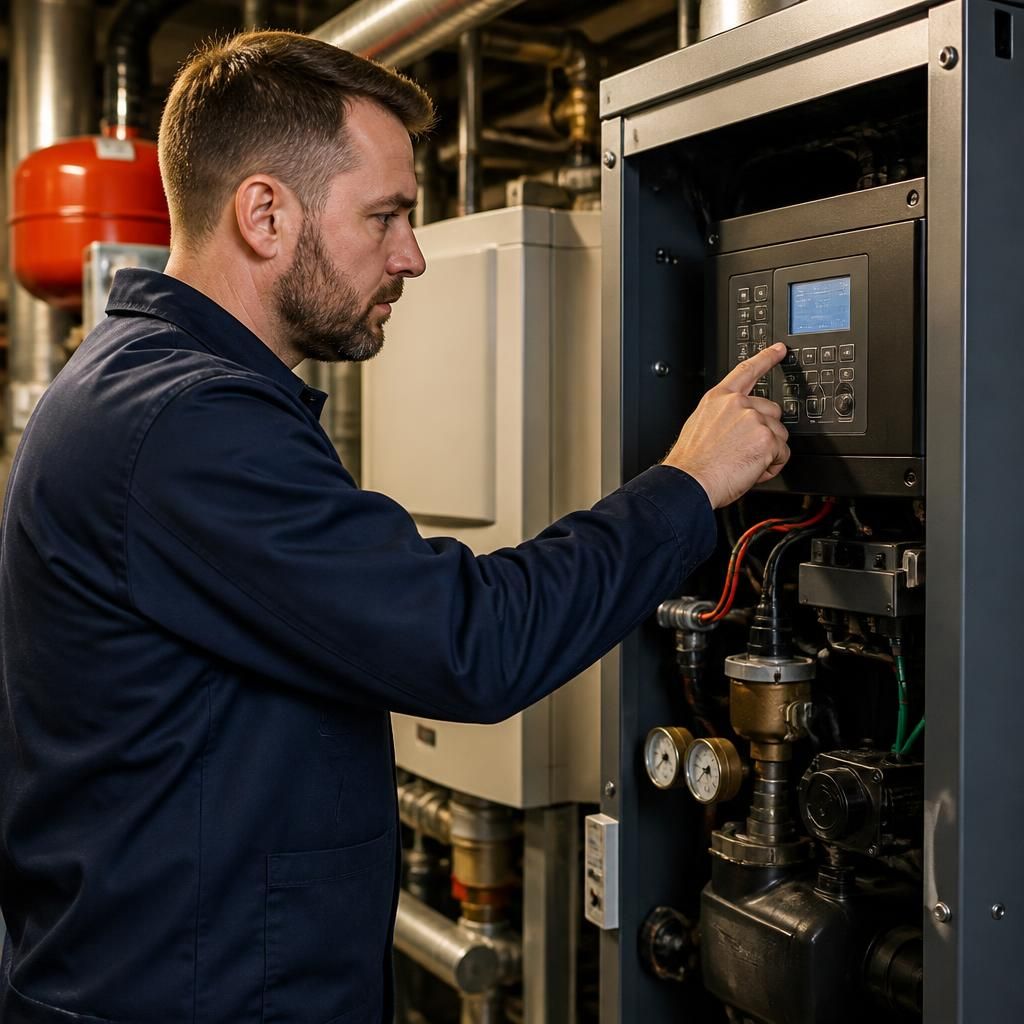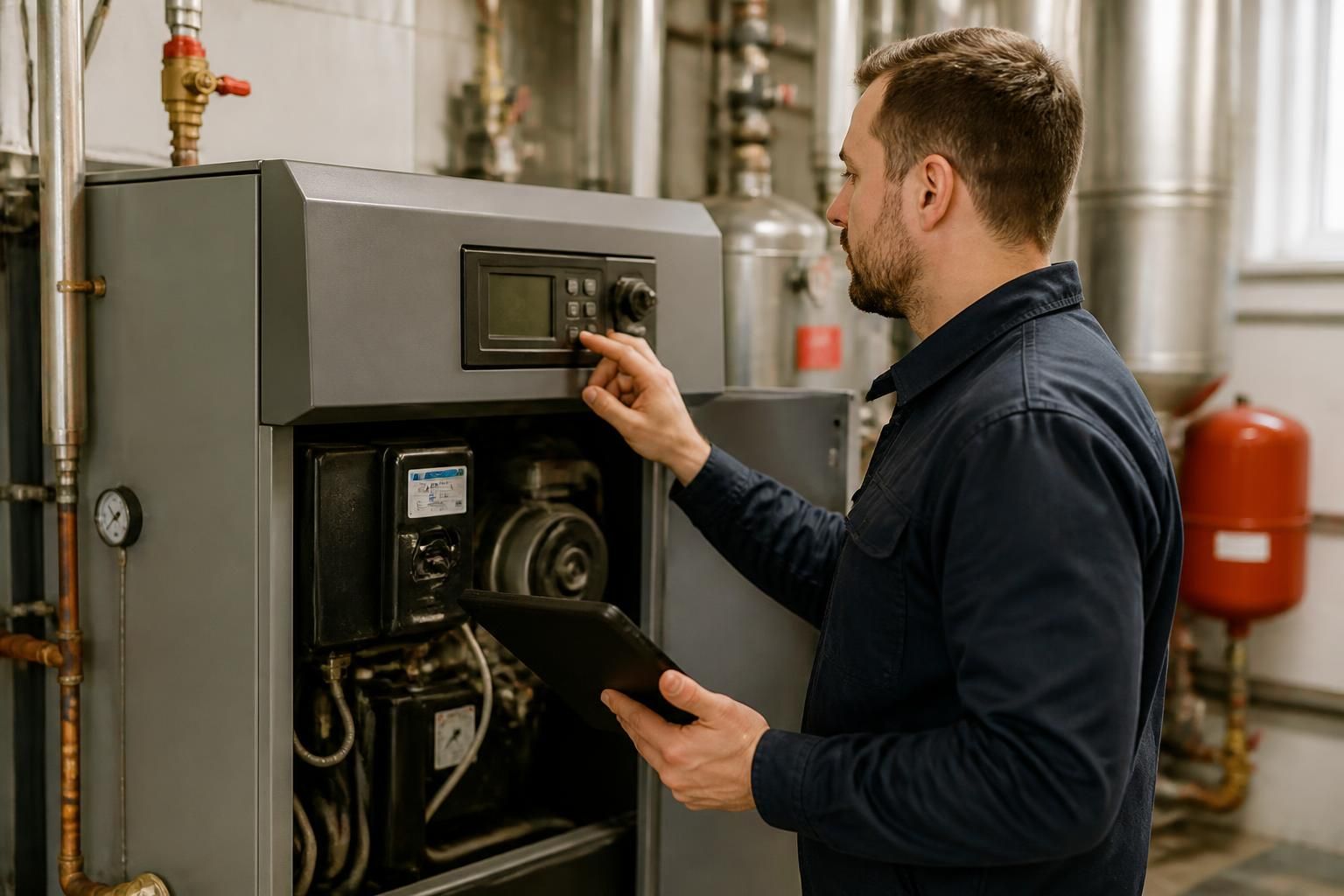
Yes. A commercial boiler can usually be repaired without replacing the wider heating system when the fault is confined to an accessible part of the boiler and the remaining equipment is safe, serviceable and compatible with the repair. The decision depends on the diagnosis, the condition of the boiler, the availability of suitable parts and whether repairing it remains technically and financially sensible.
A commercial heating system includes more than the boiler itself. It may also contain pumps, valves, controls, expansion equipment, hot-water cylinders, pipework, radiators, air-handling connections and building management controls. A fault in one of these areas does not automatically mean that the boiler or the whole system needs replacing. An engineer should identify the failed component and establish whether it is the cause of the problem or a symptom of a wider issue.
Common repairable faults may include ignition problems, failed thermostats, faulty temperature sensors, worn seals, damaged wiring, blocked condensate arrangements, pressure issues, pump faults and defective control components. Depending on the boiler design, an engineer may be able to replace the affected part, restore the correct settings and test the system without disturbing the rest of the building’s heating installation.
- Controls and sensors: Incorrect readings or communication faults can prevent safe firing, cause poor temperature control or create repeated lockouts. Replacing the defective sensor, wiring or control module may resolve the problem.
- Water circulation: A pump, valve or restriction can reduce circulation and lead to uneven heating, overheating or low system performance. The affected item may be repaired or replaced while the boiler and distribution system remain in place.
- Ignition and combustion components: Problems with ignition, flame detection or burner operation require careful testing. A serviceable component may be replaced, but combustion must be checked afterwards using appropriate procedures.
- Seals and connections: A minor water leak from a replaceable seal or connection may be repairable. The source must be confirmed first, because water damage around electrical or combustion-related parts can create a more serious safety concern.
- Condensate and drainage: Blockages or damaged drainage components can cause shutdowns on condensing boilers. Clearing or replacing the affected section may restore operation without replacing the boiler.
The repair process should begin with a structured inspection rather than replacing parts by trial and error. This normally involves reviewing the reported symptoms, checking fault codes and operating pressure, examining electrical and mechanical components, inspecting connections and assessing the boiler’s combustion and safety controls. Where relevant, the engineer should also check associated pumps, valves, controls and pipework, as a recurring boiler fault can sometimes be caused by the surrounding system.
After identifying the fault, the engineer can explain whether a component-level repair is appropriate. The assessment should consider the boiler’s general condition, previous repair history, access to parts, the likely reliability of the repaired equipment and the effect of taking it out of service. A repair that resolves one isolated defect may be sensible; repeated failures across several unrelated parts may indicate that continued repairs are becoming less suitable.
Replacement of the boiler may be considered where the heat exchanger or other major assembly has failed, essential parts are obsolete, corrosion is extensive, combustion cannot be brought within safe limits, or the appliance no longer meets the requirements of the installation. Even then, replacing the boiler does not necessarily mean replacing every part of the heating system. Existing pipework, emitters, pumps or controls may be retained if they are in suitable condition and compatible with the proposed appliance.
Commercial premises also need to consider how a repair affects safety, compliance and operational requirements. Gas-fired equipment should be inspected and worked on by an appropriately qualified engineer, with safety devices and combustion performance checked after the repair. Any work should be documented clearly, including the fault found, parts replaced, tests completed and any further defects that need attention.
For a building owner, landlord or facilities manager, useful information to provide before an inspection includes the boiler make and model, fault codes, recent maintenance records, changes in pressure, unusual noises, leaks and whether the issue affects heating, hot water or both. Accurate details can help the engineer distinguish between a boiler fault and a problem elsewhere in the system.
Ideal Plumbing Services can assess commercial boiler faults for businesses in Birmingham and the wider West Midlands, explaining whether a targeted repair is suitable or whether wider remedial work should be considered. The aim is to base the recommendation on the actual condition of the equipment rather than assuming that a boiler fault requires replacement of the complete heating installation.