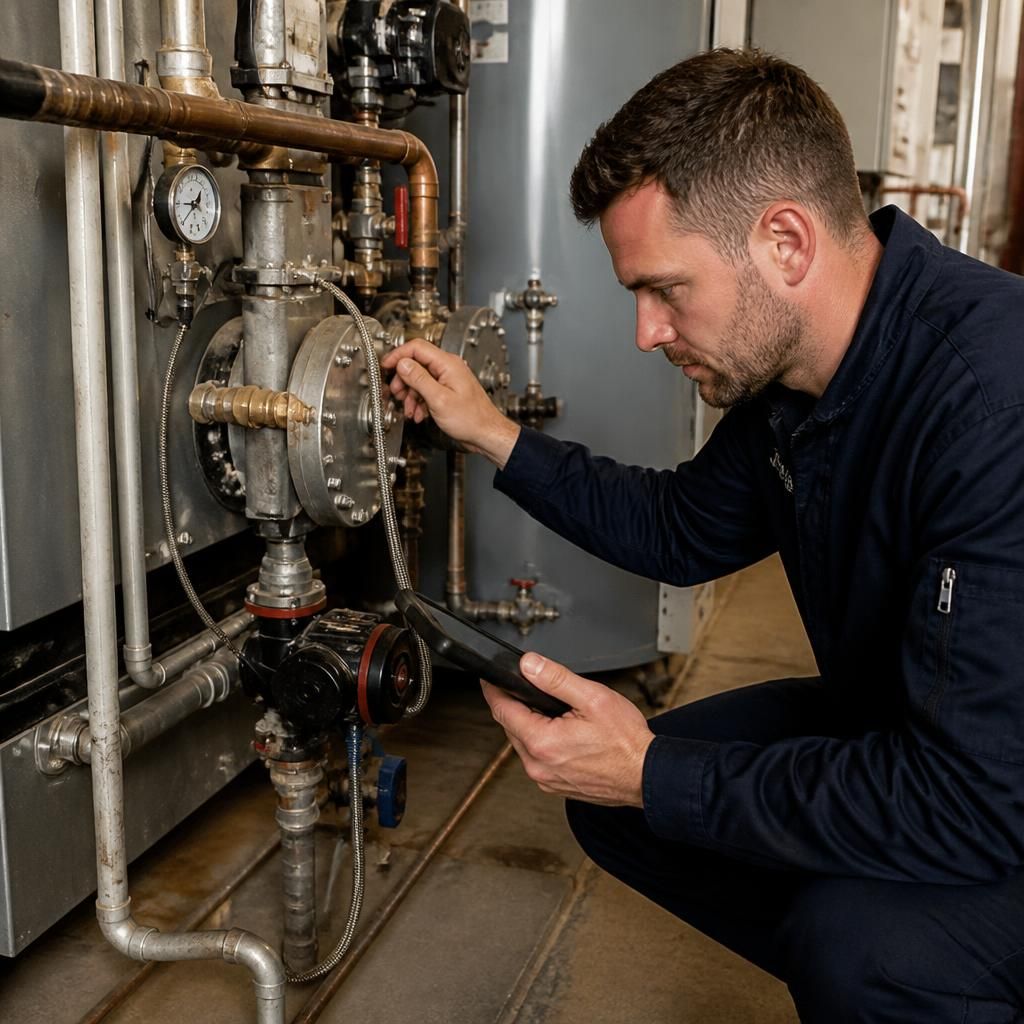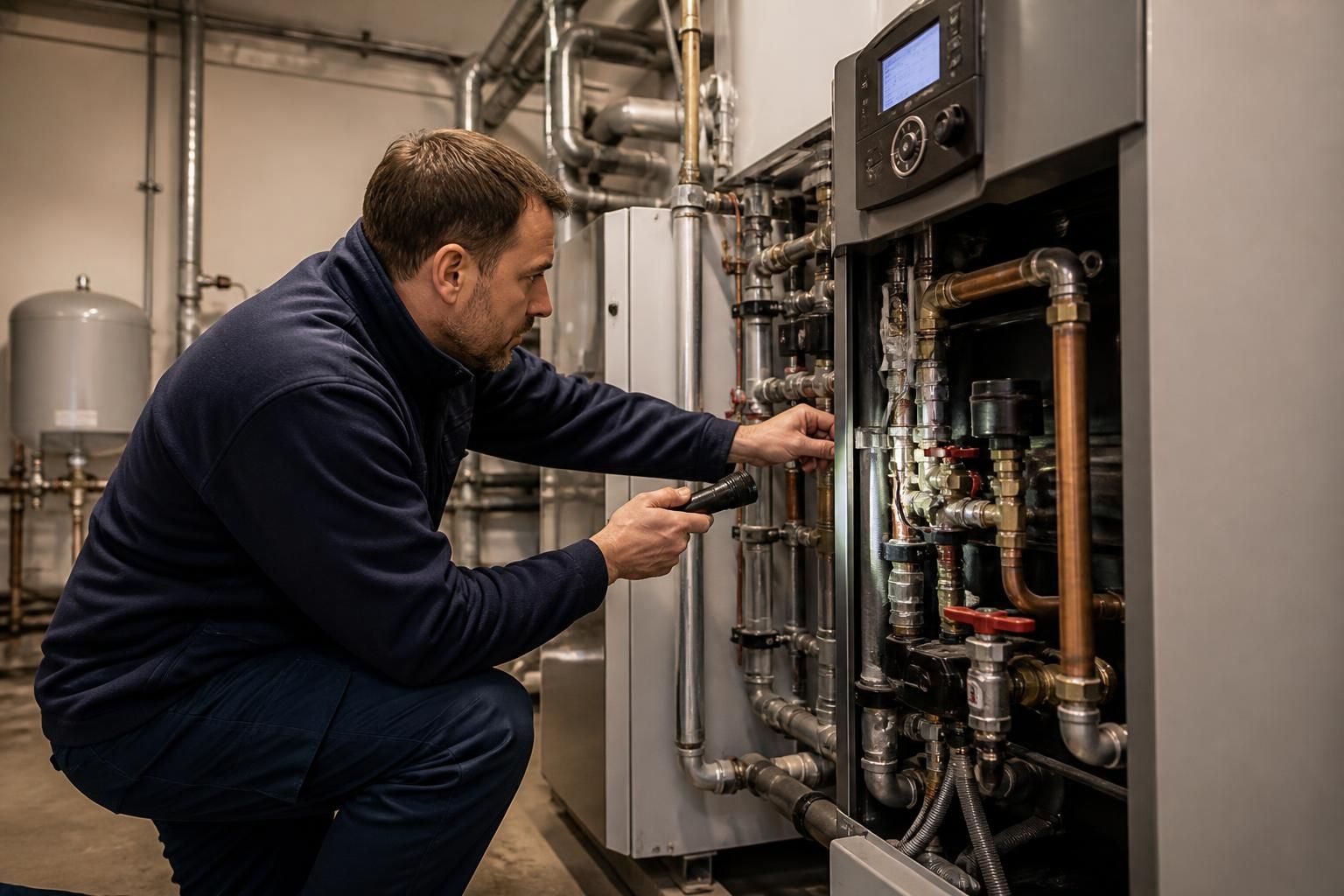
Commercial boiler leak detection will not always disrupt business operations. The effect depends on the leak’s location, its severity, the boiler’s condition and whether the heating or hot-water system can remain safely in service while checks are completed. A small, accessible leak may be investigated with limited interruption, whereas water near electrical components, gas-related equipment or pressure controls may require the affected plant to be taken out of use.
The first step is usually a visual and operational assessment. A technician may examine the boiler casing, pipework, pumps, valves, expansion vessels, radiators and visible joints, while checking pressure behaviour and signs of water loss. This helps distinguish an active boiler leak from condensation, a discharge from a safety component or a problem elsewhere in the heating circuit.
Isolation is the main source of operational interruption. If continued operation could allow water to reach electrical parts, weaken components or reduce system pressure, the boiler or a specific circuit may need to be isolated. In a larger commercial installation, it may be possible to shut down only the affected boiler or zone while other equipment continues operating. The available level of redundancy, the system design and the building’s demand for heating or hot water all influence this decision.
Access requirements can also affect disruption. Detection may require access to plant rooms, service risers, ceiling voids, storage areas or occupied parts of the premises. Where pipework is concealed, further investigation may involve removing access panels or opening a limited section of fabric. A measured diagnostic approach can help avoid unnecessary disturbance, but the exact access needed cannot be confirmed until the leak’s route and source are established.
Once the source has been located, the repair may create a separate period of interruption. Replacing a valve, tightening a connection or repairing an exposed section of pipework is generally less disruptive than dealing with damaged internal boiler components, concealed pipework or a leak that has affected electrical controls. The system may also need to be drained in part or in full, then refilled, vented and checked for correct pressure and operation.
Businesses can reduce avoidable disruption by providing accurate information before the visit and preparing suitable access to the plant. Useful details include:
- when the water loss or pressure change was first noticed;
- whether the leak is continuous or appears only when the system is operating;
- which areas have lost heating or hot water;
- whether warning indicators, unusual noises or repeated pressure drops have occurred; and
- the location of isolation valves, plant rooms and relevant system controls.
It is also sensible to protect stock, equipment and electrical items from any visible water, without touching wet electrical equipment or attempting to dismantle boiler components. If water is spreading, the responsible building manager should follow the site’s safety procedures and arrange appropriate isolation by a competent person.
A suitable detection plan should account for the business’s operating requirements. A contractor may discuss which areas are most affected, whether temporary isolation is acceptable and whether the investigation can be staged across separate sections of the system. This does not remove every interruption, but it helps ensure that shutdowns are proportionate to the risk rather than applying a wider isolation than necessary.
After detection or repair, the system should be checked for stable pressure, correct circulation and safe operation. Any affected controls, insulation or surrounding building materials should also be assessed for water damage. If the underlying cause is not addressed, repeatedly topping up the system or restarting the boiler can conceal a developing fault and increase the eventual disruption.
In practical terms, commercial boiler leak detection is intended to control disruption, not guarantee that operations will continue unchanged. Minor faults may involve only restricted access or a short equipment isolation, while significant leaks can require a wider shutdown and follow-up repair. The earlier the problem is assessed, the more clearly the necessary interruption can be defined and planned around the building’s operational needs.