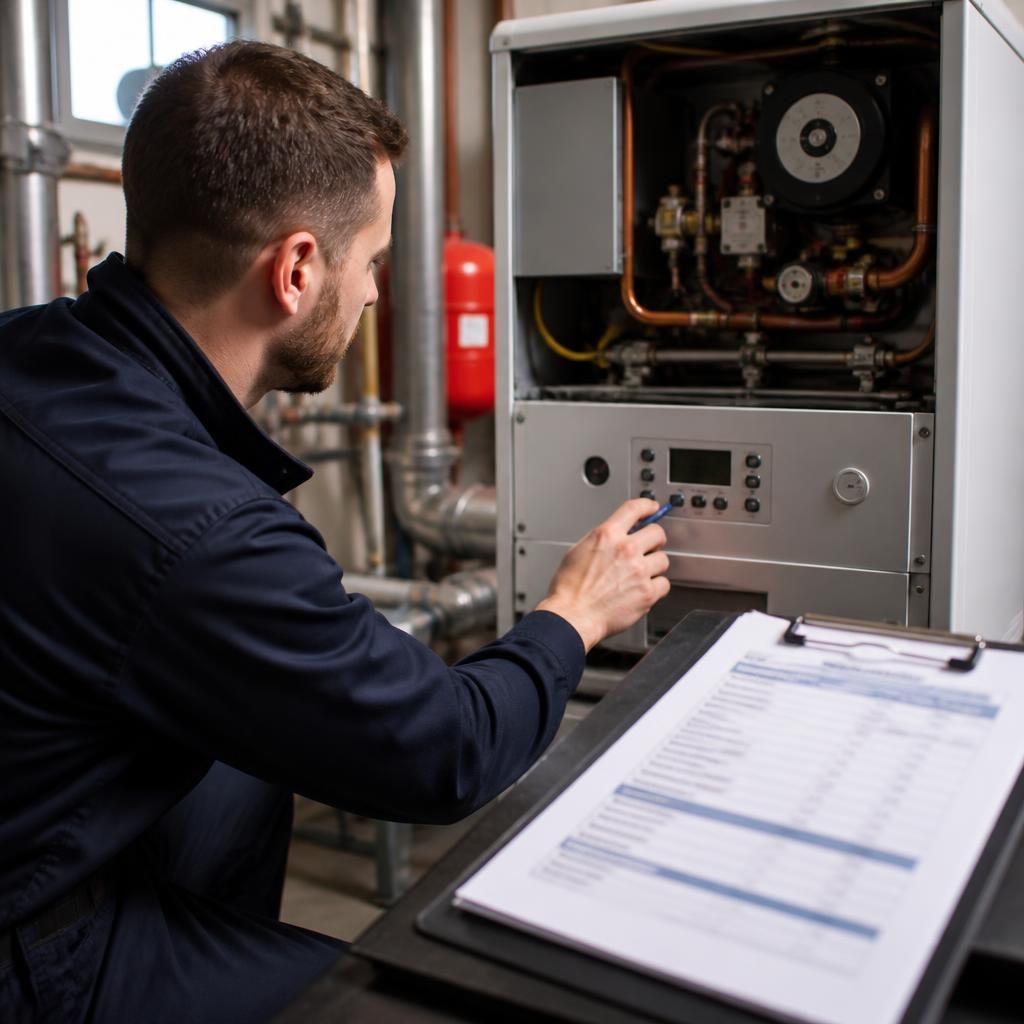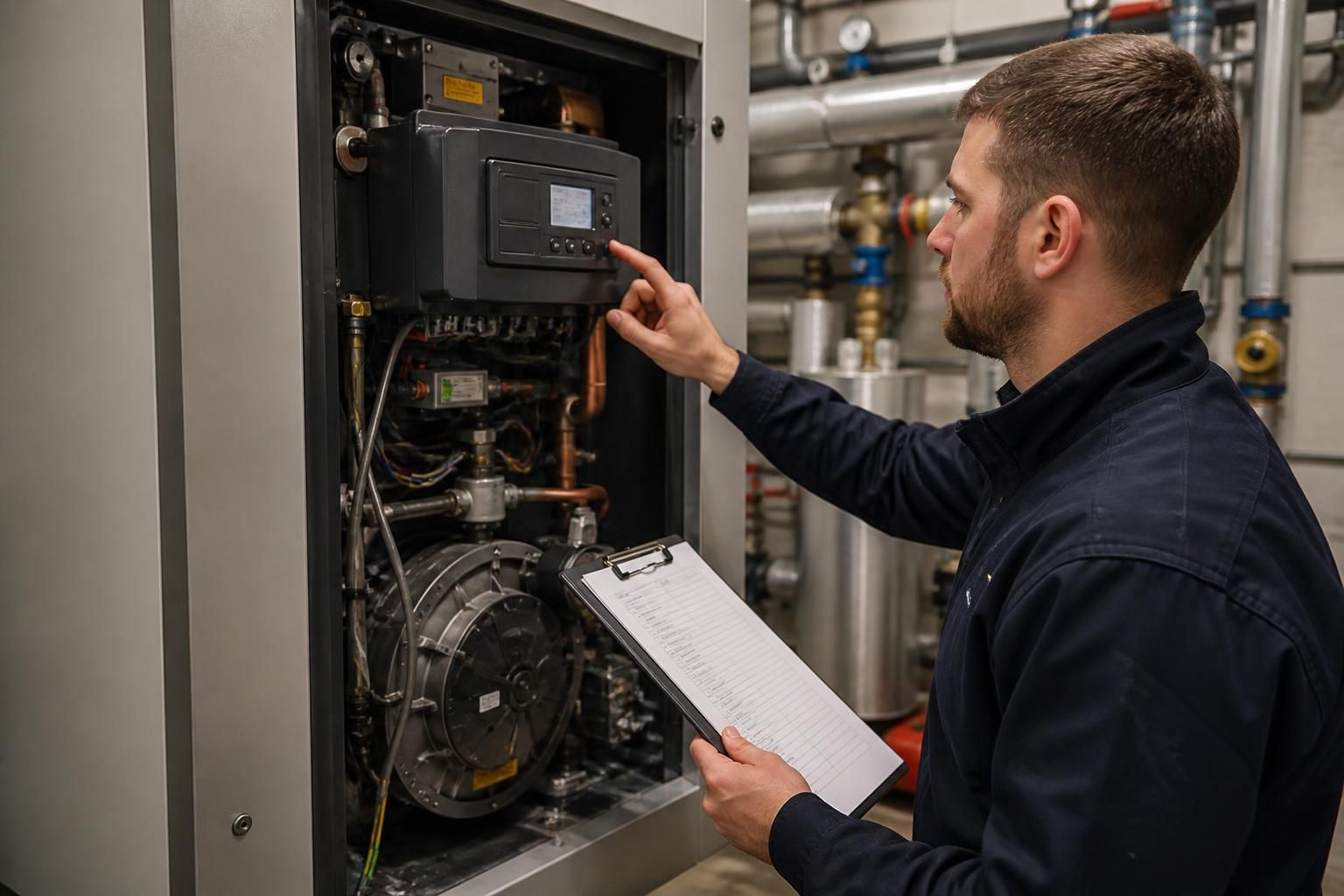
Commercial boiler repair pricing is normally assessed from the total scope of work rather than a fixed charge for the boiler itself. The assessment considers the type and extent of the fault, the boiler’s condition, the working environment, the parts required, the labour involved and any testing needed before the system is returned to service.
The boiler and system being repaired
Different commercial boilers and heating systems require different levels of expertise and different components. Pricing may therefore reflect the boiler’s output, configuration, age, accessibility and connection to other equipment such as pumps, controls, cylinders or heating circuits. A fault affecting one component may be relatively contained, while a problem involving several connected parts can require more extensive investigation.
The engineer may also consider whether the appliance is operating as part of a modular installation, a larger plant room or a system serving several areas of a building. This helps establish whether the repair can be completed locally or whether wider system checks are needed.
Diagnosis and fault-finding
A visible symptom does not always identify the failed component. For example, loss of heat could relate to controls, circulation, ignition, pressure, sensors or another part of the system. The price assessment should allow for suitable diagnostic work, including inspection, testing and interpreting fault codes where relevant.
Where the cause cannot be confirmed without further investigation, a responsible quotation should distinguish the initial diagnostic stage from any subsequent repair. This avoids presenting an uncertain repair as a guaranteed fixed cost and gives the business an opportunity to approve further work based on evidence.
Parts and component availability
Replacement components are assessed according to the part needed, its specification and whether associated seals, fittings or safety components should also be replaced. The condition of surrounding parts can affect the final scope. Replacing only the failed item may not be appropriate if another component is damaged, deteriorated or contributing to the fault.
Part pricing can also vary according to whether the required component is readily obtainable or needs to be specially sourced. A quotation should identify the main components included and explain any uncertainty where the exact part can only be confirmed after the boiler has been opened or tested.
Labour and site conditions
Labour is influenced by the complexity of the repair, the skill required and the time needed to complete it safely. Access is an important consideration in commercial premises. Restricted plant-room access, confined working areas, high-level equipment, isolation requirements or the need to protect occupied parts of a building can all affect the work involved.
The assessment may also account for preparation and reinstatement, including isolating the appliance, removing covers, draining relevant sections, cleaning the work area and carrying out operational checks. These tasks are part of completing the repair properly, rather than being optional additions.
Safety and compliance requirements
Commercial boiler repairs must be considered alongside safe operation. If inspection identifies unsafe combustion, flue, ventilation, gas or electrical conditions, additional remedial work may be necessary before the appliance can be used. Testing after the repair is important because it confirms that the boiler and related controls are operating as intended.
Where the repair reveals a wider safety concern, the quotation should separate the essential corrective work from recommendations that can be planned for a later date. This gives the responsible person a clearer basis for deciding what must be addressed immediately and what can be budgeted for separately.
Repair, replacement or wider remedial work
Pricing should be assessed against the likely value and reliability of repairing the existing equipment. A repair may be suitable where the fault is limited and the boiler remains in reasonable condition. If the boiler has repeated faults, significant corrosion, obsolete components or damage affecting several areas, replacement or broader system work may need to be considered.
This does not mean that replacement is automatically the correct option. A proper assessment should explain the defect, the proposed repair, any limitations and the implications of leaving related issues unresolved. Where more than one option is technically suitable, comparing the scope and long-term implications can help the customer make an informed decision.
What a clear price assessment should include
- The diagnosed or suspected fault and the checks used to assess it.
- The labour and stages of work included in the proposed price.
- The parts, materials and consumables expected to be required.
- Any testing, commissioning or safety checks included after the repair.
- Separate costs for additional remedial work or work that cannot yet be confirmed.
- Any applicable tax or charges, stated clearly before approval.
Commercial customers should ask for clarification if a price combines diagnosis, repair and follow-on recommendations without separating them. A transparent assessment makes it easier to compare options and reduces the risk of unexpected charges. Ideal Plumbing Services provides commercial plumbing support across Birmingham and the wider West Midlands, with repair recommendations based on the condition of the equipment and the work required rather than an unexplained standard figure.