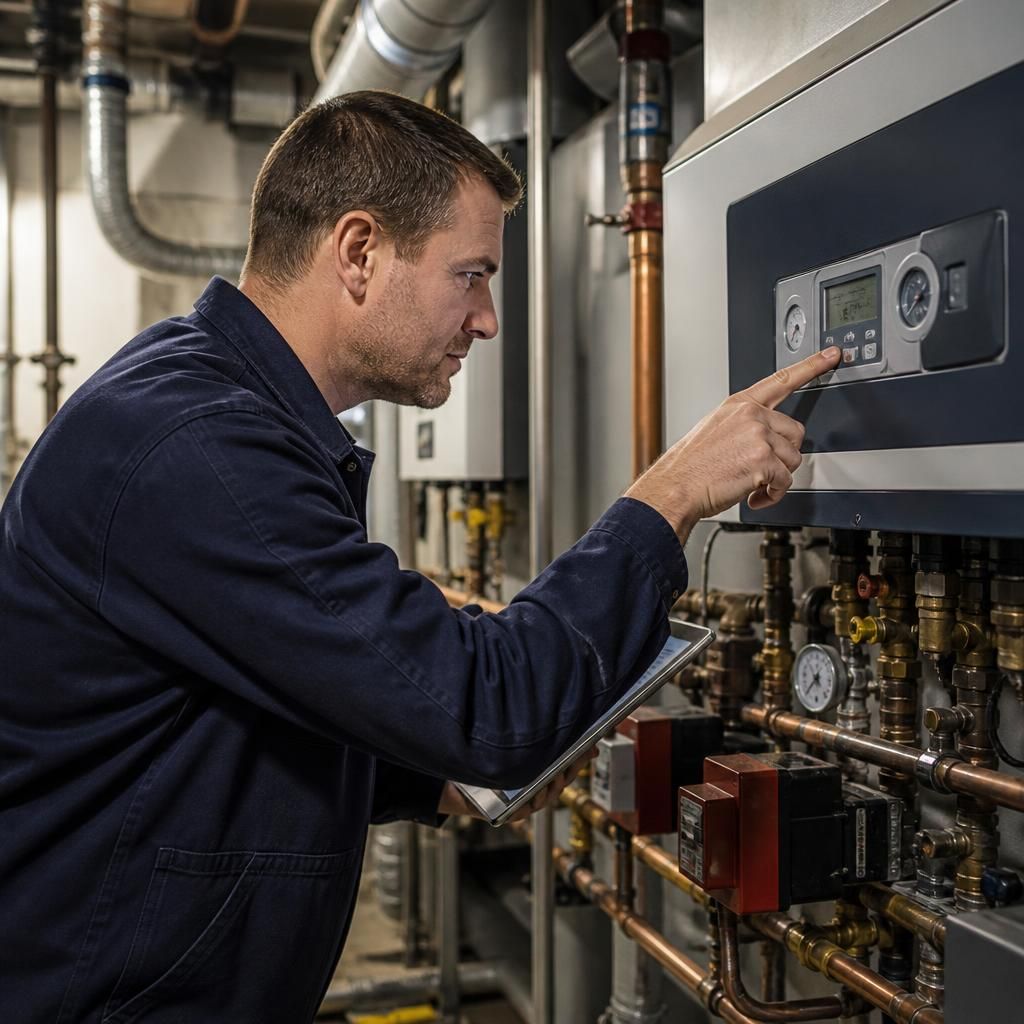
Commercial boiler repair priorities are set through a structured assessment of the fault, its likely consequences and the work required to control the risk. The priority may change as more information becomes available, so an initial report from a site representative is normally followed by inspection, testing and a review of the boiler’s operating condition.
The first assessment is diagnostic rather than financial. An engineer will establish what has failed, whether the fault is isolated to the boiler or connected to the wider heating and hot-water system, and whether continued operation could worsen the problem. Fault codes, pressure readings, visible damage, combustion results, control settings and evidence of previous repairs can all help distinguish a minor component issue from a developing system fault.
Several factors are considered when deciding where a repair sits in the priority order:
- Immediate risk: Evidence from safety controls, flue checks, combustion testing or the condition of the appliance can require the boiler to be isolated or made safe before any repair is attempted.
- Potential damage: A small defect may receive greater priority if it could lead to water damage, electrical damage, corrosion or failure of connected equipment.
- Effect on the premises: The assessment considers how the fault affects occupants, staff, tenants, customers, stored materials, hygiene arrangements and any process that depends on reliable heating or hot water.
- Likelihood of deterioration: A stable fault may be suitable for planned work, whereas a problem showing signs of rapid change, repeated lockouts or worsening readings may need earlier attention.
- Repair complexity: The condition of associated components, access to the appliance and the availability of suitable replacement parts influence how the work should be sequenced. These factors affect planning, but they do not override a safety-critical priority.
Isolation and temporary controls come before full repair where necessary. If testing identifies an unsafe operating condition, the appropriate action may be to stop the affected appliance, restrict use of part of the system or provide clear instructions until the underlying defect has been corrected. This is different from completing the permanent repair: making equipment safe controls the immediate risk, while the subsequent work restores reliable operation.
Priorities are also determined by whether a repair can be completed independently. For example, replacing a failed control may be straightforward if the rest of the system is sound. By contrast, a fault involving pumps, valves, expansion equipment, controls or distribution pipework may need a wider investigation before the repair sequence is confirmed. Repairing one symptom without checking the related components can result in repeat breakdowns or leave the original cause unresolved.
Commercial impact helps determine the order of non-safety-critical work. Where more than one issue is found, the engineer can distinguish between a defect that affects the whole installation and one limited to a single area or function. A fault affecting essential facilities, multiple zones or a particularly sensitive process may be placed ahead of a nuisance fault in a lower-use area. This allows the work to be organised around actual operational consequences rather than treating every reported issue as equal.
Repair decisions should be explained in terms of condition, risk and recommended action. A useful report will normally identify:
- the fault or suspected cause;
- any immediate restrictions or safety measures;
- the components or systems requiring attention;
- the consequences of postponing the work;
- whether the repair is temporary, permanent or part of further investigation; and
- any checks needed after the repair is completed.
Routine issues can still deserve attention even when they are not the highest priority. Persistent cycling, inaccurate controls, unusual operating patterns or declining performance may increase fuel use and place additional strain on components. Recording these issues and scheduling them before they develop into a more disruptive failure is an important part of commercial boiler maintenance.
For landlords, facilities managers and business owners, the most useful information to provide is the timing of the fault, affected areas, recent changes to the system, displayed codes, unusual sounds or smells, and whether the problem is intermittent or constant. This does not replace professional testing, but it helps the engineer assess the situation accurately and plan the repair in the correct order.
Ideal Plumbing Services applies this type of condition-based assessment to commercial boiler repairs, separating work that requires immediate control from repairs that can be planned around the needs of the premises. The result is a repair sequence based on evidence and consequence, rather than simply on which fault was reported first.