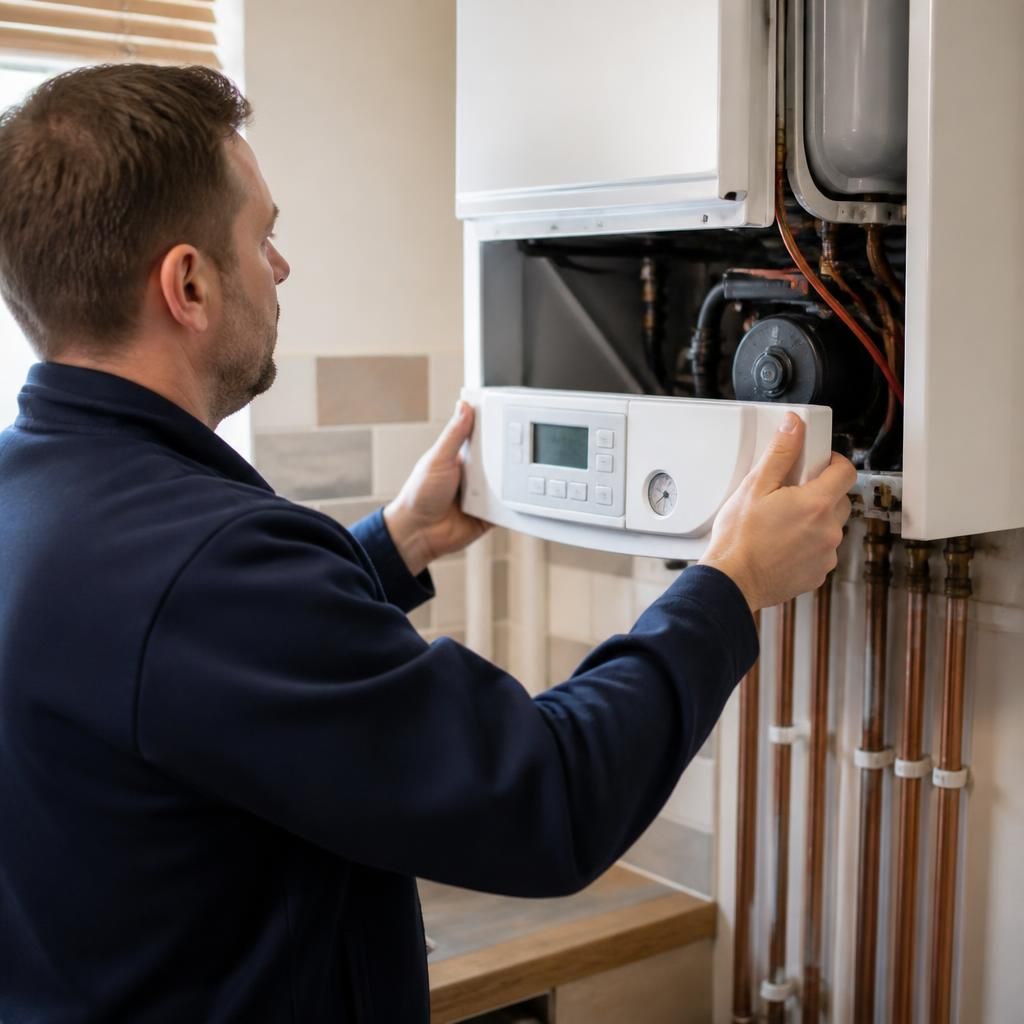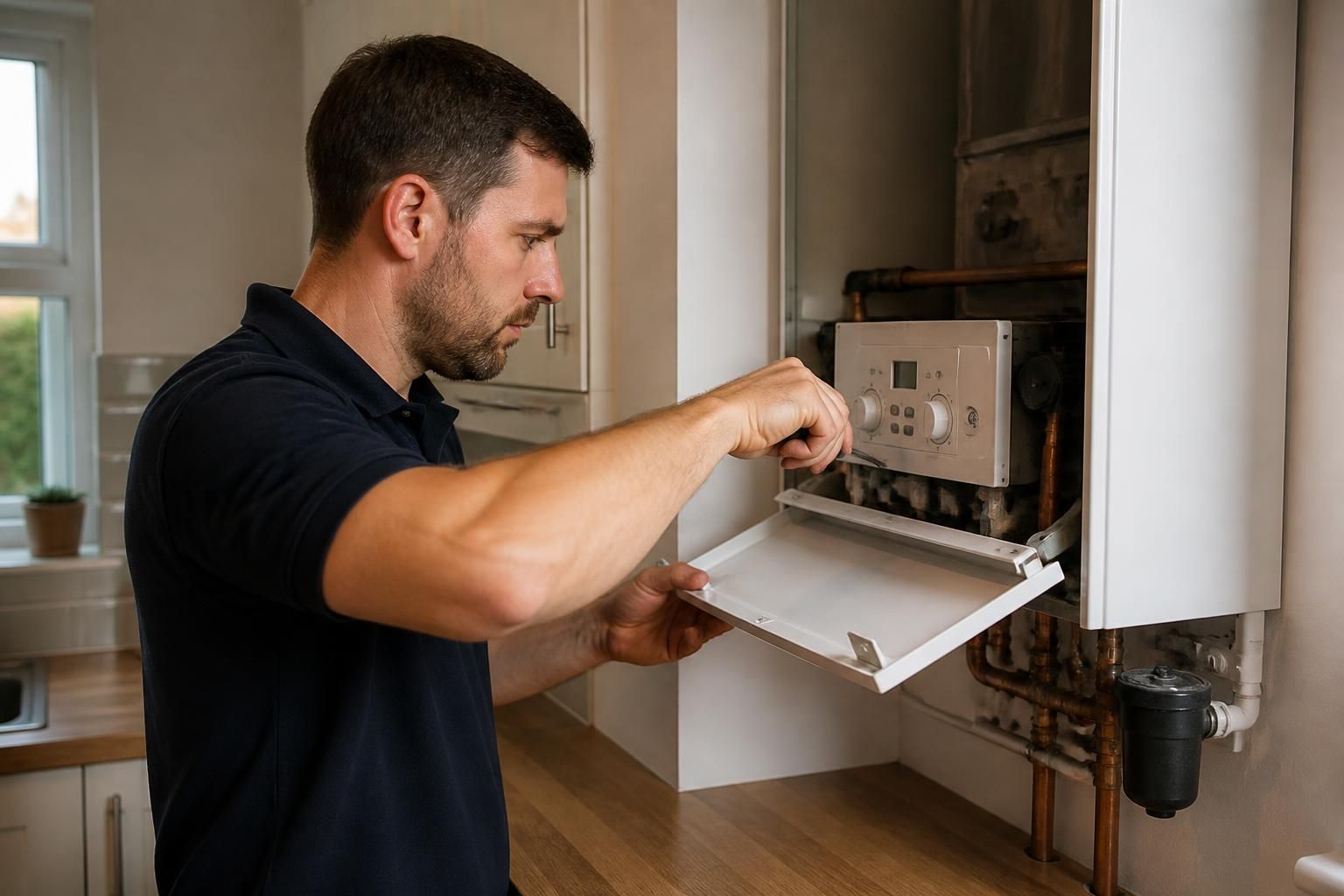
Landlords can arrange repairs for gas, oil and electric boilers, but the work must be matched to the appliance type, the fault and the landlord’s responsibilities for keeping the property safe and usable. A repair appointment can cover fault diagnosis, replacement of failed components and checks that the boiler is operating correctly after the work.
Gas boiler repairs
Gas boilers require particular attention to combustion, ventilation, flueing and gas safety. A repair may involve investigating ignition problems, heating or hot-water failure, unusual noises, pressure loss or a boiler that repeatedly switches off. If a safety issue is identified, the appliance may need to be isolated until it can be made safe. The landlord should retain the relevant service, repair and safety records for the property.
A boiler repair is separate from the landlord’s routine gas safety obligations. Repairing a fault does not automatically replace the need for the appropriate gas safety inspection or documentation. Where a tenant reports a smell of gas, signs of carbon monoxide or an appliance that appears unsafe, the issue should be treated as a safety concern rather than an ordinary maintenance request.
Oil boiler repairs
Oil boilers have different components and servicing requirements from gas appliances. Diagnosis may include the burner, fuel supply, ignition system, controls, circulation and condensate arrangements. The engineer may need details of the boiler’s symptoms, recent servicing and any warning lights or fault codes before assessing the problem.
Landlords should also consider related parts of the heating system, such as radiators, pumps, thermostats and controls. A boiler that appears to be faulty may instead be affected by a circulation, electrical or system-pressure problem. Identifying the underlying cause helps prevent a temporary fix from leaving the tenant without dependable heating or hot water.
Electric boiler repairs
Electric boilers do not burn fuel, so their diagnosis focuses on electrical supplies, heating elements, thermostats, controls, pumps and system pressure. A loss of power, tripped circuit protection or an error code can point to different causes, and the appliance should not be opened or altered by an unqualified person.
Where the fault involves the electrical installation rather than the boiler itself, the repair may require checks beyond the appliance. Landlords should ensure that any work is carried out by a suitably competent professional and that the tenant receives clear guidance about using the system safely after repair.
How a landlord can arrange the work
- Ask the tenant to describe the problem, including when it began, whether heating or hot water is affected, and any displayed fault code.
- Check the boiler type, fuel source, model information and location of the appliance before booking.
- Tell the repair provider whether the property is occupied and provide suitable access arrangements.
- Share relevant service history, previous repair details and any information about leaks, pressure loss or recurring faults.
- Request a clear explanation of the diagnosis, recommended repair and any parts that may be required.
- Keep the invoice, repair notes and any safety or testing documentation with the property records.
Ideal Plumbing Services provides landlord boiler repair support for residential properties across Birmingham and the wider West Midlands. The same service can be arranged whether the property is occupied by the landlord, a tenant or managed on the landlord’s behalf, with the repair approach based on the specific boiler and fault rather than the property’s ownership status.