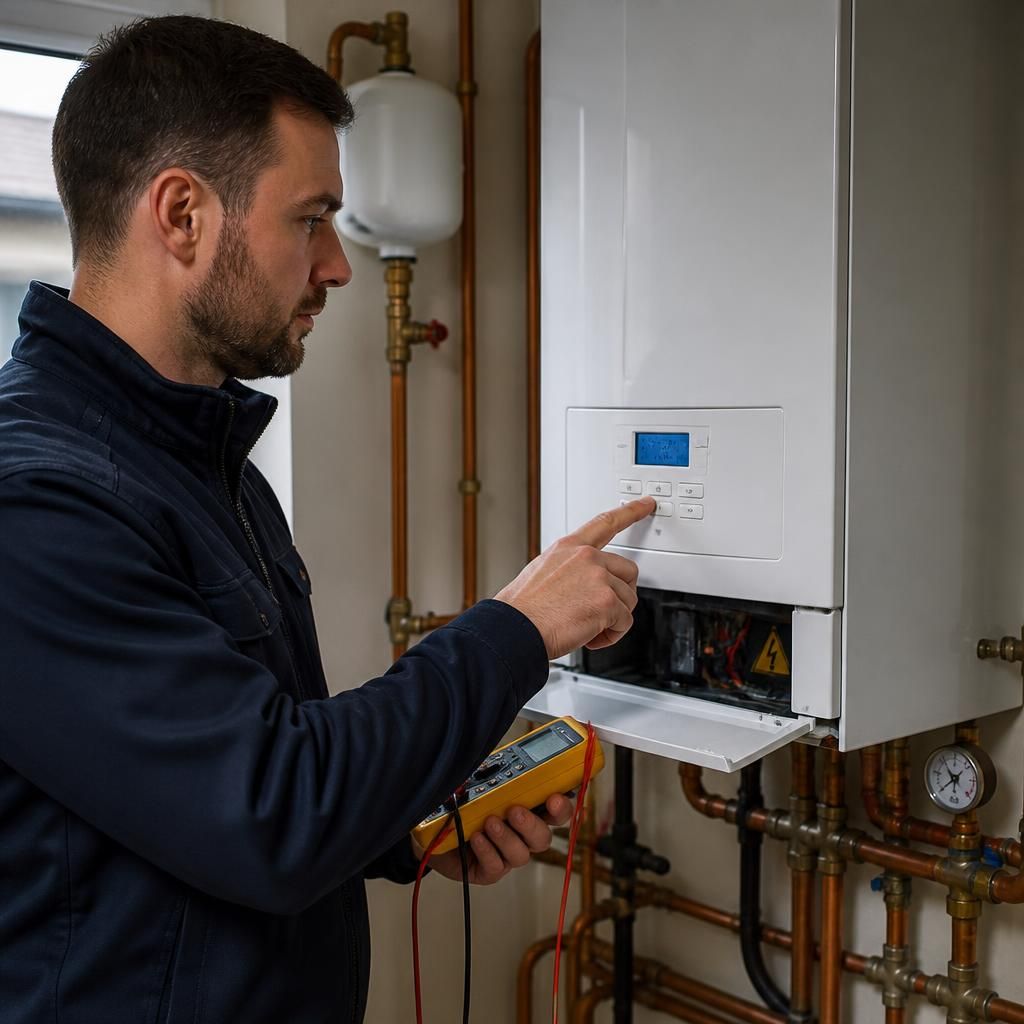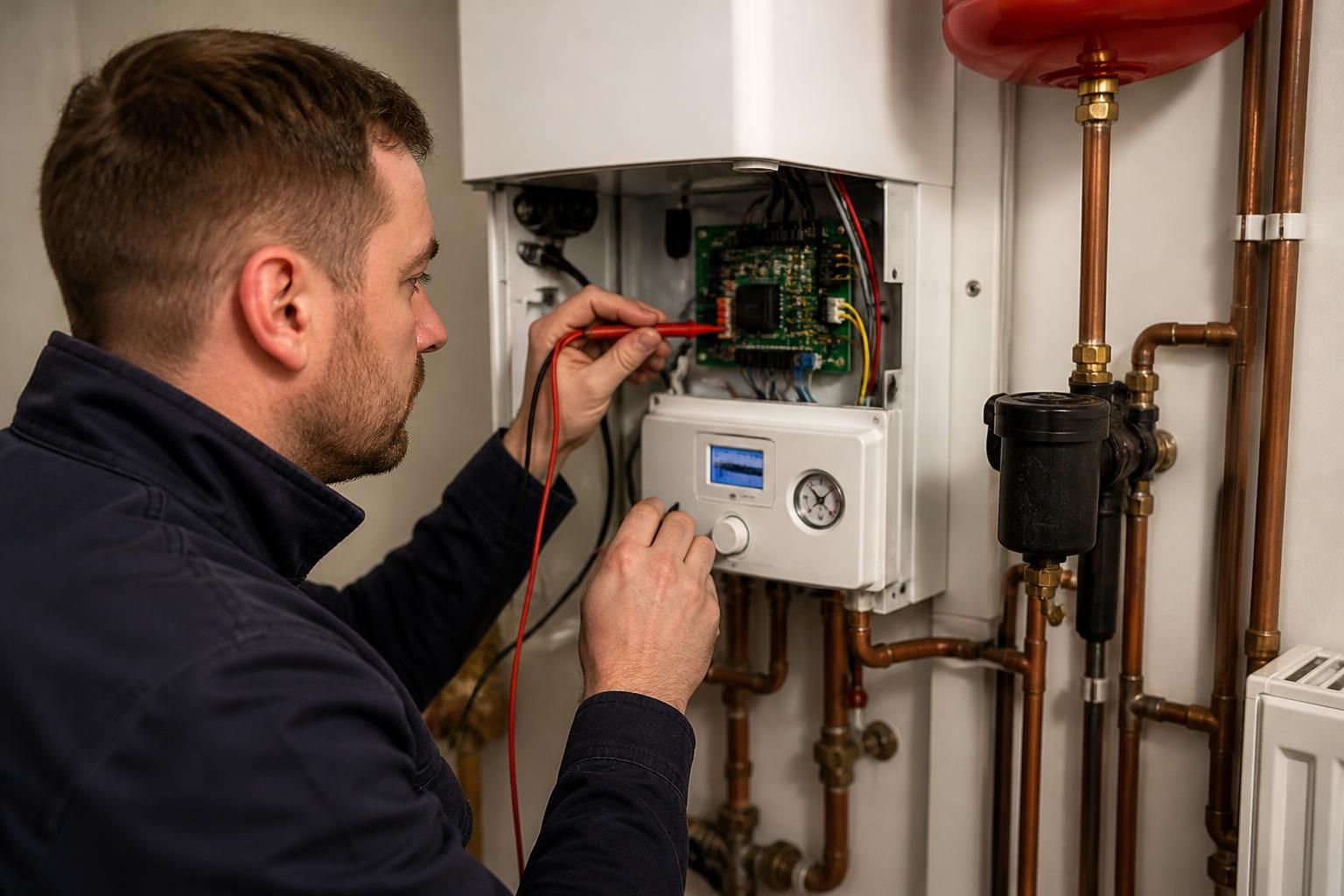
Electric boiler repairs follow a different diagnostic process from gas and oil boiler repairs, but the same heating system may share several components, including the pump, expansion vessel, radiators, pipework, controls and cylinder. The fault must first be traced to the boiler, the central-heating circuit or the electrical supply before the correct repair can be selected.
Electric boilers do not burn fuel or produce combustion gases. Common areas requiring investigation include the heating elements, thermostats, temperature sensors, contactors, control boards, pressure-related components and safety cut-outs. A fault may result in no heating, lukewarm water, intermittent operation, unusual noises, a displayed error code or repeated tripping of an electrical protective device.
Gas and oil boilers contain combustion and fuel systems that are not present in an electric boiler. Their repair may involve the burner, ignition, flame detection, fuel supply, heat exchanger, flue or combustion controls, alongside the shared wet-heating components. These differences mean that a boiler engineer must use the correct testing procedure for the fuel type rather than treating every boiler fault in the same way.
A typical repair assessment considers:
- What the boiler is doing, including whether it starts, stops, locks out or loses power.
- Whether the fault affects heating, hot water or both.
- Pressure, circulation and temperature readings within the heating system.
- Electrical connections, controls and safety devices on an electric boiler.
- Fuel, ignition, combustion and flue-related components on gas or oil equipment.
- The condition of connected controls, pumps, valves, radiators and pipework.
Some apparent boiler faults originate elsewhere. For example, a faulty thermostat, programmer, motorised valve, pump or electrical connection can prevent heat reaching the radiators even when the boiler itself is operating. Conversely, a boiler displaying power or temperature symptoms may need attention inside the appliance. Testing each relevant part helps distinguish an appliance repair from a wider heating-system fault.
Safety precautions also differ. Gas and oil appliances should be assessed and repaired by a suitably qualified person because incorrect work can affect combustion, fuel control or flue safety. Electrical boiler repairs require safe isolation and appropriate electrical testing. Do not remove the boiler casing or attempt to bypass a safety device; record any fault code, switch the appliance off if it is unsafe and provide the engineer with details of the symptoms.
Whether a repair is suitable depends on the failed component, the boiler’s condition, the availability of a compatible part and the likely reliability of the appliance after repair. A clear assessment should identify the fault, explain the proposed work and distinguish a boiler repair from repairs to associated heating controls or pipework. Ideal Plumbing Services can assess electric, gas and oil boiler faults and carry out the appropriate repair for the system involved.