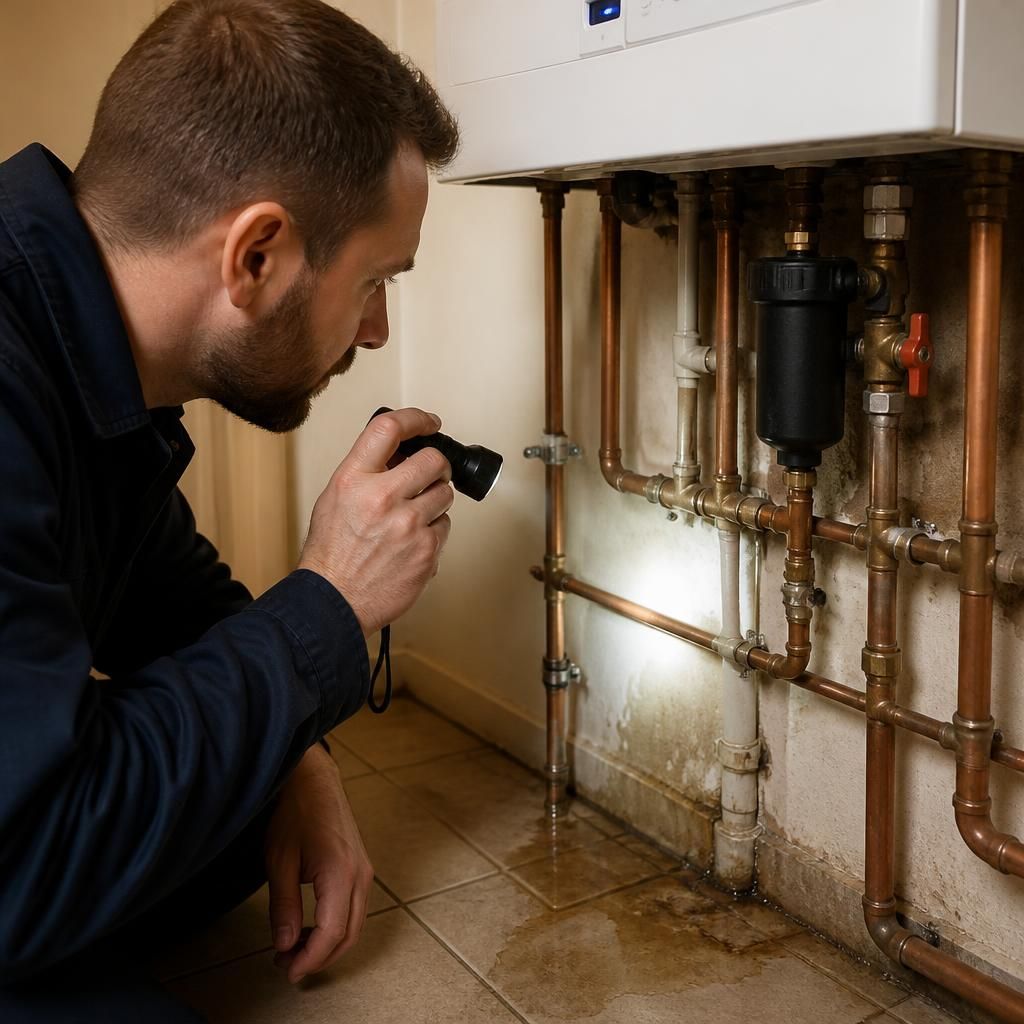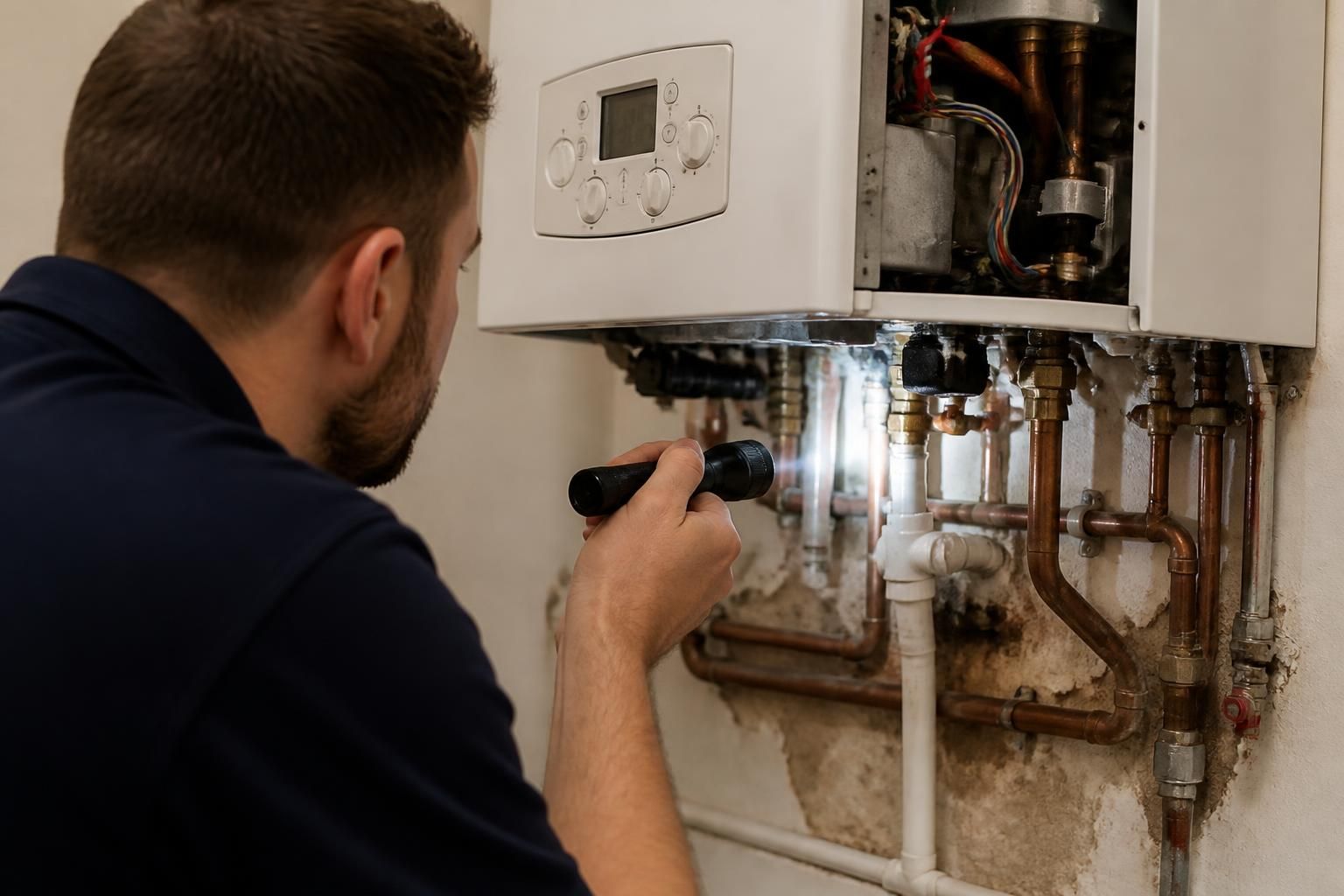
The most useful preparation is to preserve evidence of the leak, avoid unsafe DIY work and make the boiler installation and surrounding property ready for inspection. This helps the plumber distinguish a boiler fault from a problem with connected pipework, heating components or nearby plumbing.
Do not dismantle or interfere with the boiler. Do not remove its casing, apply sealant, tighten fittings or attempt to repair internal components. Gas appliances and sealed heating systems can contain electrical, pressurised and combustion-related hazards, so investigation and repair should be carried out by a suitably qualified professional.
If you smell gas, leave the property and avoid operating electrical switches, flames or other potential ignition sources. Contact the relevant gas emergency service from a safe location. If water has reached sockets, wiring or electrical equipment, do not touch the wet items; arrange appropriate electrical assistance where necessary.
Before the appointment, it is also helpful to:
- Keep children and pets away from the boiler and any wet areas.
- Protect flooring and nearby belongings from further water damage without moving or disturbing components connected to the boiler.
- Keep installation, servicing, warranty and previous repair paperwork available, if you have it.
- Make sure the person arranging the appointment can authorise inspection and any further work. Tenants may need to involve their landlord or managing agent before repairs are approved.
- Have details of any home-insurance or landlord reporting requirements to hand if the leak has damaged flooring, cupboards, ceilings or other parts of the property.
A leak detection visit may involve a visual inspection, checks to accessible heating components and pipework, pressure-related tests, and examination of connections such as valves, pumps, expansion equipment, condensate arrangements or radiators. The exact checks depend on where the water is found and whether the source is visible. A wet patch is not always directly below the fault, because water can travel along pipework, flooring or internal surfaces.
Ask the plumber to explain whether the source has been confirmed, whether the leak is from the boiler itself or an associated component, and whether further investigation is needed. You can also ask which repair is recommended, whether replacement parts are required, and whether the system should remain unused until the work is completed. A clear diagnosis separates immediate safety measures from planned repair work and helps prevent unnecessary replacement of the whole boiler.
If the appointment concerns a recurring leak, provide any relevant maintenance history and explain whether other parts of the heating system have recently been altered. Avoid cleaning away deposits or repairing the visible area beforehand, as staining, corrosion and dried residue can help identify the route and duration of the leak.