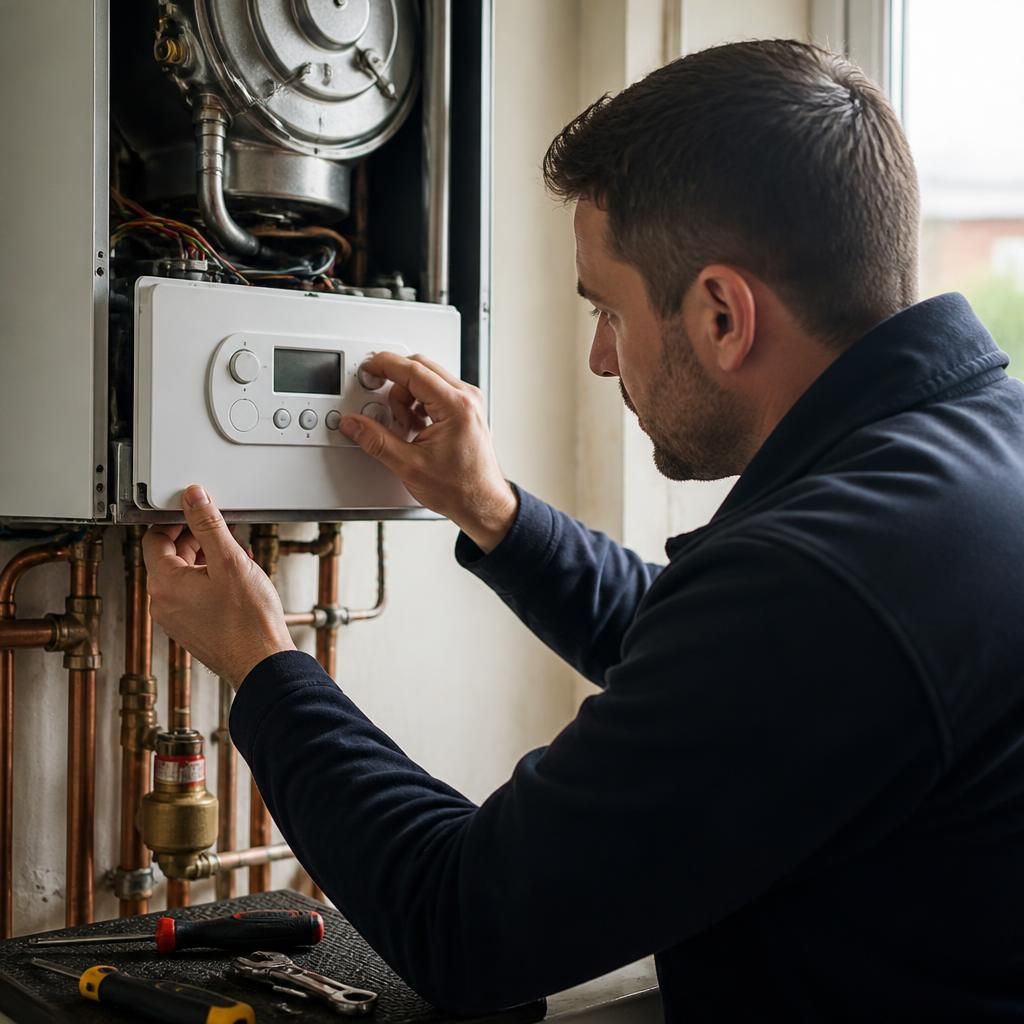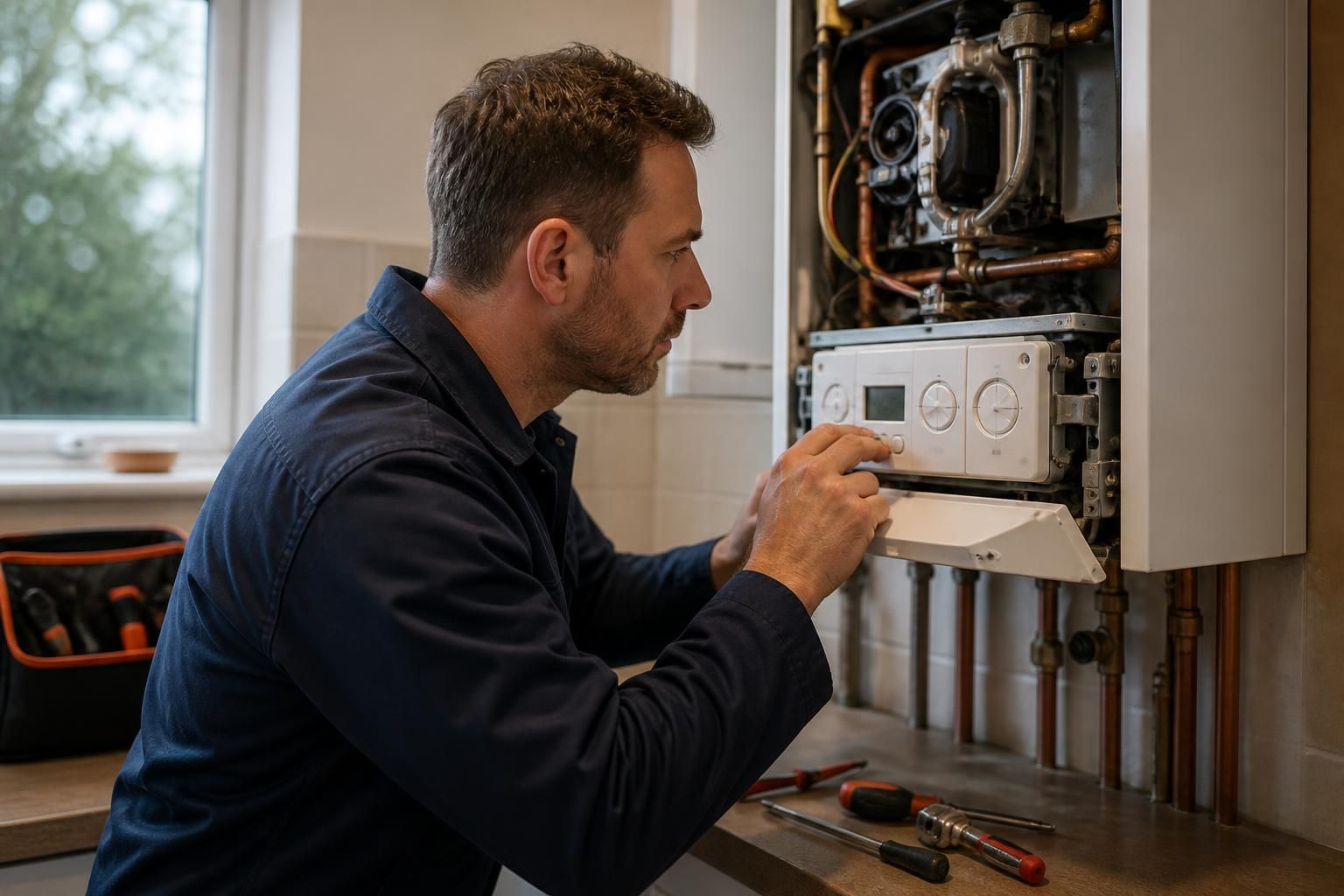
Boiler repair cost is usually made up of diagnostic labour, the parts needed and the time required to complete the work. The fuel type affects which components may fail, but the specific fault is normally more important than whether the boiler is gas, oil or electric.
What affects the final price?
- Fault-finding: The engineer may need to test controls, sensors, electrical connections, pumps or combustion components before identifying the cause.
- Parts: A simple sensor, fuse or thermostat may be relatively straightforward to replace, while a control board, pump, fan, burner or heat exchanger can represent a larger proportion of the bill.
- Access and complexity: A boiler that is difficult to reach, or a fault involving connected heating controls, pipework or the condensate system, may take longer to repair.
- Boiler age and model: Older appliances can require obsolete or less readily available components. The engineer may need to establish whether a suitable replacement part can still be sourced.
- Additional defects: Testing may reveal more than one problem, particularly where a boiler has been losing pressure, making unusual noises or repeatedly shutting down.
Gas boiler repair costs are often influenced by the combustion and safety components involved. Ignition systems, flame sensors, fans, pumps, diverter valves and printed circuit boards can all produce different repair requirements. Work on gas appliances should be carried out by an appropriately qualified engineer, with safety checks forming part of the assessment.
Oil boiler repair costs can involve the burner, nozzle, fuel pump, photocell, ignition components or control system. The condition of the burner and the cleanliness of the system may affect both diagnosis and repair time. A fault should not be treated as a routine parts replacement until the engineer has checked the appliance properly.
Electric boiler repair costs are assessed differently because there is no gas burner or oil-fired combustion system. Common areas of investigation include heating elements, thermostats, relays, sensors and electronic controls. Electric boilers can have fewer mechanical components, but a failed specialist control or heating element may still make the repair more involved.
Repair or replacement? Repair is often considered where the fault is isolated, the appliance is otherwise in sound condition and suitable parts are available. Replacement may need to be discussed where the boiler has repeated faults, significant corrosion, an obsolete component or a major failure affecting the heat exchanger or primary controls. The decision should take account of the boiler’s condition and likely future reliability, not just the price of one repair.
Before approving work, ask for the estimate to separate the diagnostic charge, labour, parts and any applicable VAT. It is also sensible to check whether the price includes testing after the repair, removal of replaced components and any further work that would require your approval. A clear written explanation helps you compare a repair quote with the practical cost of replacing an ageing appliance.
Ideal Plumbing Services provides boiler fault diagnosis and repairs for residential customers, including homeowners, landlords and tenants. With over 20 years’ experience, the company focuses on precise repairs, affordable options, no hidden charges and a satisfaction guarantee. If a boiler is leaking, repeatedly losing pressure, producing an unusual smell or showing a fault code, arrange an assessment rather than continuing to reset it or attempting a repair yourself.