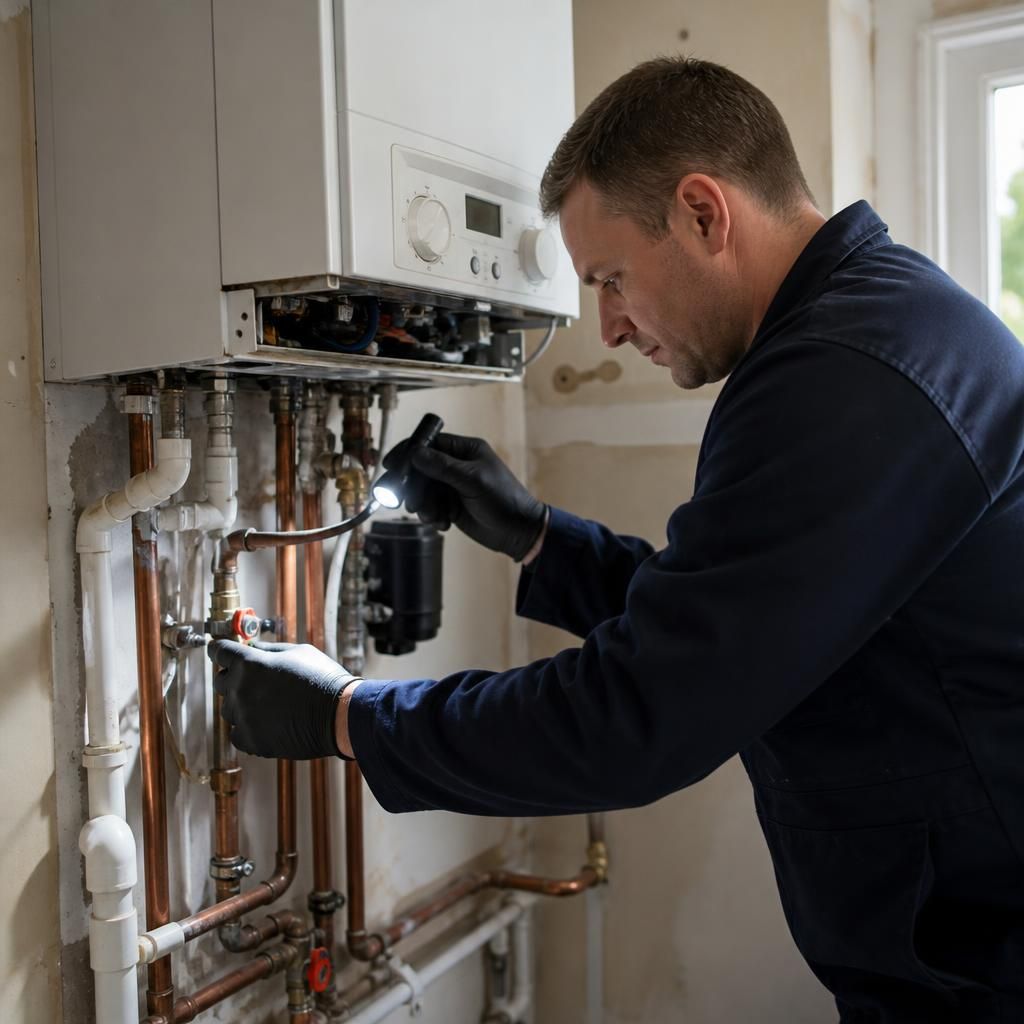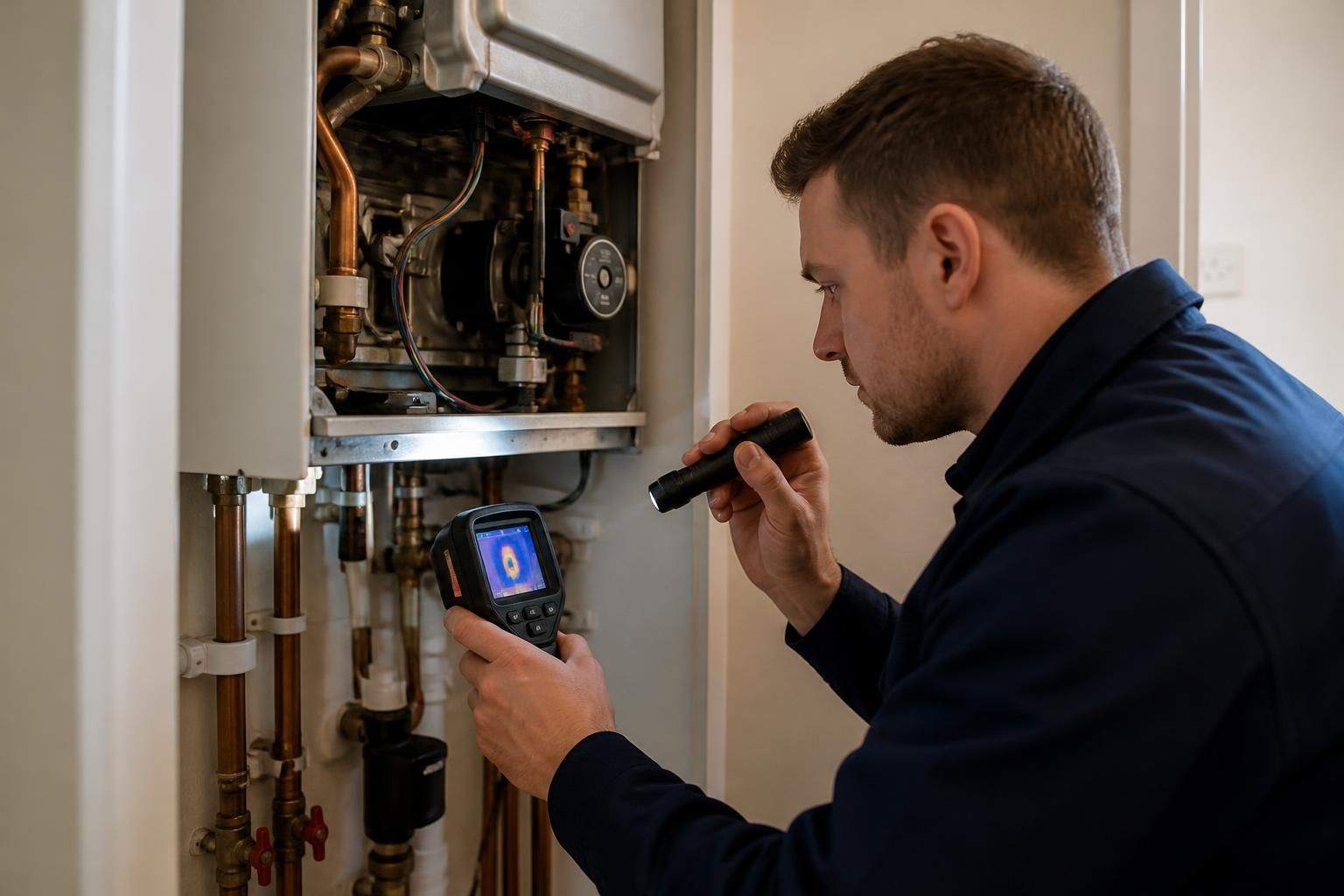
The result of a leak detection visit is a diagnosis, not a replacement recommendation. It can establish where water is escaping and whether the source is within the boiler, a heating component or the surrounding pipework. A replacement becomes a serious consideration only when the findings show that the boiler itself is unsafe, beyond practical repair or unlikely to provide dependable service after repair.
What leak detection can establish
A detailed inspection can help distinguish between several faults that may produce similar symptoms, including:
- a leak from a boiler casing, connection or internal component;
- water escaping from heating pipework, radiators, valves or underfloor pipes;
- a discharge from the pressure relief system;
- a condensate or flue-related issue that has been mistaken for a central-heating leak; and
- water damage caused by another plumbing installation near the boiler.
Methods may include visual checks, pressure testing, examination of accessible components and tracing moisture through concealed areas. The purpose is to identify the route and source of the water rather than assume that the boiler is responsible simply because the symptoms appear nearby.
When the boiler may not need replacing
If the leak comes from an accessible seal, valve, connection or external section of heating pipework, a repair may resolve the problem without changing the boiler. The same applies where the boiler is operating safely and its main components remain in suitable condition. In these circumstances, replacing the appliance could address the wrong fault and leave the actual source of the leak unresolved.
A heating engineer should explain whether the defect is localised, whether the affected part can be replaced and what checks are needed afterwards. The system may also need to be refilled and tested to confirm that pressure remains stable and that no further water loss is occurring.
When the findings may support replacement
Replacement may be appropriate where the leak is from a major internal component and repair is not technically practical or represents poor value compared with installing a suitable new appliance. It may also be considered where inspection identifies repeated failures, extensive corrosion, serious damage or a safety-related defect. A leak alone does not prove any of these conditions; they must be confirmed through a broader assessment of the boiler and system.
The engineer should consider the boiler’s general condition, the availability and suitability of replacement parts, the likely reliability after repair, and whether the existing system is compatible with a replacement appliance. The condition of connected pipework, radiators, controls and the condensate arrangement is relevant because replacing the boiler will not automatically correct defects elsewhere in the system.
Why pressure loss matters
A boiler that repeatedly loses pressure may have a water leak, but pressure loss can also be linked to other faults. The expansion vessel, pressure relief valve, filling arrangement and internal heat-transfer components may all require assessment. Simply topping up the pressure without locating the cause can conceal a continuing problem and may lead to further damage.
Where there is no visible escape, testing can help determine whether water is being lost within concealed pipework or through the appliance. If the boiler is found to be sound but the hidden heating circuit is leaking, the appropriate solution may involve repairing or isolating the affected pipework rather than replacing the boiler.
Safety checks are essential
Water around a boiler should not be treated as a purely cosmetic issue. It can affect electrical parts, damage surrounding surfaces or indicate a fault that requires the appliance to be taken out of service. An engineer should assess the boiler’s safe operation in addition to tracing the water. If there is a suspected gas escape, unusual combustion, scorching, or a carbon monoxide concern, the appliance should not be used until it has been assessed by a suitably qualified professional.
What the assessment should conclude
A useful report or explanation should separate the confirmed source of the leak from the recommendation that follows. It should make clear:
- where the water originated;
- whether the boiler itself is affected;
- whether the fault can be repaired;
- what safety or performance issues were identified; and
- whether repair, further investigation or replacement is the most appropriate option.
This evidence-based approach prevents a boiler replacement being recommended solely because a leak is difficult to see. Leak detection can therefore form an important part of the decision, but the final conclusion depends on the condition, safety and repairability of the boiler and the wider heating system.