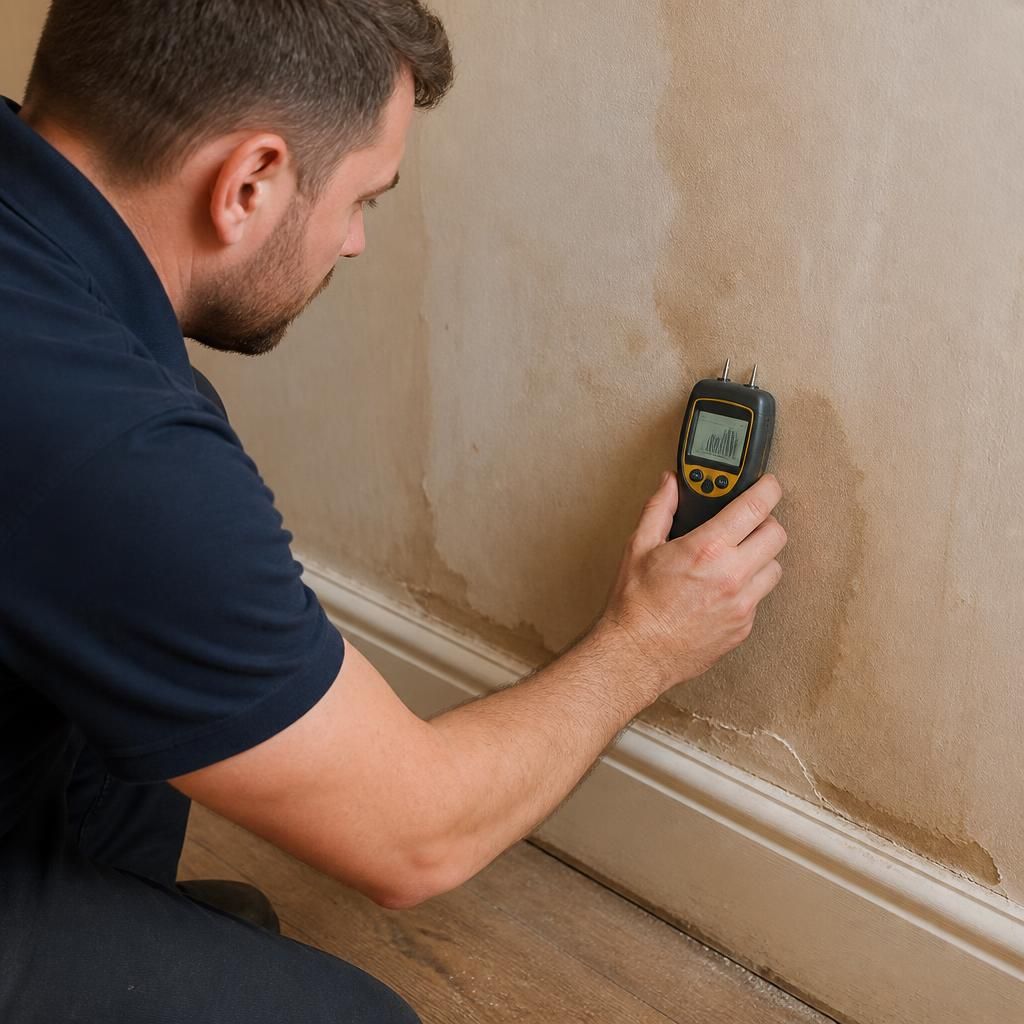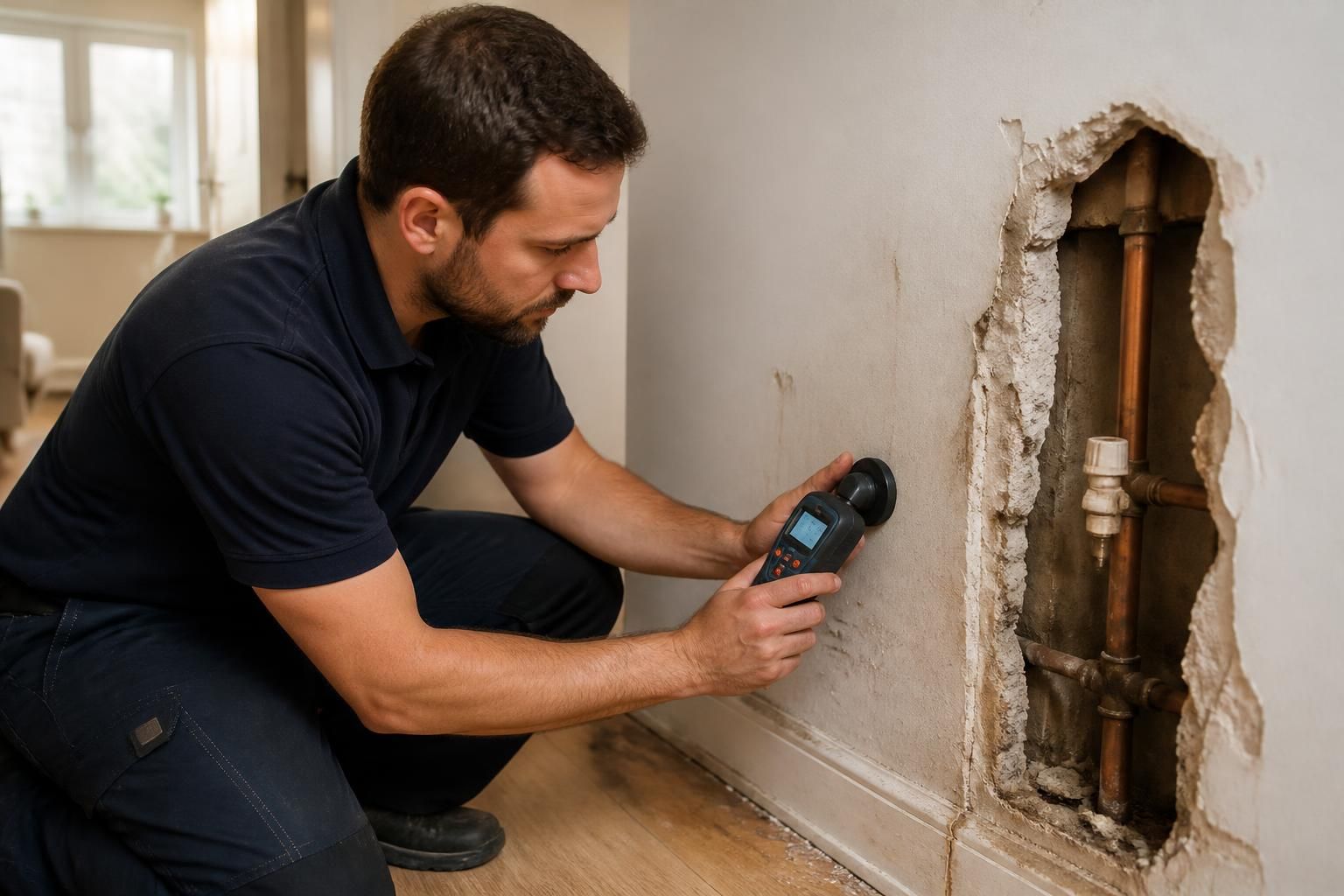
Once a concealed leak has been located, the priority is to control the water, confirm the affected system and plan access to the pipework without causing unnecessary disruption. The next stage may involve isolating the supply, carrying out a targeted repair and checking that the leak has stopped before any damaged surfaces are reinstated.
1. The findings are recorded
The engineer should explain where the leak is believed to be, how it was identified and whether the evidence points to a supply pipe, heating circuit, appliance connection, waste pipe or drainage installation. A clear record helps distinguish the original source from secondary moisture that may have travelled through walls, floors or ceilings.
2. The affected system is made safe
Depending on the source, this can involve isolating the incoming water supply, closing a local service valve, draining part of a heating circuit or switching off equipment connected to the affected pipework. If water has reached electrical fittings, do not touch wet switches or sockets; use the appropriate isolation procedure and arrange an electrical safety check where necessary.
3. Access is planned
Concealed pipework may sit beneath flooring, behind a wall or within a ceiling. The access point should be chosen using the detection findings, the pipe layout and the need to reach sound pipework for the repair. In some cases, a small opening is sufficient. Where the pipe is damaged over a longer section or fittings are difficult to reach, more extensive access may be required.
4. The repair is completed
The appropriate method depends on the pipe material, the position of the fault and the pressure or temperature of the system. It may involve replacing a damaged section, renewing a joint, securing a connection or repairing a failed valve or fitting. A temporary measure may control the leak, but a permanent repair should address the defective component rather than simply conceal the symptoms.
5. The installation is tested
After the repair, the system should be returned to service in a controlled way and checked for further leakage. Relevant tests can include inspecting joints while the system is pressurised, checking heating-system pressure where applicable and confirming that connected outlets, appliances or drainage points operate correctly. Any abnormal pressure loss or continuing moisture should be investigated before the access area is closed.
6. Damage is allowed to dry
Plaster, flooring, insulation, timber and furnishings can retain moisture after the pipe has been repaired. Drying may therefore continue after the active leak has stopped. Ventilation and suitable drying equipment can help, but enclosed areas should not be sealed or redecorated until they are sufficiently dry. Lingering damp, staining, odours or mould growth may indicate retained moisture or an unresolved leak.
7. The repair and reinstatement responsibilities are clarified
Plumbing work and building reinstatement are separate tasks. A plumbing engineer may repair the pipe and make the installation safe, while plastering, flooring, decorating or joinery may need to be arranged separately. Homeowners should keep the findings, photographs, invoices and details of remedial work for their records and, where relevant, for an insurer.
For tenants, the leak and any access requirements should be reported to the landlord or managing agent in line with the tenancy arrangement. The tenant should not arrange significant alterations or close up walls and floors without the appropriate consent, particularly where the concealed pipework forms part of the property’s fixed installation.
If the leak is connected to a boiler or heating system, the findings do not automatically mean that the boiler must be replaced. The decision should take account of the failed component, the condition of the appliance, the safety of the installation and whether a suitable repair remains practical. Where replacement is being considered, the engineer should explain why it is relevant and separate that recommendation from repairs to unrelated pipework.
Ideal Plumbing Services can provide leak detection, plumbing repairs and related advice for homeowners, landlords and tenants in Birmingham and across the West Midlands. The aim is to leave the cause, repair options and any further work clearly understood rather than treating only the visible sign of water damage.