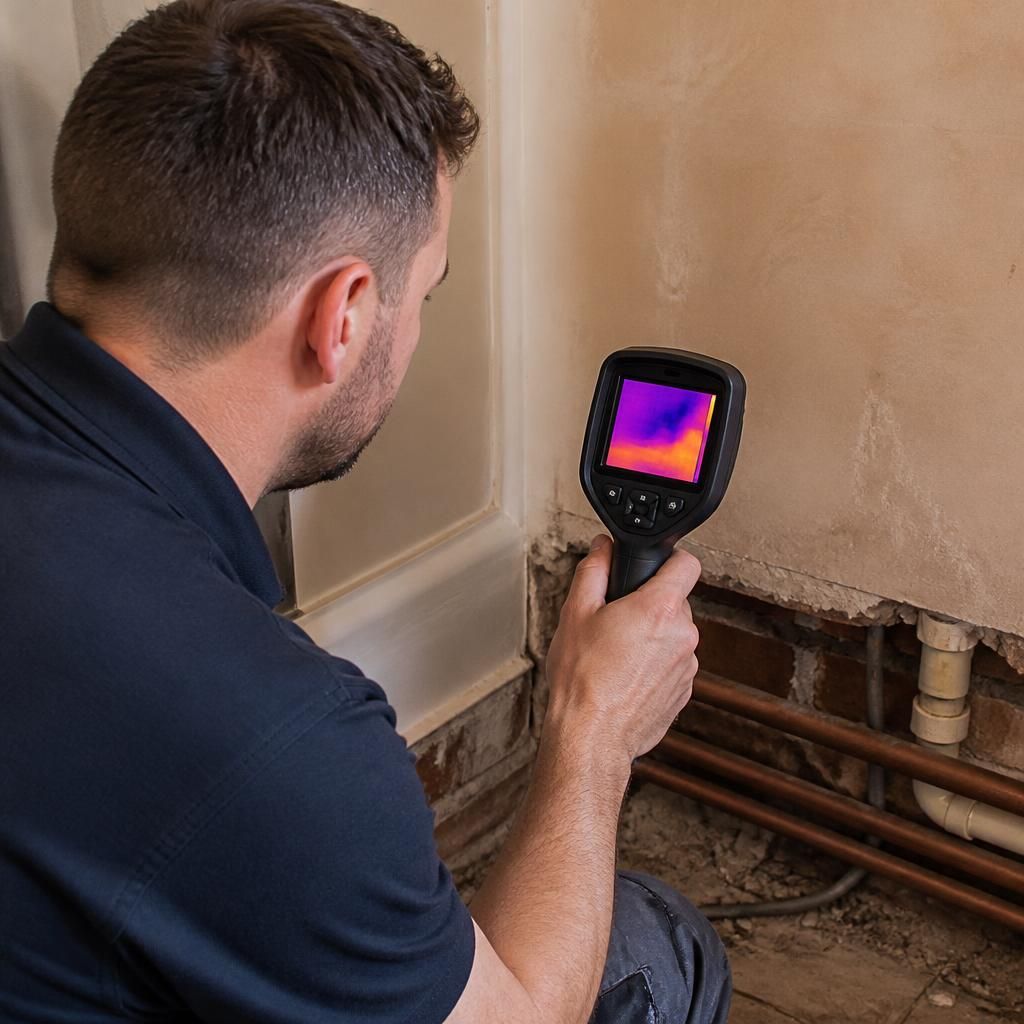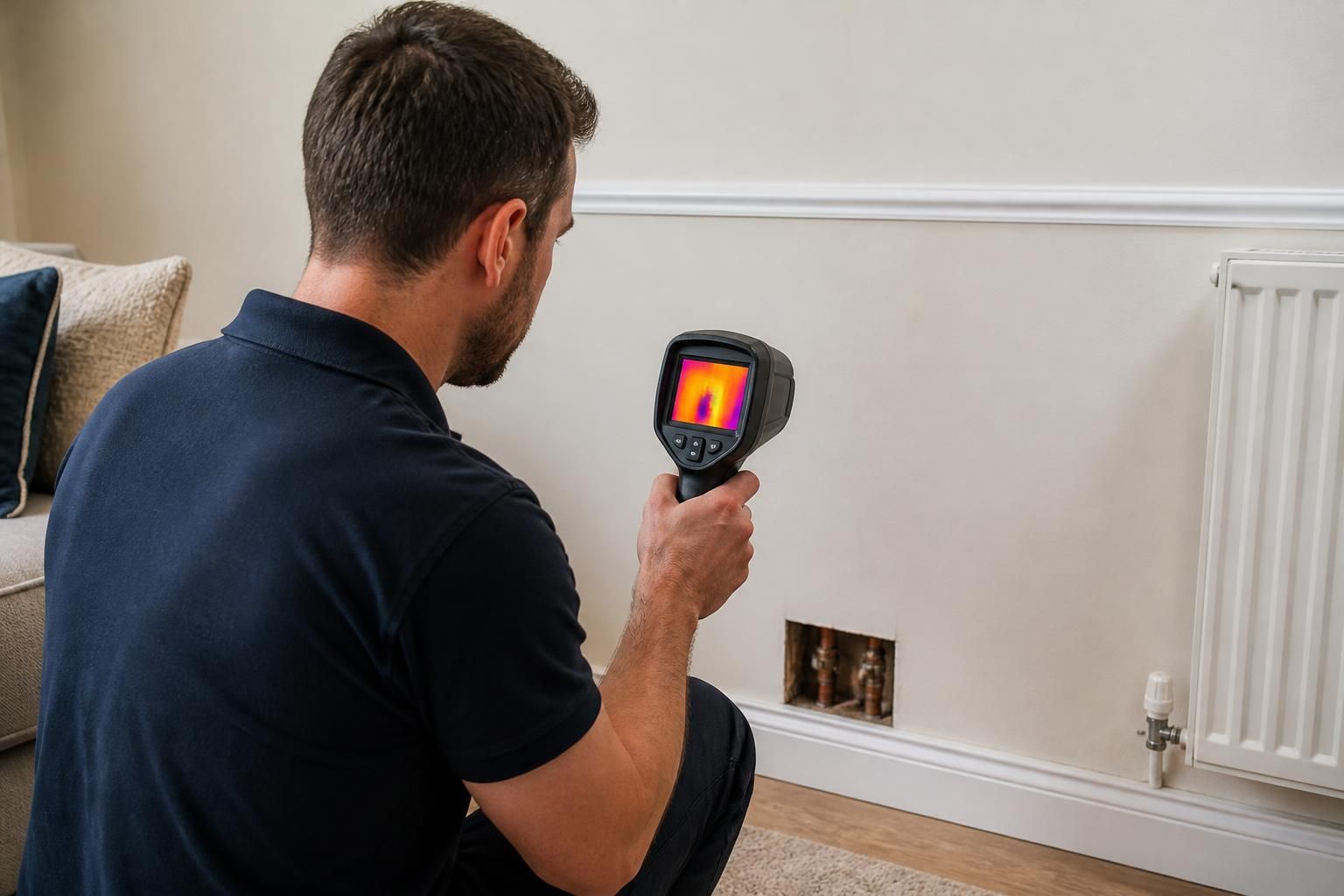
A concealed leak is located through a structured process of confirming unexplained water loss, isolating the affected part of the plumbing or heating system, and tracing the pipe route to the most likely source. The absence of staining, pooling or damp patches does not rule out a leak, because water may travel along a pipe, evaporate within a void or drain away beneath flooring before it becomes visible.
The first stage is to establish whether the problem is an active leak. A plumber may check whether the water meter continues to register use when taps, appliances and toilets are not being used. Where the property has a sealed heating system, repeated loss of boiler pressure can indicate water escaping from the heating circuit, although pressure loss can also have other causes. These checks help distinguish a genuine leak from condensation, rainwater entry, a faulty appliance or a drainage issue.
The plumbing is then divided into sections so each part can be assessed separately. This may involve closing isolation valves, checking individual appliances and examining whether the issue relates to the mains supply, hot-water pipework, central-heating circuit or waste system. Isolating sections prevents assumptions based on the nearest damp area, which may not be close to the actual escape point.
Accessible fittings are inspected before any disruptive work is considered. Typical points include connections beneath sinks, baths and washing machines, radiator valves, toilet cisterns, boiler connections, service valves and joints below kitchen or bathroom units. Pipework passing through floors, walls and cupboards is also considered, particularly where movement, corrosion, previous alterations or a loose connection could have affected a joint.
A concealed leak may produce indirect signs rather than visible damage. Useful clues include:
- a water meter registering use when the property should be using no water;
- boiler pressure that repeatedly falls after the system has been topped up;
- an unexplained increase in water usage;
- musty smells or changes in flooring, skirting boards or wall surfaces;
- localised warmth or coolness that does not match the surrounding area;
- noise from pipework when outlets and appliances are not in use; and
- moisture appearing in a neighbouring room, ceiling or lower floor.
These clues are assessed alongside the building layout. Water can follow joists, insulation, plasterboard or pipe channels, so the first area affected may only show where water has collected rather than where it escaped. For example, a mark below a bathroom may relate to a joint beneath the bath, but it could also result from pipework running beneath the floor or within an adjacent wall.
Once the likely route has been narrowed down, the plumber confirms the finding using the least disruptive inspection suitable for the situation. This can include checking moisture levels at selected points, inspecting an accessible void or lifting a small section of flooring where there is a clear reason to do so. The aim is to avoid removing large areas of plaster, flooring or cabinetry before the leak position has been properly assessed.
Diagnosis also needs to identify the type of water involved. Clean mains water, hot-water pipework, heating-system water and waste water can create different risks and require different repairs. A heating leak, for instance, may be associated with pressure loss and corrosion, while a waste-pipe fault may only appear when a particular sink, bath or appliance is discharged. Finding the route without identifying the system could lead to an unsuitable repair.
After the source has been identified, the findings should be explained before repair work begins. This normally includes the suspected location, the affected pipe or fitting, the access needed, and whether the repair is likely to involve replacing a joint, section of pipe, valve or connected component. If the evidence does not conclusively identify one point, further investigation may be preferable to opening up several areas unnecessarily.
Ideal Plumbing Services provides concealed leak detection and plumbing repairs for homeowners, landlords and tenants in Birmingham and the wider West Midlands. With over 20 years’ experience, its plumbers can assess unexplained water loss and set out the appropriate next step without relying solely on visible damage. Where repair work is recommended, charges should be explained clearly, with no hidden charges.