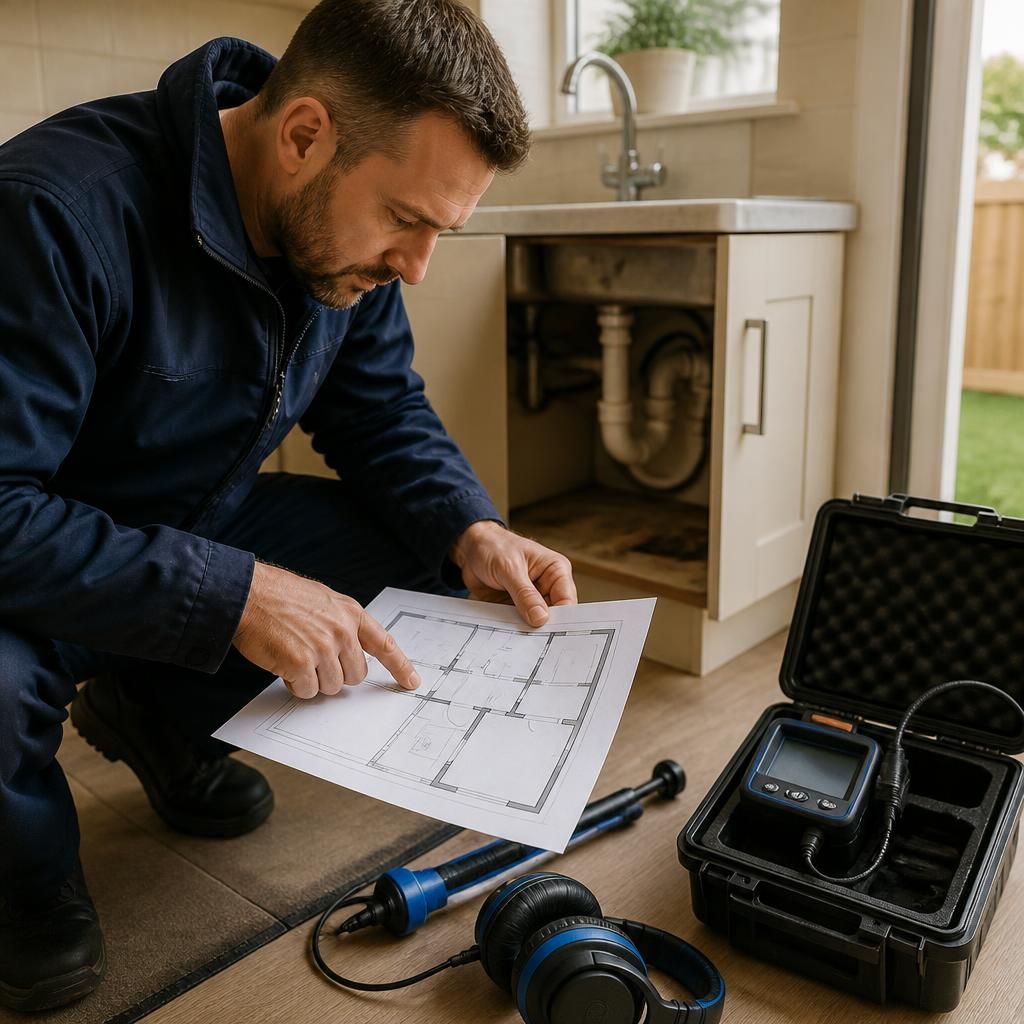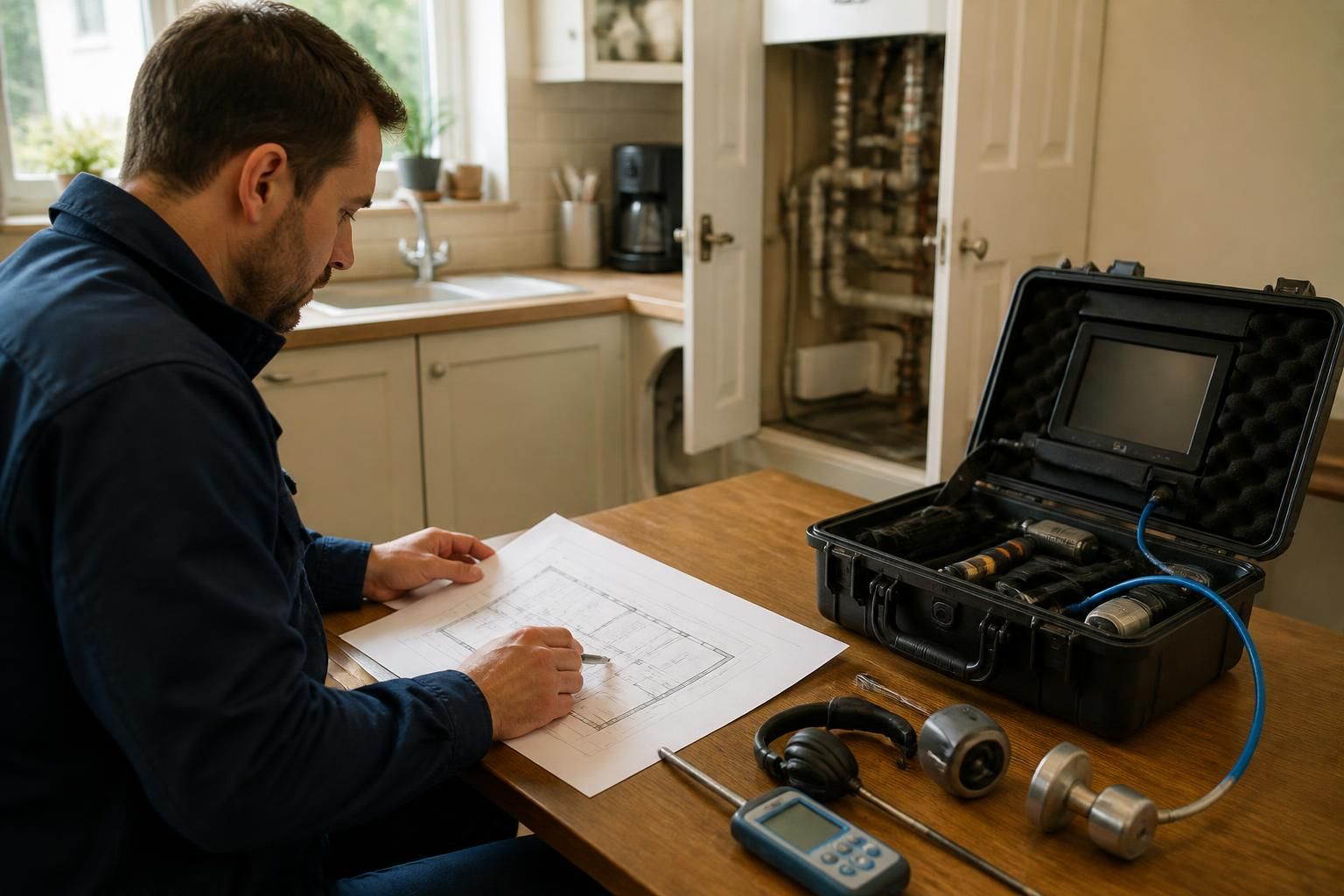
Before a leak detection visit, provide information about the property’s plumbing and heating systems, the conditions under which the problem occurs, and any steps already taken to control it. This helps the engineer assess whether the suspected source is a clean-water pipe, waste pipe, central-heating circuit, appliance connection or another part of the building’s water system.
- Property details: Explain whether the property is a house, flat, maisonette or other type of dwelling, and identify its approximate age if known. Older properties may have altered or concealed pipework that is not shown on modern plans.
- Plumbing and heating arrangement: Mention whether the home has a combi boiler, hot-water cylinder, cold-water storage tank, underfloor heating or other relevant equipment. Tell the engineer which floors, rooms or outbuildings contain bathrooms, kitchens, utility areas, tanks or heating equipment.
- Pattern of the problem: Explain whether the issue occurs continuously or only when a tap, toilet, washing machine, shower, heating system or other appliance is used. If it changes when the heating is switched on or when water is drawn elsewhere, include that detail.
- Changes in system behaviour: Report repeated boiler pressure loss, the need to refill a heating system, unusual meter readings, reduced flow, intermittent hot water or a change in the operation of a pump or tank. These details can help distinguish a heating-circuit problem from a mains-water leak.
- Water identification: If it is safe to do so, note whether the water appears clean, dirty, greasy or has an unusual smell. Wastewater and heating-system water can point towards different parts of the installation, although the source should not be assumed from appearance alone.
- Isolation and safety measures: State whether the stopcock, appliance valve or heating system has been turned off, and whether the affected area is near electrical sockets, consumer units or electrical equipment. Do not handle electrical equipment in a wet area; explain the risk when arranging the visit instead.
- Property documents: If available, provide plumbing plans, heating diagrams, building plans, previous leak reports or details from an insurance claim. These may show pipe routes, extensions, converted rooms or earlier alterations that are difficult to identify from the visible layout.
- Ownership or permission: Tenants should confirm that the landlord or managing agent knows about the visit and provide the correct contact details for approving investigative work. Landlords should share any relevant information about the building’s construction, previous alterations and neighbouring properties.
It is also useful to explain what has already been ruled out. For example, say whether individual appliances have been isolated, whether water use has been stopped, or whether a toilet, tap or heating component has been checked by someone on site. This prevents the same basic checks being repeated and gives the engineer a clearer starting point.
Keep a record of when the issue is most noticeable and whether it follows particular activities, such as showering, filling a bath, running a washing machine or using the heating. A simple written timeline can be more useful than a general description because concealed leaks may appear some distance from the failed pipe.
Ideal Plumbing Services can use this information when assessing a residential leak detection enquiry in Birmingham and across the West Midlands. Supplying accurate details does not replace an inspection, but it can help determine the appropriate diagnostic approach and identify any safety or access considerations before work begins.