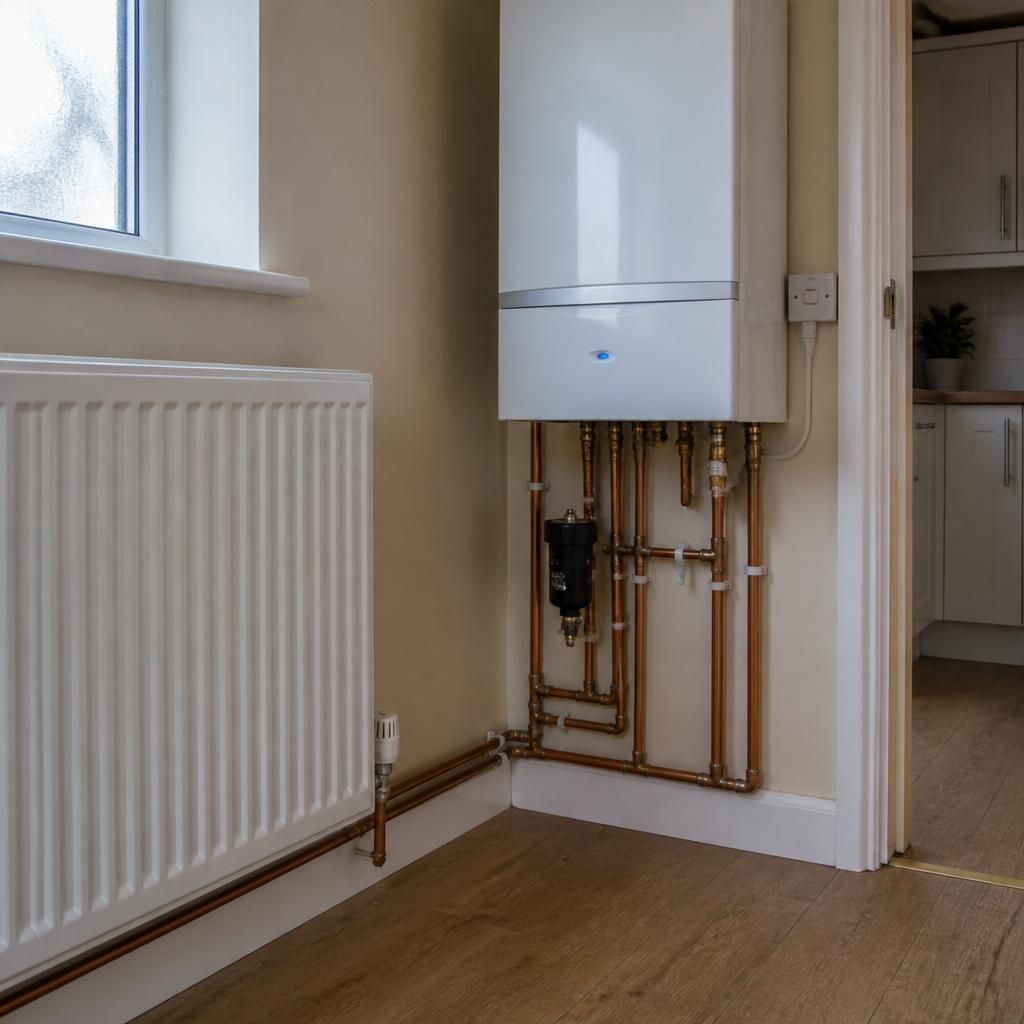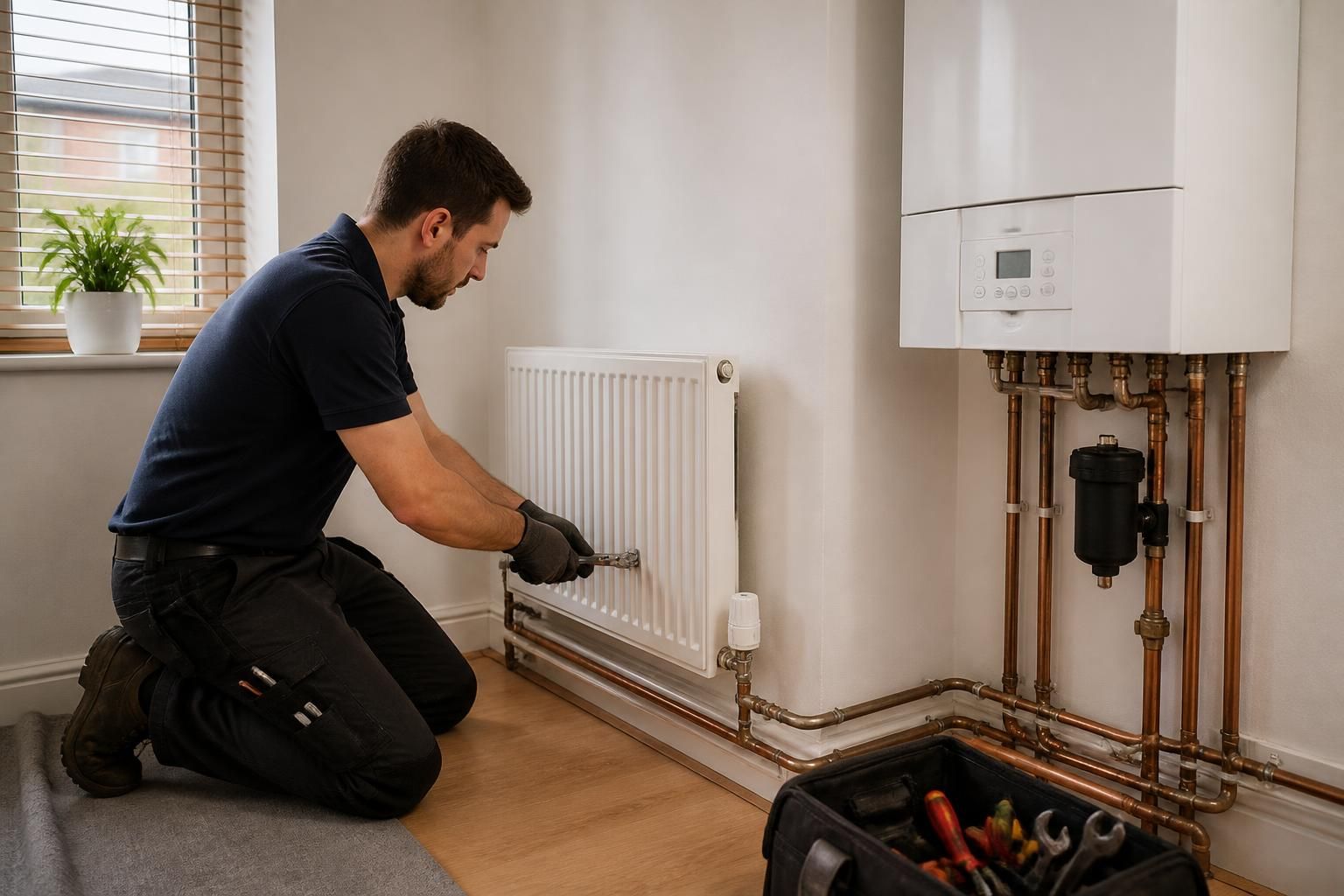
The deciding factor is whether the existing heating system can deliver the required heat safely and efficiently with the replacement boiler. Radiators do not normally need to match the boiler brand or model, but their output, condition, connections and the way the system is controlled must be considered as part of the replacement design.
A modern condensing boiler is generally designed to operate efficiently at lower return-water temperatures. Older heating systems may have been designed around higher flow temperatures, so a radiator that previously heated a room adequately may provide less heat when the system is operated at a lower temperature. This does not automatically mean replacement is necessary. The installer can assess the heat requirement of each room and determine whether the existing radiator has sufficient output at the intended operating temperature.
The assessment should consider:
- the size and heat-loss characteristics of each room, including external walls, windows and insulation;
- the radiator's type, dimensions and rated output;
- whether the radiator heats evenly across its surface;
- the condition of the radiator, valves and visible pipework;
- the pipe diameter and layout, particularly where older microbore pipework is installed;
- whether the system is open-vented, sealed, combi-based or connected to a hot-water cylinder; and
- whether the existing controls can regulate the new boiler effectively.
Radiator condition is important because a replacement boiler cannot compensate for restricted circulation or damaged components. Cold areas on a radiator, persistent noise, repeated pressure issues or poor heat distribution can indicate trapped air, sludge, balancing problems, a sticking valve or a circulation fault. Surface corrosion and leaks may also justify replacement independently of the boiler work.
Water quality and system cleanliness should be checked before the new boiler is connected. Sludge and magnetite can collect in radiators, valves, pumps and heat exchangers, reducing circulation and potentially affecting the new appliance. Depending on the system's condition, the recommended work may include cleaning, flushing, fitting a suitable system filter or replacing contaminated components. Cleaning is not a substitute for replacing a radiator that is leaking or structurally deteriorated.
Radiator valves and system balancing are also relevant. Thermostatic radiator valves may need servicing or replacement if they do not respond correctly, while lockshield valves are used to balance flow between radiators. Correct balancing helps prevent some rooms becoming excessively hot while others remain cool. New or upgraded controls may be recommended so that the boiler's output and flow temperature are managed in a way that suits the existing emitters.
There are situations where replacing one or more radiators is sensible. This may apply where a room has been extended, insulation has changed, the previous boiler was oversized, or the existing radiator is too small for efficient operation at the planned temperature. A larger or differently configured radiator may be needed to maintain comfort without relying on unnecessarily high flow temperatures. Replacement may also be practical when a radiator has seized valves, internal corrosion, repeated leaks or connections that no longer suit the proposed pipework.
It is not usually necessary to replace every radiator simply because the boiler is being changed. A room-by-room assessment provides a more proportionate approach: suitable radiators can remain, while defective or under-sized units can be identified for targeted replacement. The installer should also confirm that the boiler's output is appropriate for the property's heating demand rather than selecting a larger appliance solely because existing radiators perform poorly.
Before work begins, ask for the proposed boiler output, intended operating temperatures, condition of the existing radiators, any recommended cleaning and the reason for each suggested replacement. A written assessment should distinguish essential safety or compatibility work from optional improvements, including whether the hot-water cylinder, pumps, controls or pipework form part of the wider system. This makes it clearer which radiators can remain and what, if anything, must be changed for the completed heating system to operate correctly.