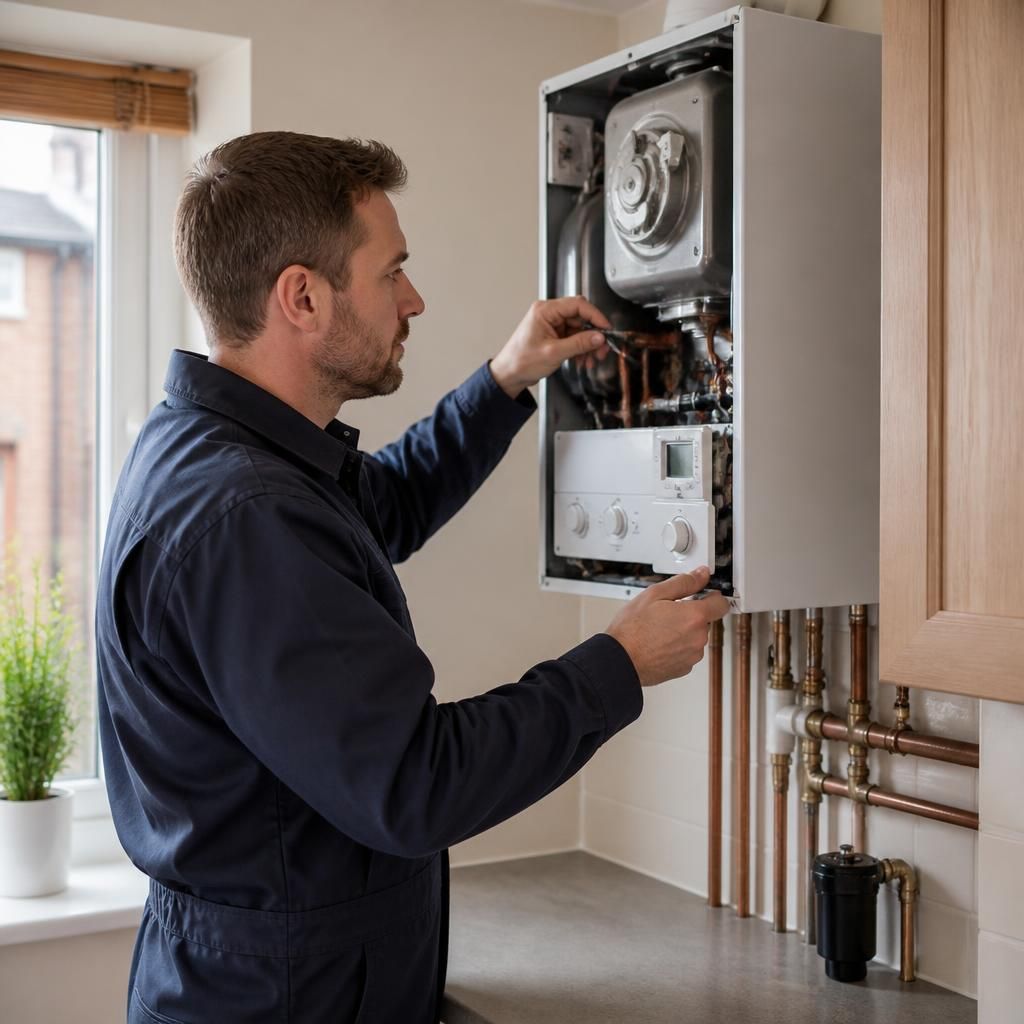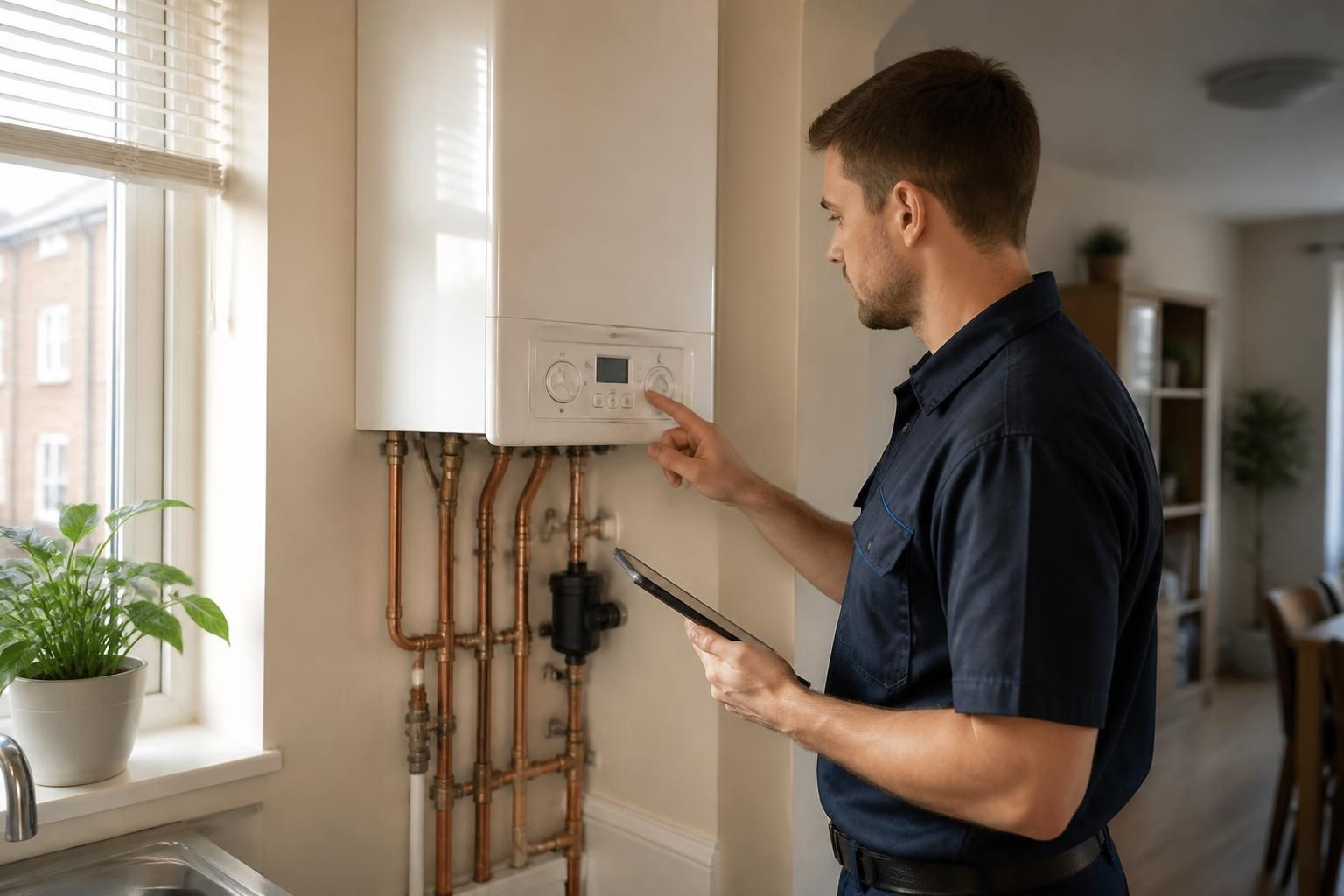
Domestic boiler replacement can be a suitable investment for a rented property, but the decision should be based on the boiler’s condition, the home’s heating demand, safety requirements and the landlord’s responsibilities. A professional assessment should establish whether replacement is necessary and what type of system will provide appropriate heating and hot water for the property.
When replacement may be appropriate
Replacing the boiler may be more suitable than repeated repairs when the appliance is unsafe, regularly breaking down, difficult to source parts for, or no longer capable of heating the property properly. Age alone does not always justify replacement, but an older boiler with recurring faults can create uncertainty for both the landlord and tenant.
Replacement may also be considered where:
- the boiler has a poor service history or unresolved defects;
- heating or hot water is inconsistent across the property;
- the existing appliance is unsuitable for the number of occupants or bathrooms;
- the flue, controls, condensate arrangement or ventilation requires substantial remedial work;
- the property is being refurbished or its heating requirements have changed; or
- the landlord wants to improve the system’s controls and general efficiency.
A repair may remain the better option where the fault is minor, the appliance is in good condition and the expected repair is proportionate. The decision should take account of the likely cost of continued maintenance, not just the price of the immediate repair.
Landlord safety and compliance responsibilities
Landlords must keep fixed heating installations in safe working order and arrange the inspections and records required for the type of appliance installed. For a gas boiler, this includes using an appropriately qualified gas engineer for installation, servicing and safety checks. A replacement should be commissioned correctly, with the relevant documentation retained for the property’s records.
The installation may also need to comply with current building control, ventilation, flue, condensate and carbon monoxide safety requirements. If the replacement changes the heating layout, electrical controls or associated pipework, further certification or notification may be relevant. The installer should explain which documents apply and provide them when the work is complete.
Energy performance requirements can also affect the decision. A more efficient boiler or improved heating controls may support the property’s energy performance, but replacing the boiler does not automatically resolve every requirement applying to a rented home. Landlords should consider the property’s wider insulation, windows, controls and heating design rather than selecting an appliance in isolation.
Choosing the right replacement system
The correct boiler depends on the property’s size, hot water demand, number of bathrooms, available space, incoming water supply and existing system design. A combination boiler may be suitable for some smaller homes, while a system or regular boiler with a hot water cylinder may be more appropriate where several occupants need hot water at the same time.
The assessment should consider whether the existing radiators, pipework, controls and flue can be retained. Reusing suitable components may reduce the scope of work, but components should not be kept simply to avoid necessary improvements. In some cases, a new boiler will perform poorly if restrictions in the pipework, inadequate controls or unsuitable radiators are left unaddressed.
Landlords should also think about access for future servicing. The boiler should be positioned where it can be safely inspected and maintained, and any cupboards or enclosures should allow the required clearances. The tenant’s use of the home should not be unnecessarily restricted by the installation.
Costs and responsibilities in a rented property
The landlord will normally arrange and fund a replacement that forms part of the property’s fixed heating system. A tenant should not be expected to choose or install a boiler independently unless this is specifically covered by the tenancy arrangements and managed by the landlord. The tenancy agreement should be checked where responsibility for appliances, access or improvements is unclear.
The quoted work may include more than the boiler itself. Potential items include new controls, system cleansing, alterations to pipework, flue work, condensate drainage, ventilation improvements, removal of the old appliance, commissioning and certification. A written quotation should identify what is included, whether remedial work has been allowed for and what assumptions have been made about the existing installation.
Landlords should retain the quotation, installation records, appliance information, warranties and certificates. These records help demonstrate that the work was properly completed and provide useful information for future servicing or repairs. They should be passed on to a new managing agent or owner if responsibility for the property changes.
Planning the work with the tenant
Boiler replacement requires access to the property and may involve work in more than one room. The landlord should agree suitable arrangements with the tenant, provide the notice required by the tenancy and explain the expected scope of the visit. Where possible, the installer should identify in advance whether flooring, cupboards, boxing or decorations may need to be disturbed.
After installation, the tenant should receive basic operating guidance, including how to use the controls, adjust the temperature and identify a fault. The tenant should also know who to contact if the heating or hot water does not operate correctly. Clear instructions can reduce avoidable call-outs and help the system operate as intended.
Questions to ask before approving replacement
- What fault or limitation makes replacement preferable to repair?
- Is the proposed boiler correctly sized for the property’s heating and hot water demand?
- Can the existing radiators, pipework and controls remain suitable?
- Will the flue, ventilation or condensate route need alteration?
- What safety checks, certificates and commissioning records will be provided?
- What access will be needed, and what parts of the property may be affected?
- What maintenance is recommended after installation?
For landlords in Birmingham and the wider West Midlands, a plumbing and heating professional can assess the existing installation and explain whether repair, partial improvement or full domestic boiler replacement is the most appropriate option. The assessment should leave the landlord with a clear specification, transparent cost information and the documentation needed to manage the rented property responsibly.