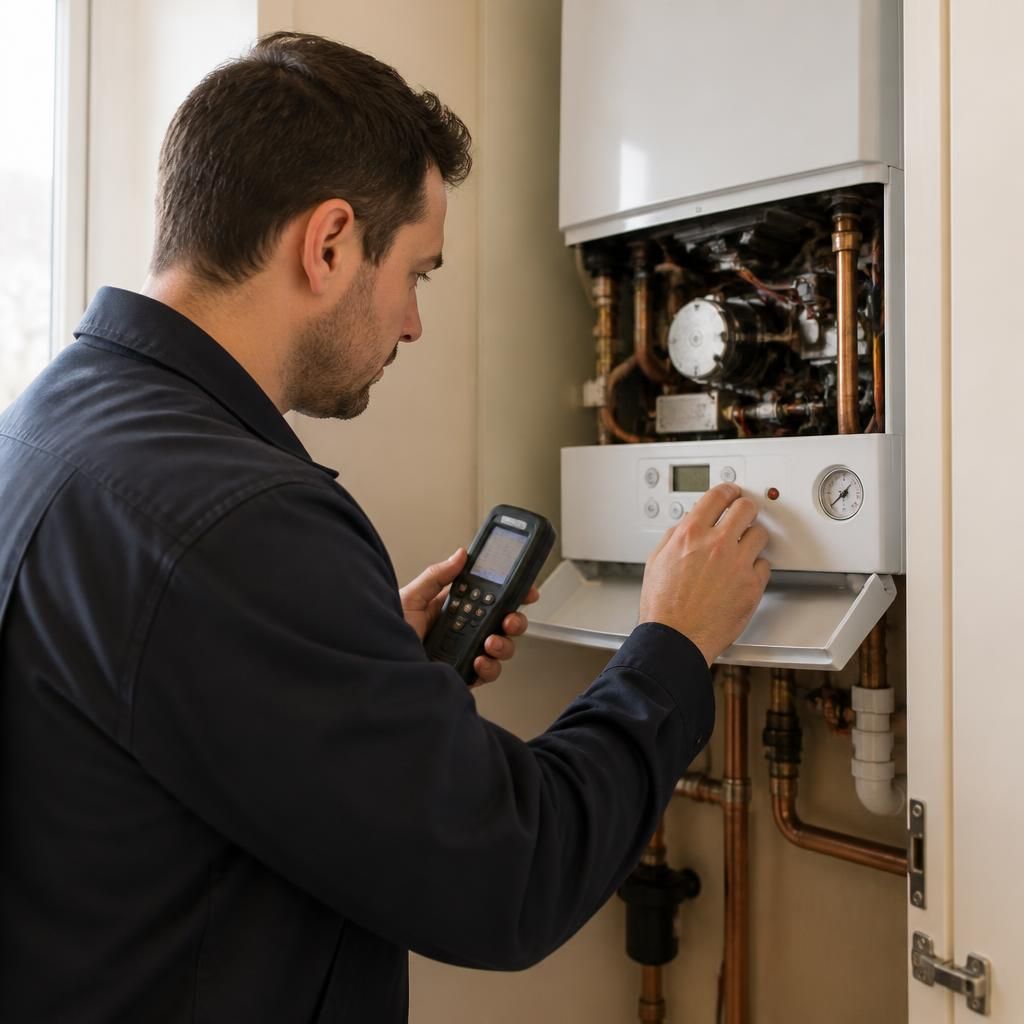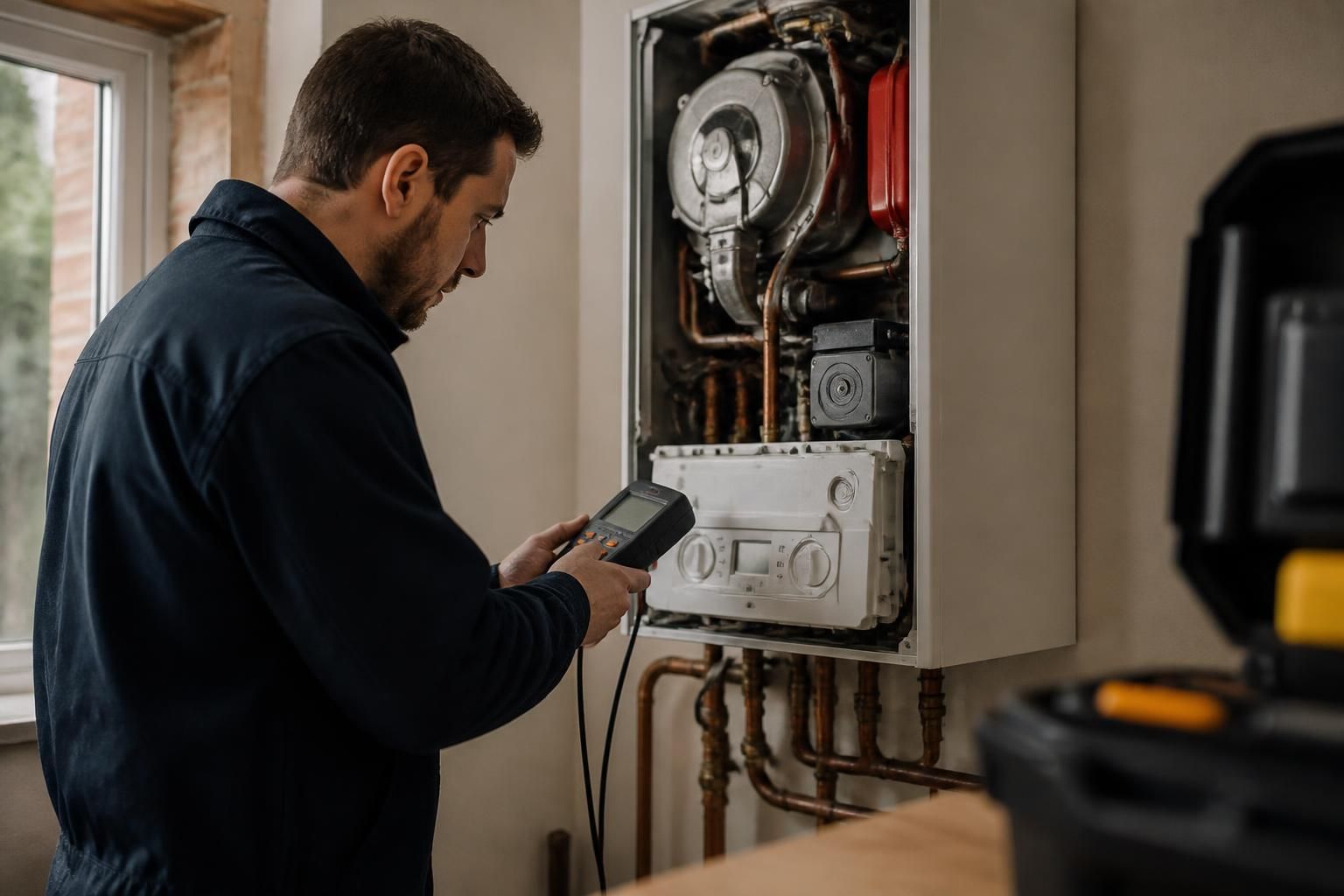
An emergency boiler replacement may be necessary when the appliance can no longer provide dependable heating or hot water, a qualified heating professional identifies a major internal failure, or a suitable repair is no longer practical. A loss of service alone does not automatically mean the boiler must be replaced, so the decision should follow a safety inspection and diagnostic assessment.
Several performance changes can indicate that the boiler is approaching the point where replacement is more appropriate than repair:
- Heating or hot water cannot be restored: If the boiler has power and the controls are set correctly but it still cannot produce usable heat, the fault may involve a major component rather than a simple control issue.
- Inconsistent output: Radiators that remain cool, hot water that changes temperature unexpectedly, or a boiler that starts and stops without maintaining the required temperature can indicate problems with the heat exchanger, pump, diverter valve, thermostat or control system.
- Persistent fault codes or lockouts: A displayed code is an indication of a fault, not a diagnosis. If the same fault returns after the appropriate basic checks, further resetting may conceal the underlying problem and professional testing is needed.
- Serious component failure: Damage to key parts such as the heat exchanger, burner assembly, fan, main control board or gas valve can make replacement more sensible, particularly where several related components are worn.
- Parts or technical support are no longer available: An older or discontinued model may be difficult to repair if compatible parts cannot be sourced. Installing a suitable replacement can provide a more dependable long-term solution than waiting for uncertain repairs.
- Repair is disproportionate to the boiler's condition: A repair may not be the best option where the appliance has several age-related defects, has already required substantial work, or the cost and likely reliability of the repair compare poorly with replacement.
There are also signs that the problem may extend beyond the boiler itself. Poor circulation, air in the heating system, blocked components, incorrect controls or a fault with the electrical supply can all affect performance. For this reason, replacing the appliance without checking the wider system could leave the original problem unresolved. A heating professional should assess the boiler, controls, pipework, radiators and flue arrangements before recommending a replacement.
An assessment should establish:
- the exact fault and whether it affects a safety-critical or essential component;
- whether the boiler can be isolated safely while a decision is made;
- whether a repair is technically feasible and likely to remain reliable;
- whether replacement parts are available and suitable;
- the type and output of replacement boiler required for the property;
- whether the existing controls, condensate arrangements, flue and heating system need modification.
If the boiler has stopped working completely, do not dismantle the casing or attempt to bypass a fault. Follow the manufacturer's basic operating guidance only where it is safe to do so, then arrange an inspection by a qualified heating professional. If there is any immediate concern about appliance safety, leave it switched off and follow appropriate gas-safety advice.
Ideal Plumbing Services can assess boiler faults and explain whether repair or emergency replacement is the more suitable route for a home in Birmingham or elsewhere in the West Midlands. The aim should be a clear diagnosis, an appropriate replacement specification and work that complies with current safety requirements, rather than replacing an appliance simply because it has developed a single fault.