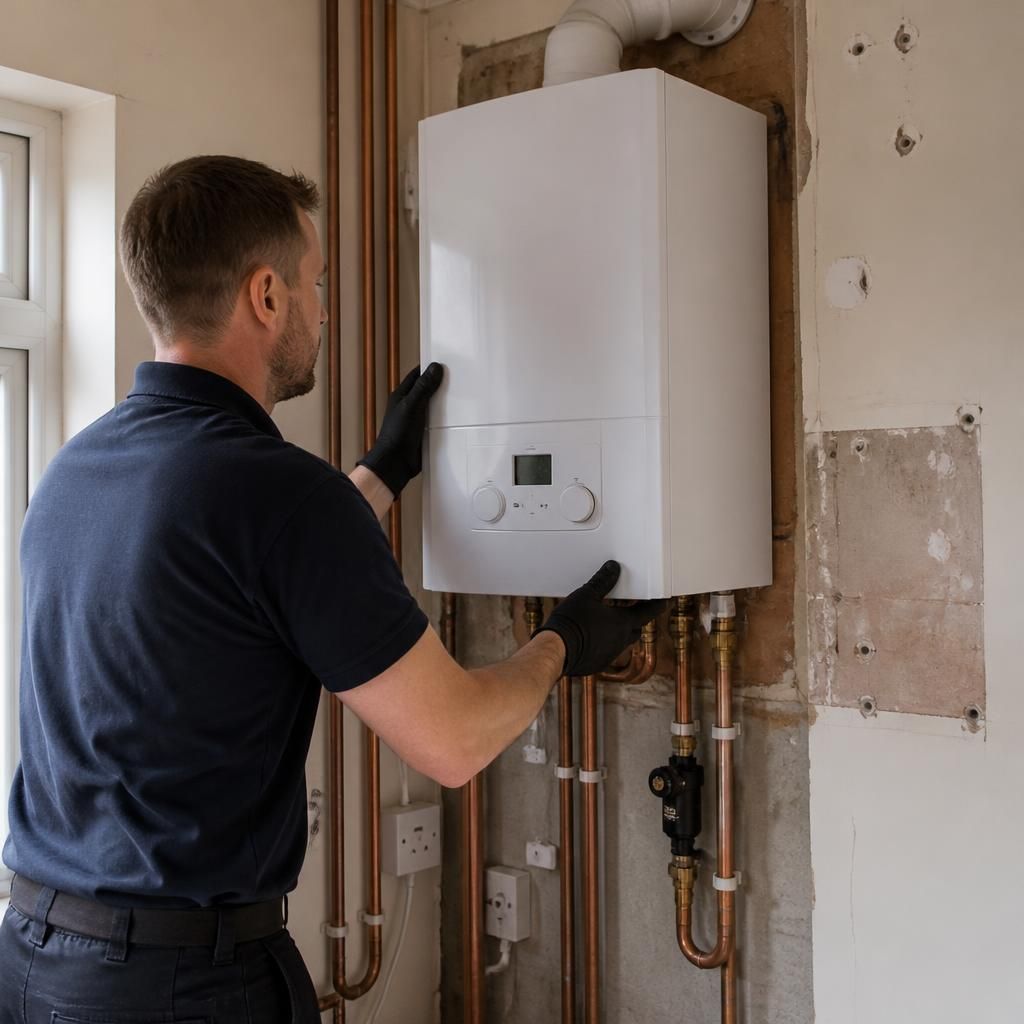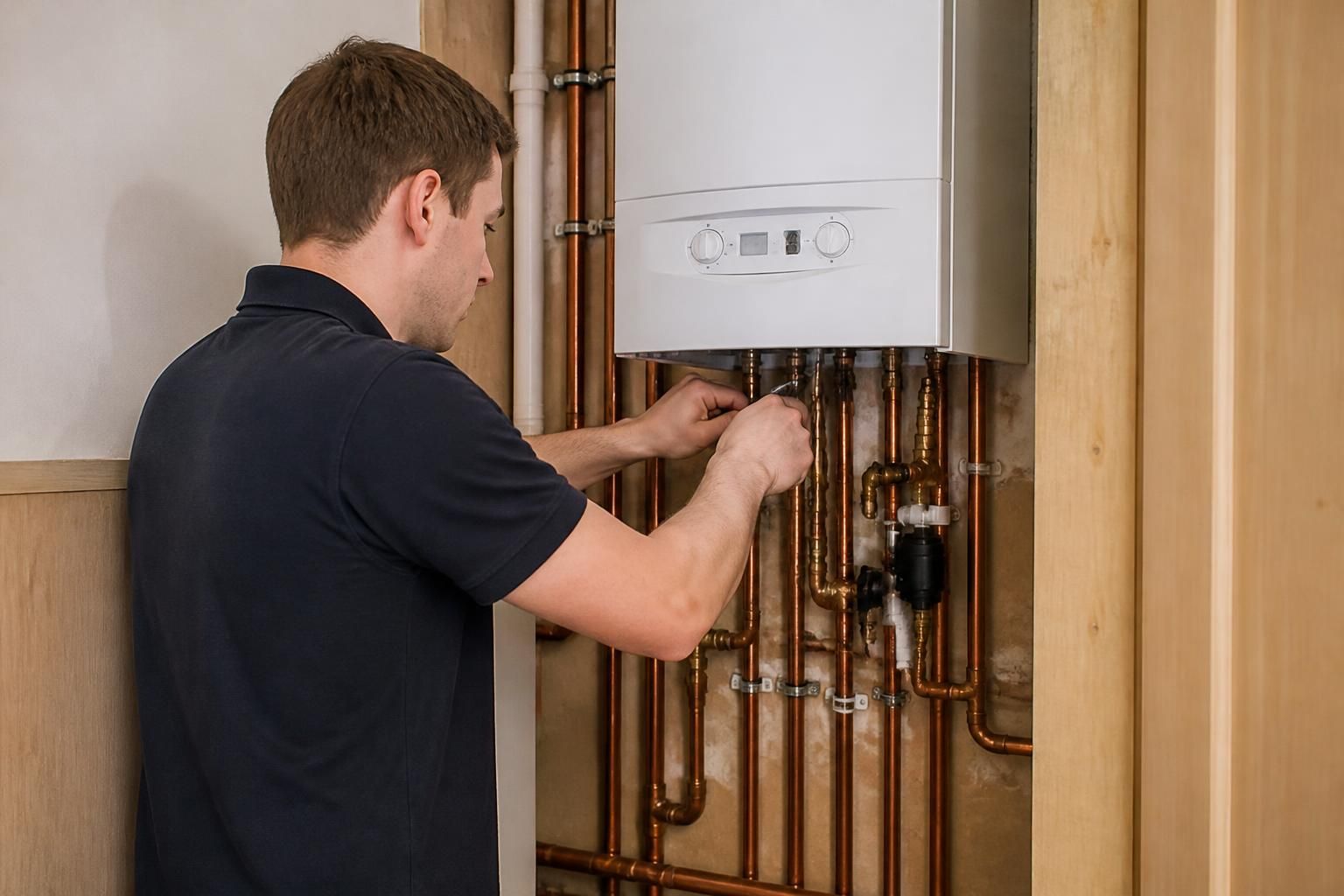
Emergency boiler replacement can disrupt parts of your home temporarily, but it does not usually mean that every room becomes unusable. The main effects are restricted access to the boiler and associated pipework, interruption to heating and hot water, and noise or dust while the installation is carried out. The level of disruption depends on the installation layout, the condition of the system and whether the replacement can use the existing connections.
What happens during the replacement? Before work starts, the engineer should confirm the proposed boiler position, identify the isolation points and explain which areas need to remain accessible. The existing appliance is isolated and removed, then the new boiler and any required components are connected. Pipework, controls, condensate arrangements and the flue may need attention, depending on the system and the condition of the original installation.
The heating and hot-water system may need to be drained during the work. This means radiators and pipework can be temporarily unavailable, and taps or showers connected to the boiler may not provide hot water until the system has been refilled and tested. If the boiler is in a kitchen, utility room, cupboard or loft space, that area will normally remain in use as a work zone until installation and checks are complete.
Which parts of the home may be affected?
- Boiler access: The engineer needs clear working space around the appliance, nearby pipework and controls. Cupboard contents, stored items or furniture may need to be moved.
- Flooring and surfaces: Removing an old appliance and working on pipework can involve water, debris or dust. Suitable protection should be used where practical, although the installation area still needs to be kept clear.
- Noise: Drilling, cutting pipework, removing fixings and testing the system can create intermittent noise.
- Water and heating: The system may be unavailable while it is isolated, drained, refilled and checked. Other household water supplies may also need to be controlled briefly during specific stages.
- External access: If the flue or condensate pipe requires work, access to an outside wall, garden, side passage or another part of the property may be necessary.
What can make the work more disruptive? Replacement is more involved when the new boiler cannot occupy the same position, when the existing pipework is unsuitable, or when concealed components need to be reached. Corrosion, leaks, poor previous alterations or problems with the flue can also require additional work. An engineer should explain any newly identified issue and its effect on the installation before carrying out work beyond the agreed scope.
System type also matters. Replacing a boiler connected to a straightforward arrangement may require less alteration than changing a system with separate tanks, older controls or complicated pipework. Moving the appliance to a different room or changing the layout of the heating system generally creates more work because additional connections and access points may be needed.
How to prepare the property
- Clear items from around the boiler, controls, cylinder and visible pipework.
- Move fragile belongings and furniture away from the route to the work area.
- Ensure the engineer can reach relevant radiators, taps, electrical controls and external flue or condensate points.
- Tell the engineer about known leaks, unusual smells, previous repairs or areas that are difficult to access.
- Keep children and pets away from tools, open work areas and isolated equipment.
- Plan for the temporary loss of heating or hot water during the installation.
If the boiler is located in a rented property, the landlord or managing agent may need to approve the proposed replacement, while the tenant can help by providing access and reporting any existing damage or access restrictions. Clear communication about responsibility for decisions can prevent avoidable delays and further disruption.
What should happen before the installation is considered complete? The engineer should check for leaks, confirm that the boiler and controls operate correctly, assess the heating and hot-water performance, and verify that the installation is safe and suitable for use. The work area should be left in a reasonable condition, with the user shown how to operate the controls and informed of any maintenance requirements. Any remaining limitations, follow-up work or documents relating to the installation should be explained clearly.
To reduce disruption, ask for the work sequence to be explained before removal begins, confirm which rooms require access and check whether extra repairs have been identified. A professional replacement should focus on safe installation and proper testing rather than simply restoring the appliance as quickly as possible. Ideal Plumbing Services provides boiler replacement support for homeowners, landlords and tenants across Birmingham and the West Midlands, with the assessment tailored to the property and existing system.