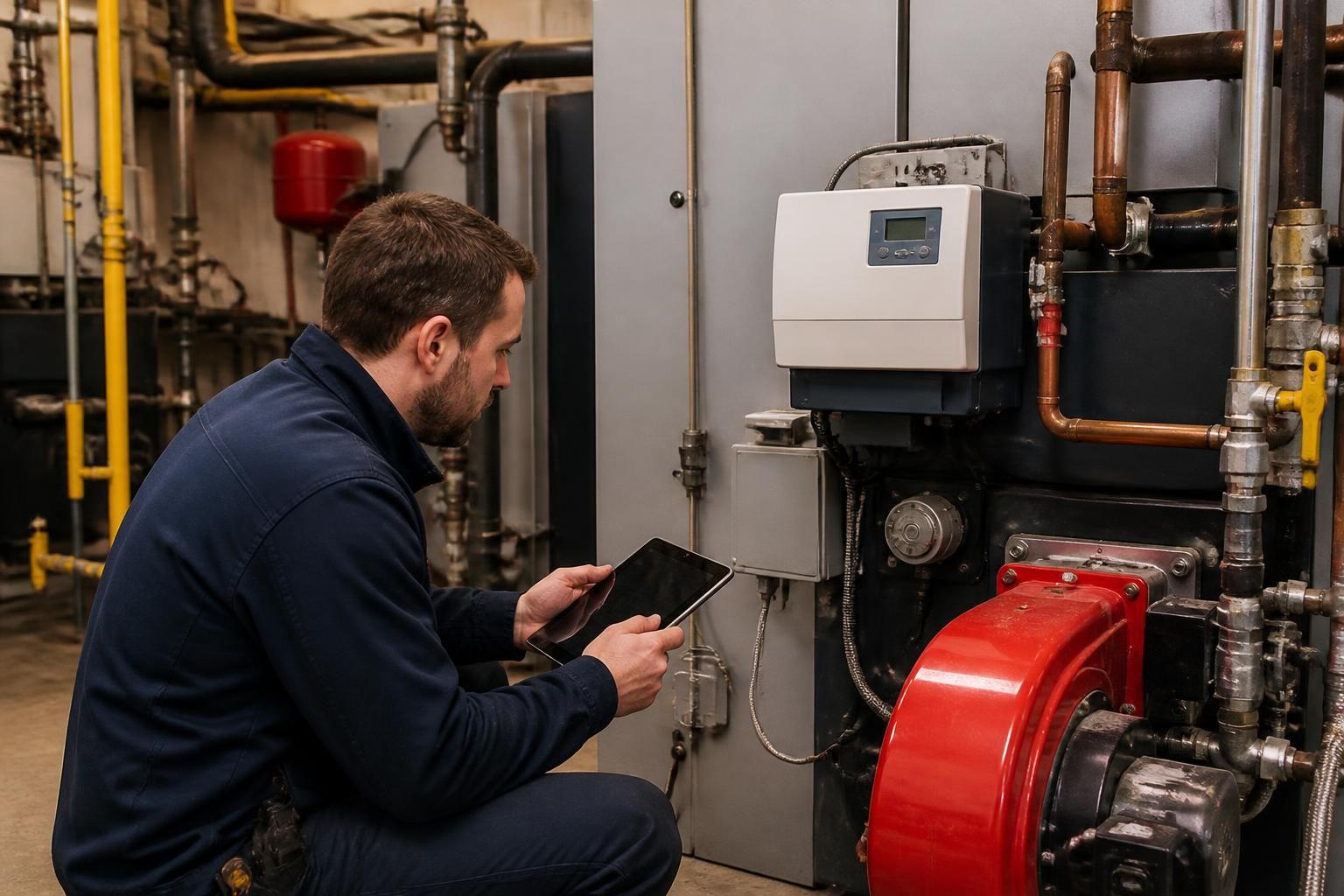
There is no single servicing interval that suits every commercial boiler. The appropriate schedule is determined by the manufacturer’s instructions, the boiler’s age and condition, the type of system, the premises’ heating requirements and how intensively the equipment is used. A servicing plan should also reflect applicable safety duties, insurance conditions and the findings recorded during previous inspections.
For many commercial properties, a yearly service provides a practical baseline. However, an annual appointment may not be sufficient where a boiler operates for long periods, supplies a high-demand building or forms part of a larger heating installation. Boilers serving hotels, care settings, schools, restaurants, offices and industrial premises can have very different operating patterns, so the interval should be assessed rather than assumed.
- Usage: Equipment that runs for extended periods or experiences frequent demand may need closer monitoring than a boiler used occasionally.
- System complexity: Multiple boilers, cascade arrangements, pumps, controls, pressurised systems and associated plant create more components that require inspection and maintenance.
- Age and condition: Older equipment or a boiler with a history of faults may require more regular checks, particularly if previous servicing identified wear or deteriorating components.
- Manufacturer instructions: The required maintenance schedule should be checked against the installation and operating documentation. These instructions may specify inspections that go beyond a basic service.
- Premises risk: The consequences of a heating failure or unsafe operation can be more serious in some buildings, making a documented maintenance programme especially important.
A commercial boiler service is more than a visual inspection. A suitably qualified engineer should assess the appliance and relevant controls, examine the flue and ventilation arrangements, check combustion and safety operation, look for signs of leakage or corrosion, and inspect accessible components for wear. The precise checks depend on the boiler type and installation. Any defects, unsafe conditions or recommended repairs should be explained and recorded.
Servicing should be arranged before a known period of heavy use where possible, but it should not be treated as a substitute for responding to warning signs. Unusual noises, repeated ignition problems, fluctuating pressure, unexplained shutdowns, changes in heating performance or signs of water or gas leakage warrant professional investigation rather than waiting for the next planned visit.
It is also sensible to review the service interval after significant changes. A new boiler, alteration to the heating system, change of building use or increase in occupancy can affect the workload placed on the equipment. Repairs and replacement parts may also prompt a follow-up inspection, depending on what was found and the engineer’s recommendations.
Keep service reports, test results and repair records together with the boiler and heating-system documentation. These records help demonstrate that maintenance has been planned, provide useful information for future engineers and make it easier to identify recurring faults. Landlords and business owners should also check whether their insurer, lease or site-specific risk assessment sets additional maintenance requirements.
In practice, the best approach is to use the manufacturer’s schedule and the engineer’s assessment as the starting point, then increase the frequency where operating conditions or risk justify it. A written maintenance plan can set out the next service date, interim checks, responsible person and actions arising from the previous report.