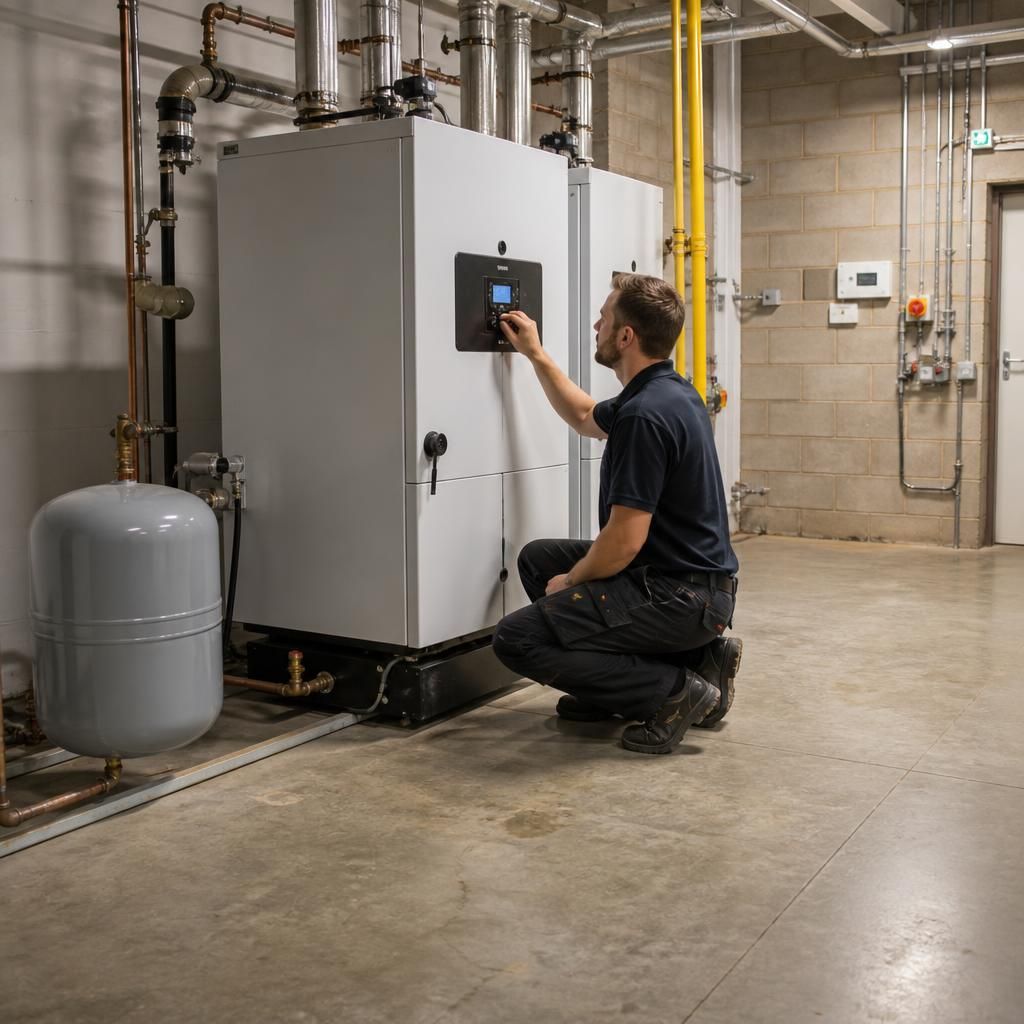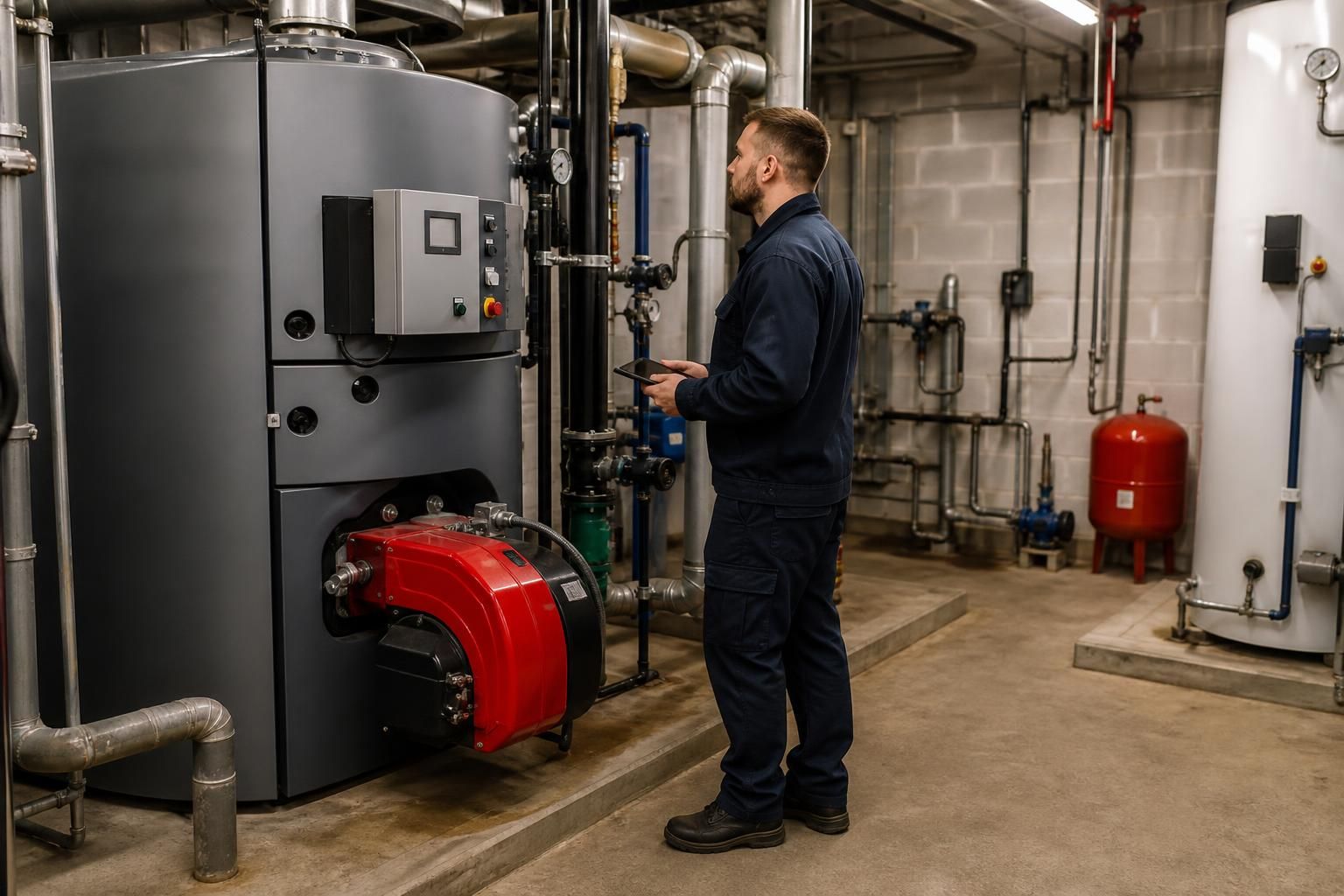
Engineers need practical, safe access to every part of the commercial boiler installation that must be inspected, tested or maintained. This usually includes the boiler itself, the surrounding working space, the route to the plant area and any equipment that affects safe operation, such as pumps, expansion vessels, controls, fuel supplies and flue components.
Access to the plant room or boiler location
The engineer must be able to enter the room or area containing the boiler without moving stored goods, office equipment or other obstructions. The route should be clear enough to carry tools and replacement components safely. If the boiler is in a basement, loft, roof space, service corridor or restricted plant enclosure, the engineer may need information about stairs, ladders, locked doors, security procedures and any site-specific hazards before attending.
Where a boiler is installed above a suspended ceiling, behind an access panel or within a cupboard, the panel or door should be capable of being opened without damaging the building. Access must also allow the engineer to work in a stable position rather than reaching across machinery or standing on unsuitable surfaces.
Working space around the boiler
Servicing involves removing covers, examining internal components, taking measurements and using testing equipment. There must therefore be enough clearance in front of and, where relevant, beside or above the appliance. The exact space depends on the boiler design and the manufacturer’s servicing requirements. Permanent fixtures, stored materials and temporary site equipment should not prevent the engineer from removing panels or reaching serviceable parts.
Access is not limited to the boiler casing. Engineers may need to inspect nearby pumps, valves, filters, expansion equipment, condensate arrangements, controls and pipework. If these components are in separate parts of the building, all relevant rooms or enclosures should be accessible during the visit.
Flue, ventilation and external areas
Safe servicing can require inspection of the flue route, terminal and ventilation arrangements. Where the flue passes through a ceiling, riser, roof space or external wall, access to inspection points may be necessary. A roof terminal or external flue may require suitable permanent access, edge protection or other site-approved arrangements. Engineers should not be expected to use unsafe ladders, climb over fragile surfaces or enter an area that has not been made safe.
Ventilation openings should not be blocked by stock, furniture or temporary coverings. If the boiler room has restricted ventilation, the engineer may need to assess the arrangement before testing or operating the appliance.
Electrical and fuel isolation points
The relevant electrical isolator and fuel isolation points must be identifiable and reachable. A boiler service may involve safely isolating the appliance, checking electrical connections and confirming that controls operate correctly. If isolation points are located in another room, behind a locked door or within a controlled area, the responsible person should arrange access and identify them in advance.
For systems connected to wider heating or hot-water plant, the engineer may also need access to associated pumps, time controls, sensors and control panels. A service cannot always be completed fully if parts of the system cannot be isolated, examined or tested.
Site permissions and safety information
Commercial premises often have procedures that do not apply in a domestic setting. The engineer may need an induction, a visitor pass, personal protective equipment requirements, a permit to work or an escort. The person arranging the service should explain hazards such as asbestos-containing materials, restricted areas, high-level work, chemicals, noise-sensitive operations and other contractors working nearby.
Access to service records, previous fault information and details of recent alterations can also be useful. These records help the engineer understand the installation and identify whether reported issues relate to the boiler, controls or connected systems. They do not replace physical access, but they can make the inspection more accurate and efficient.
What the responsible person should arrange
- Confirm who can unlock the site, plant room and related service areas.
- Clear stored items and temporary obstructions from the route and working area.
- Identify the boiler, flue route, ventilation openings and isolation points.
- Arrange access to connected heating and hot-water equipment where it forms part of the service.
- Share relevant site rules, risk information and service records.
- Arrange suitable access equipment for high-level or restricted installations where permanent safe access is not already provided.
If required access is unavailable or unsafe, the engineer may be unable to complete some tests or remove equipment for inspection. In that situation, the outstanding access requirement should be recorded and resolved before the service is treated as complete. For a commercial property, confirming access with the responsible person, facilities team, landlord or managing agent beforehand helps ensure that the boiler and its associated components can be assessed properly.