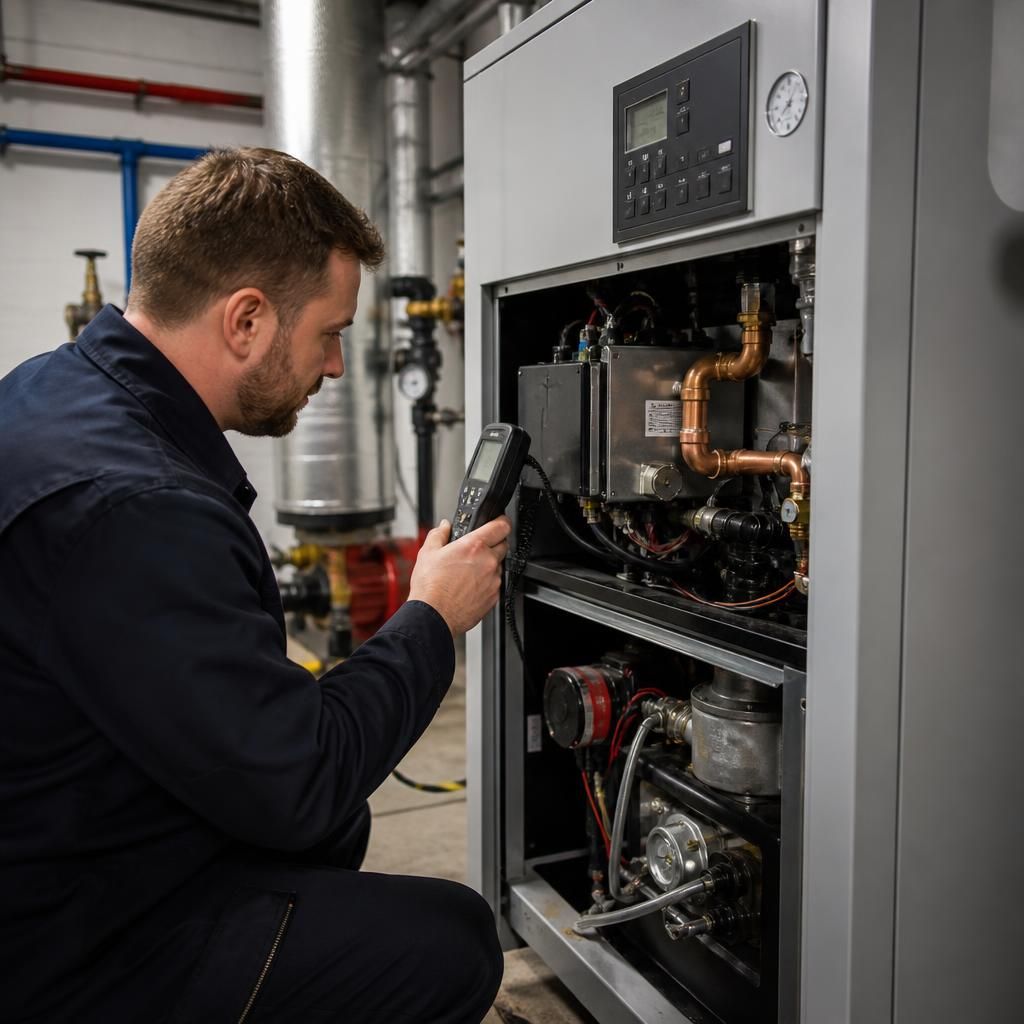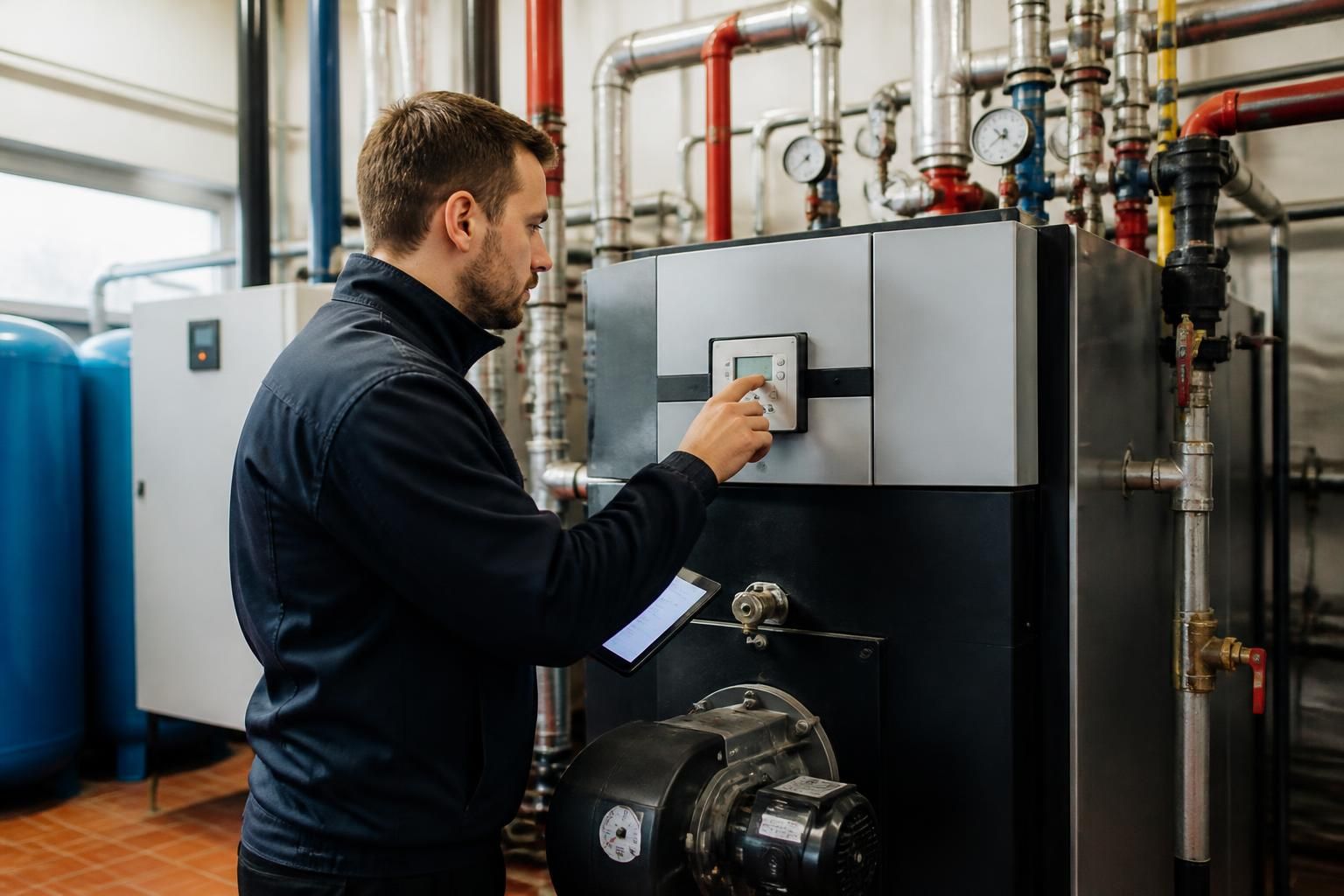
Commercial boiler servicing is needed wherever a boiler supports a business’s heating, hot water or essential processes. The most suitable servicing approach depends on the type of premises, the boiler system installed, how heavily it is used and the consequences of a failure.
Offices and professional workplaces
Offices rely on boilers to maintain comfortable working conditions and provide hot water for kitchens, toilets and staff facilities. Servicing should consider the boiler, pumps, controls, expansion vessels and associated heating circuits, particularly in larger buildings with several zones. Faults with controls or circulation can leave parts of a building cold even when the boiler itself is operating.
Retail units and shops
Shops may have heating systems serving sales areas, stockrooms, staff rooms and offices. Servicing helps identify combustion, pressure, control and circulation issues before they affect customer areas or stored stock. Units within shopping centres or shared buildings may also need servicing arrangements that account for landlord-owned plant, shared flues or communal heating systems.
Restaurants, cafés and catering premises
Catering businesses often place greater demands on hot water systems because sinks, washrooms and cleaning processes are used frequently. The boiler service should take account of the system’s workload, hot water storage and the condition of valves, pipework and safety controls. Where gas-fired catering appliances are present, the boiler should be considered as part of the wider commercial gas installation, while each appliance still requires appropriate attention of its own.
Hotels, guest accommodation and serviced properties
Hotels, guesthouses and similar premises can have extensive heating and hot water distribution networks, sometimes with separate circuits for bedrooms, communal areas and service rooms. A service can include checks of plant-room equipment, system pressure, temperature controls and visible signs of leakage or corrosion. The scope should reflect whether the property uses one central boiler or several appliances serving different areas.
Schools, nurseries and colleges
Educational premises commonly have different heating requirements across classrooms, halls, offices, kitchens and washrooms. Boiler servicing should therefore look beyond basic operation and consider time controls, thermostats, pumps and heating zones. Older systems may also require attention to inefficient controls, damaged insulation or components that are becoming unreliable.
Healthcare, dental and care premises
Medical practices, care homes and other healthcare settings require dependable heating and hot water for staff, patients and residents. Their boiler systems may serve treatment rooms, bedrooms, communal areas and hygiene facilities, so the service needs to reflect the sensitivity of those spaces and the importance of maintaining suitable temperatures. Where hot water is stored or circulated, the system should be assessed in line with the premises’ hygiene and safety procedures.
Warehouses, workshops and industrial units
Warehouses and workshops may use boilers for staff facilities, offices, production areas or process-related hot water. Large spaces can have high heat losses and may use warm-air units, radiators, fan convectors or multiple heating circuits. Servicing should identify issues such as poor combustion, damaged flues, inadequate ventilation, faulty thermostats and uneven heat distribution. Process applications may require a more detailed assessment than a standard space-heating system.
Leisure, sports and community facilities
Gyms, sports centres, community halls and similar buildings often combine space heating with substantial hot water demand from showers, changing rooms and washrooms. Boilers, hot water cylinders, pumps and controls should be assessed together because a fault in one part of the system can affect the service provided by the others. Usage patterns can also vary considerably, making correct controls and zoning particularly important.
Mixed-use and managed buildings
Offices, flats, shops or other uses may share a building or central plant. In these cases, responsibility for servicing should be clear between the freeholder, managing agent, landlord and individual occupiers. The engineer may need information about shared flues, plant-room access, separate meters, tenant installations and the areas covered by each boiler.
What determines the servicing requirements?
- Boiler type and output: Larger or multiple-boiler installations may need checks across sequencing controls, pumps, safety devices and linked heating circuits.
- Fuel and combustion arrangement: Gas-fired equipment requires appropriate combustion, flue, ventilation and safety checks by a suitably qualified engineer. Oil-fired systems have different servicing requirements, including attention to the burner, fuel supply and flue.
- System design: Pressurised systems, open-vented systems, hot water cylinders, buffer vessels and zoned heating circuits each have different components that can affect performance.
- Usage pattern: A boiler serving a lightly occupied office will experience different demands from one supplying showers, kitchens or continuous hot water.
- Building condition: Poor insulation, air leaks, corroded pipework or inadequate ventilation can affect boiler operation and may need to be reported separately.
- Access and records: Servicing is more effective when the boiler, controls, flue route and relevant documentation can be inspected safely. Previous service records can also help identify recurring faults.
A commercial boiler service should normally include a visual inspection, operational checks, examination of safety controls and an assessment of components relevant to the installation. The engineer should record any defects, limitations or recommended repairs rather than treating every premises as if it has the same system.
Employers, landlords and property managers should also consider the manufacturer’s servicing guidance, equipment instructions, insurance requirements and any applicable gas, fuel and workplace safety obligations. A service does not replace repairs, system cleaning or replacement where a component is unsafe or beyond economical repair.
Ideal Plumbing Services provides commercial plumbing and heating support for businesses in Birmingham and the wider West Midlands, including boiler servicing assessments suited to the premises and its heating system.