Commercial boiler servicing is usually a low-disruption process when the work is organised with the premises and the engineer in advance. The boiler or part of the heating system will normally need to be isolated while checks are carried out, so there may be a temporary effect on heating or hot water. The extent of the interruption depends on the boiler arrangement, the condition of the equipment and whether any repairs are identified.
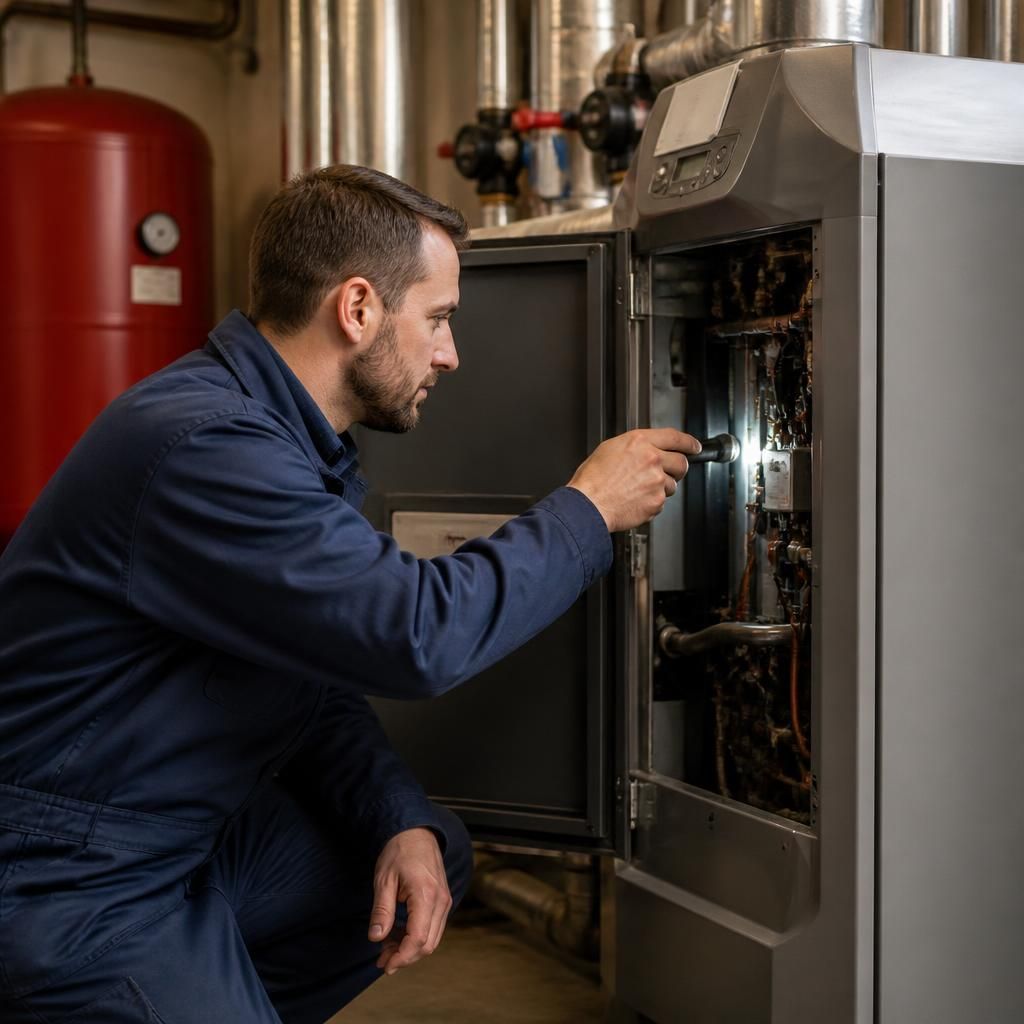
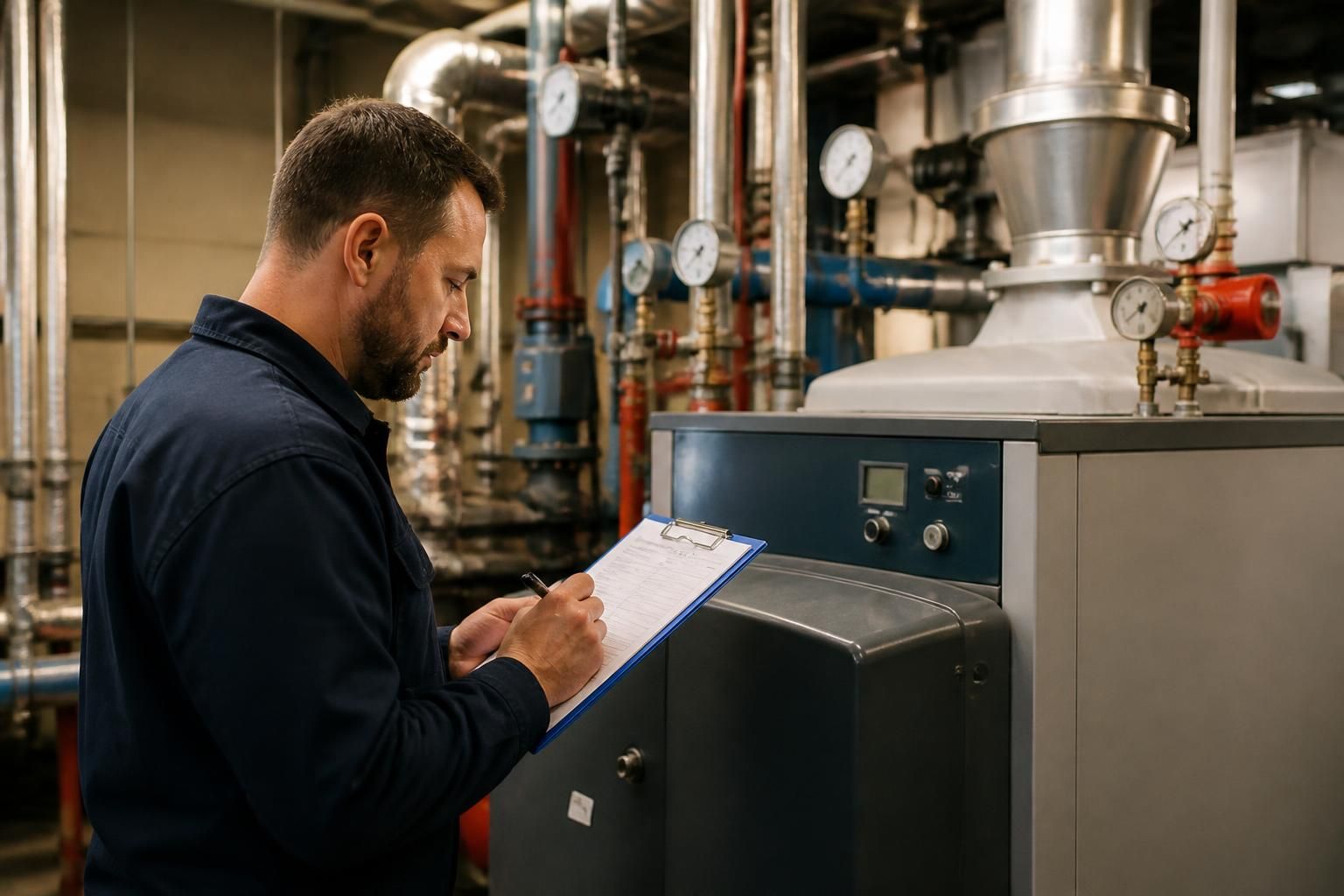
A standard service is intended to assess the boiler’s condition and safe operation rather than dismantle the system unnecessarily. The engineer may inspect accessible components, check controls and safety devices, examine connections, assess combustion where applicable and look for signs of wear, corrosion, leaks or other faults. They can then record the findings and explain whether the boiler can continue operating or whether remedial work should be considered.
Most of the disruption can be managed through preparation. Before the appointment, the person responsible for the premises should identify:
- Where the boiler, controls, isolation points and related equipment are located.
- Which rooms, tenants, staff or customers could be affected by a temporary loss of heating or hot water.
- Any access restrictions, security procedures or safeguarding requirements.
- Whether there are sensitive areas that depend on a stable temperature or hot-water supply.
- Any known faults, unusual noises, error messages or changes in performance.
Providing this information helps the engineer understand the system before starting and reduces avoidable delays. Clear access to the boiler and its surrounding equipment is particularly important. Stored items, locked plant areas or restricted access can prevent a full inspection and may mean that further arrangements are needed.
The main operational impact is normally the temporary isolation of the boiler. If the premises has separate boilers or more than one heating circuit, it may be possible to work on equipment in stages, although this depends on how the system is designed. A single-boiler installation may have a more noticeable effect because heating and hot water can be unavailable while that unit is isolated. Staff and occupants should therefore be told in advance which facilities may be affected.
Servicing should be distinguished from repair work. A routine service may identify a worn component, unsafe condition, control fault or issue affecting efficiency. Replacing a part or investigating a more complex fault can take longer than the inspection itself and may require the boiler to remain switched off. The engineer should explain the problem, the proposed work and any operational implications before additional work is undertaken.
Businesses can reduce the practical impact by coordinating the appointment with the person responsible for the building, notifying affected occupants and keeping access routes clear. Where the premises has customers or employees on site, the work can be planned for a quieter period, provided that the timing is suitable for the engineer and the building’s needs. It is also sensible to consider whether temporary heating or alternative hot-water arrangements are needed for particular rooms or activities.
After servicing, the engineer should explain the condition of the boiler and identify any recommendations. A service record is useful for tracking recurring faults, planned maintenance and repairs. Keeping these records together with previous reports can help reveal whether a problem is isolated or part of a developing issue.
In practice, the service itself is unlikely to stop all business activity, but it should not be treated as having no operational effect. The key considerations are the period during which the boiler must be isolated, the availability of alternative heating or hot water, the accessibility of the equipment and whether defects are found. Good coordination allows the business to plan for those effects rather than dealing with an unexpected interruption.