Oil and LPG boilers are not suitable for servicing in absolutely every property, but most domestic buildings can be accommodated when the appliance, fuel arrangement and installation meet safety requirements. The property itself is usually less important than whether the boiler is correctly installed, reasonably accessible and compatible with the engineer’s qualifications and equipment.
Different building layouts can affect how the service is carried out:
- Houses: Detached, semi-detached and terraced homes can normally be serviced where the boiler room, utility area or external housing can be reached safely.
- Flats and apartments: Individual boilers may be serviceable within the flat, but access to external flues, meters, cylinders or communal areas may require permission from a managing agent, freeholder or building manager.
- Rental properties: Servicing can usually be arranged in rented homes, although the landlord or managing agent may need to approve the appointment and retain the service documentation.
- Older properties: Older buildings may have restricted access, ageing pipework, non-standard controls or installations that need additional checks before routine servicing can proceed.
- Outbuildings and annexes: A boiler in a garage, plant room, converted outbuilding or annexe can be serviced if the route to it is safe and the installation has suitable working space.
Flats with shared or communal heating need particular care. An engineer may be able to service an individual appliance, but a communal boiler, shared flue or central plant room may fall under a separate maintenance arrangement. Responsibility for the system should be confirmed before an appointment, especially where access is controlled by another party.
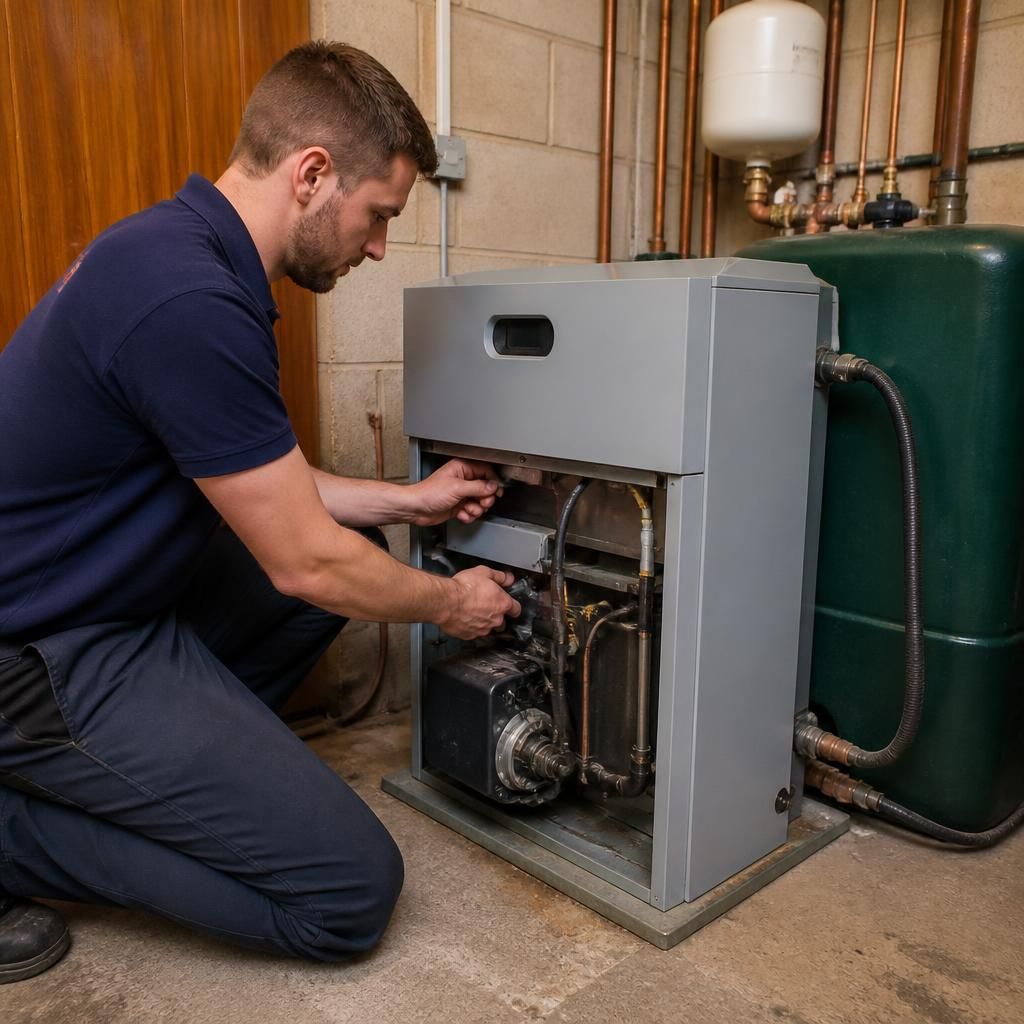
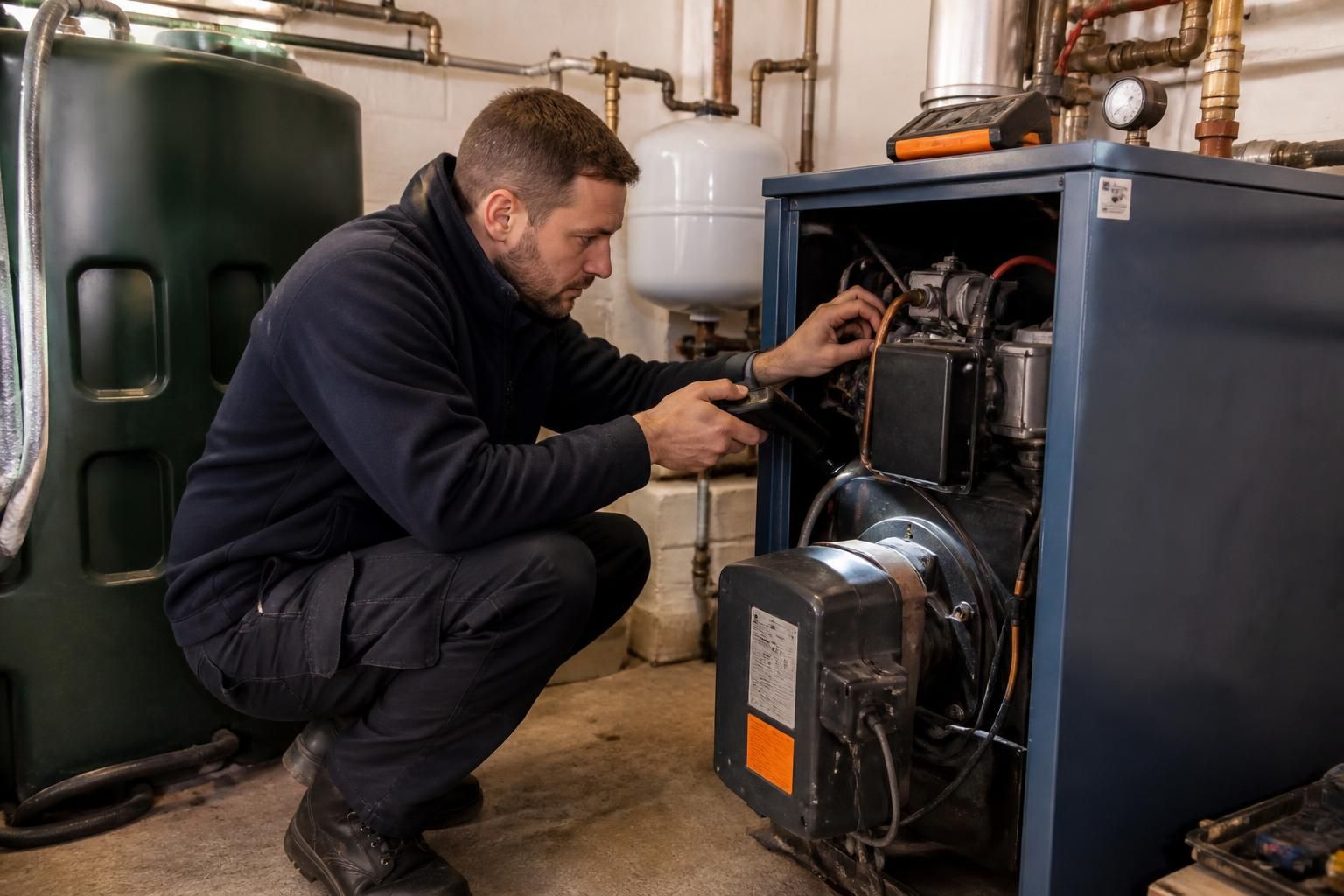
The type of fuel also changes the assessment. An oil installation may involve equipment positioned separately from the boiler, such as a remote tank, filter or oil line. An LPG installation may use cylinders or a bulk storage tank outside the building. These components need to be considered as part of the appliance installation, even when they are not in the same room as the boiler. Restricted access, damage, suspected leakage or unsuitable positioning may mean that further work is needed before servicing can be completed.
Property conversions can also require closer inspection. A boiler installed during a loft conversion, garage conversion or extension may have different flue routes, ventilation arrangements and access requirements from the original building design. A service can identify installation concerns, but it does not automatically correct defective building work, unsafe alterations or wider compliance issues.
For LPG appliances, the work should be undertaken by an engineer with the appropriate competence for LPG systems. Oil boilers also require suitable knowledge of oil-fired appliances and their associated controls and fuel equipment. The engineer will normally need to identify the appliance, assess its condition and carry out the relevant operational and safety checks before confirming the service findings.
A service may need to be postponed or limited if the boiler is unsafe to operate, badly damaged, inaccessible, affected by suspected fuel leakage or dependent on parts of the installation that cannot be inspected. In that situation, the engineer should explain the issue and distinguish between routine servicing, remedial work and replacement recommendations.
Ideal Plumbing Services provides oil and LPG boiler servicing for residential customers in Birmingham and across the wider West Midlands. Before arranging the work, it is useful to provide the property type, boiler location, fuel type and any access restrictions so the service can be assessed appropriately.