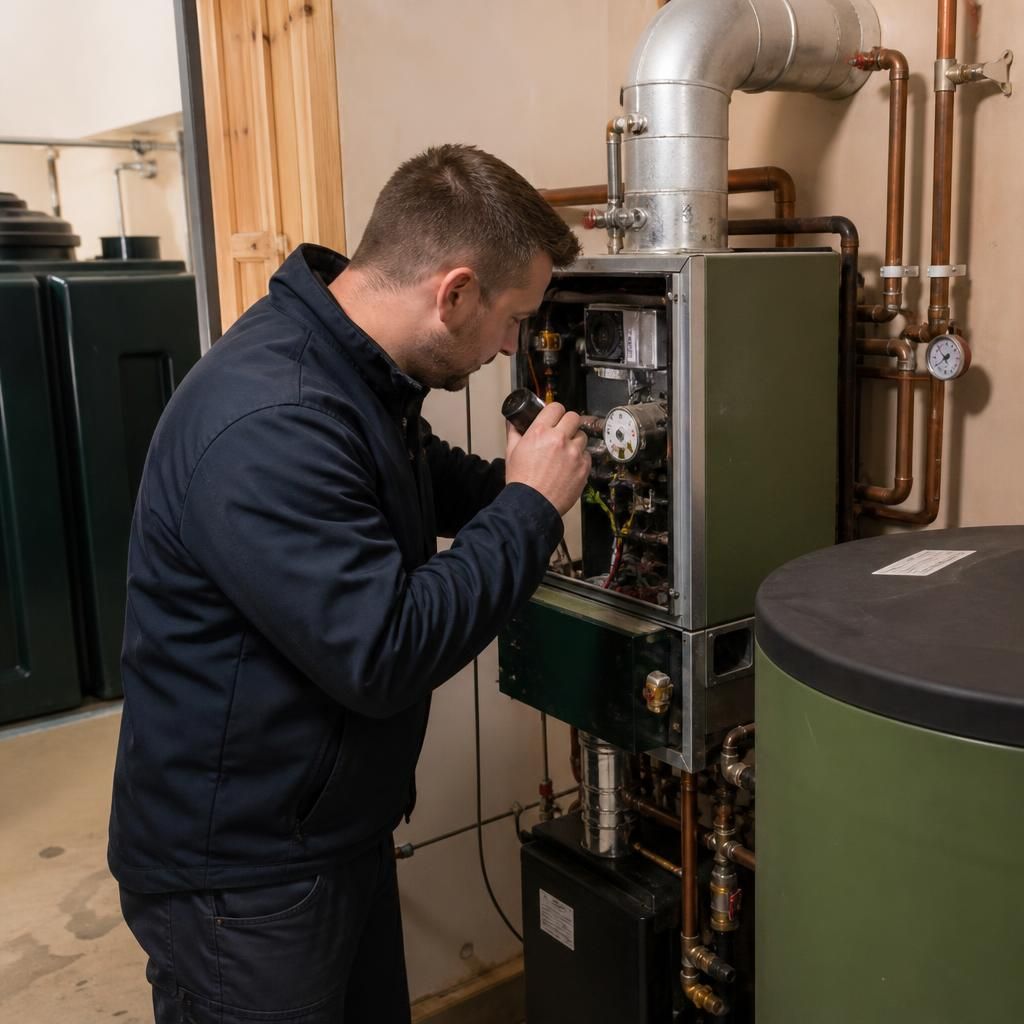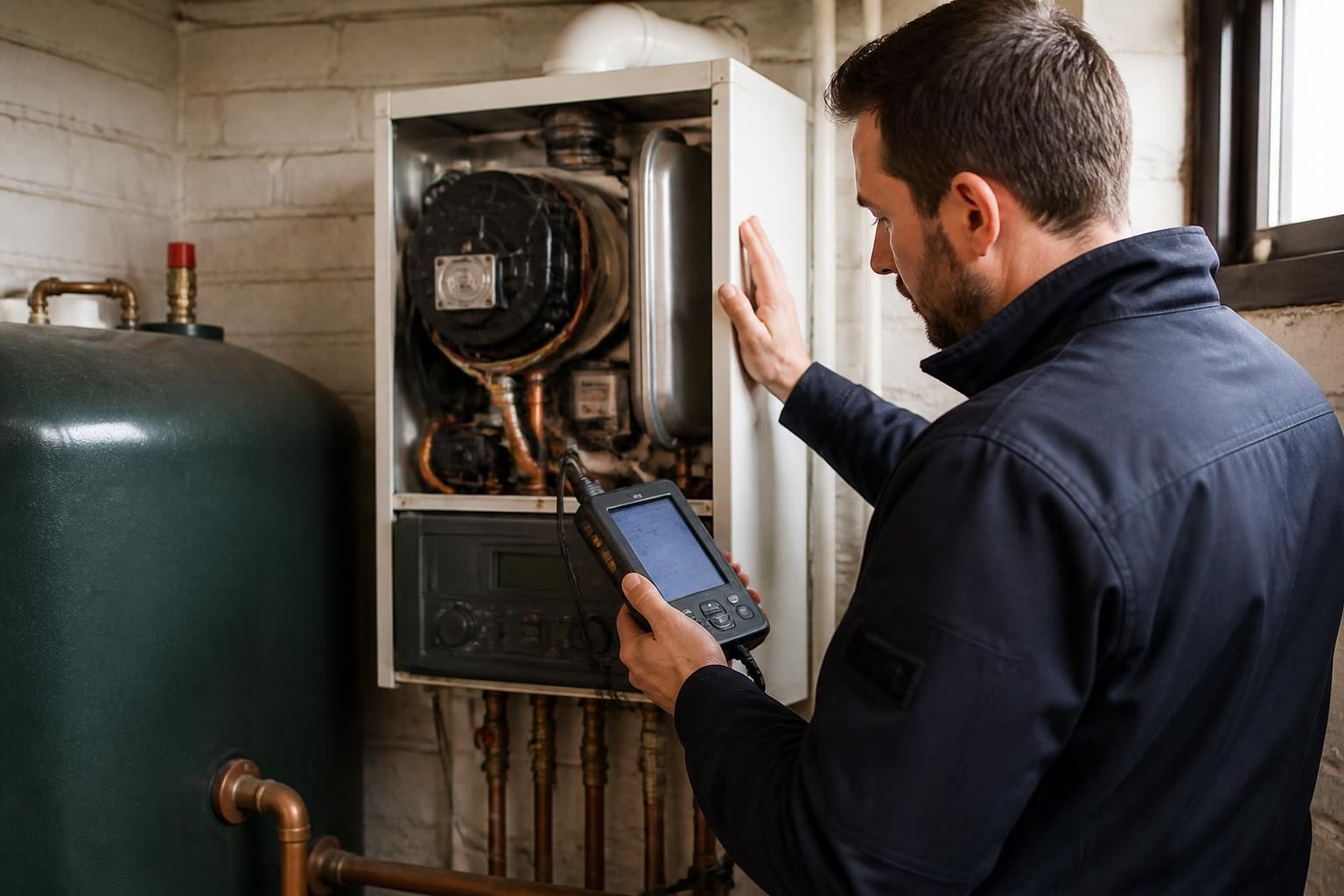
Yes. Oil and LPG boilers can be serviced in rented homes, provided the landlord or property manager arranges suitable access and the engineer can safely inspect the appliance, associated fuel system and flue. The requirements differ depending on whether the boiler uses LPG or oil.
LPG boiler servicing and safety checks
LPG appliances in rented accommodation fall under gas safety requirements. The landlord must use an engineer who is registered and competent to work on LPG appliances for the relevant safety inspection. This is separate from a general boiler service: the inspection assesses the appliance, flue, ventilation and gas-tightness, while servicing may include cleaning, adjustment and checks recommended by the appliance manufacturer.
The landlord should retain the appropriate safety documentation and provide the required information to the tenant. Any defects that could make the appliance unsafe should be dealt with before it is returned to normal use. A carbon monoxide alarm should also be correctly positioned where required, and tenants should know what to do if they suspect a gas or carbon monoxide problem.
Oil boiler servicing in rented accommodation
Oil-fired boilers can also be serviced in a rental property, but oil appliances are not covered by the same gas safety certification scheme as LPG appliances. There is no general equivalent of a gas safety certificate for every oil boiler. Nevertheless, landlords remain responsible for keeping heating installations, fuel equipment and associated systems safe and properly maintained.
For an oil boiler service, the engineer will typically assess the burner, combustion, controls, heat exchanger, seals, flue and visible pipework. The oil tank, oil lines and isolation arrangements may also need attention, particularly where there are signs of corrosion, leakage or damage. The service frequency should follow the manufacturer's instructions and any requirements imposed by the property's insurer or maintenance arrangements.
What the landlord should arrange
- Use an appropriately competent engineer for the type of appliance and fuel involved.
- Provide access to the boiler, flue termination, fuel tank or LPG installation and relevant controls.
- Keep service records, reports and details of remedial work with the property's maintenance documents.
- Deal with unsafe faults rather than treating the visit as routine paperwork.
- Give the tenant practical information about operating the heating system and reporting faults.
- Check that ventilation, access and the surrounding area have not been obstructed or altered.
Responsibility for arranging the work normally sits with the landlord or managing agent, while the tenant is expected to provide reasonable access by agreement. Tenants should not remove boiler covers, alter fuel connections or attempt servicing themselves. If the appliance is not working correctly, the tenant should report the fault and, where relevant, follow the property's instructions for isolating the fuel supply.
Issues that can affect a rental-property service
Access can be more involved when the boiler is in a locked cupboard, the flue passes through another part of the building, or the oil tank or LPG cylinders are located outside. The engineer may need to inspect more than the boiler itself, especially where the installation includes external fuel storage, pressure regulators, flexible connections or an underground supply line. The service report should make clear which components were inspected and identify any areas that could not be assessed.
A boiler service does not automatically correct every problem with a heating system. Repairs, replacement parts, flue alterations, tank work or changes to ventilation may require separate work and, in some cases, additional assessment. If the installation is old, has been modified, or lacks clear maintenance records, the engineer may recommend further checks before confirming that it is suitable for continued use.
For landlords in Birmingham and the wider West Midlands, Ideal Plumbing Services can provide guidance on arranging oil and LPG boiler servicing for residential rental properties, including the information needed before an engineer attends and the records to retain afterwards.