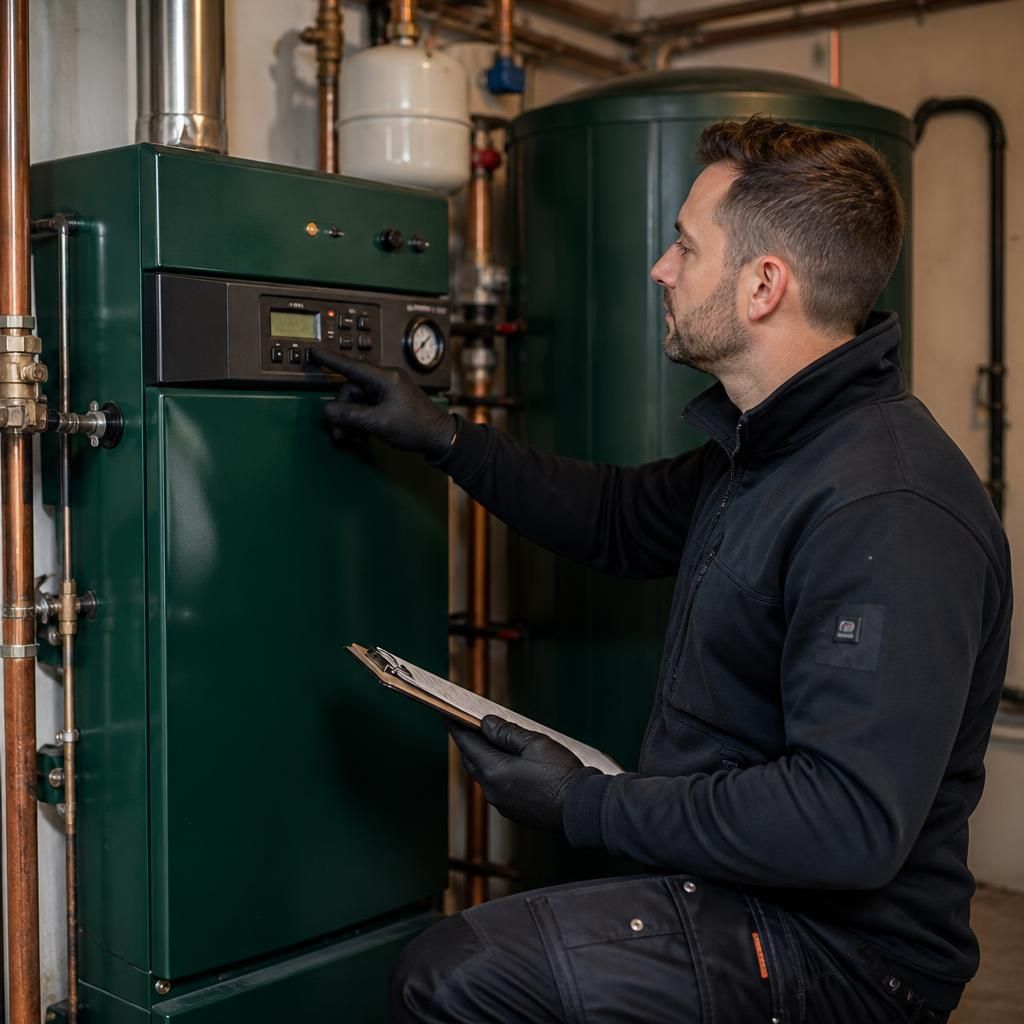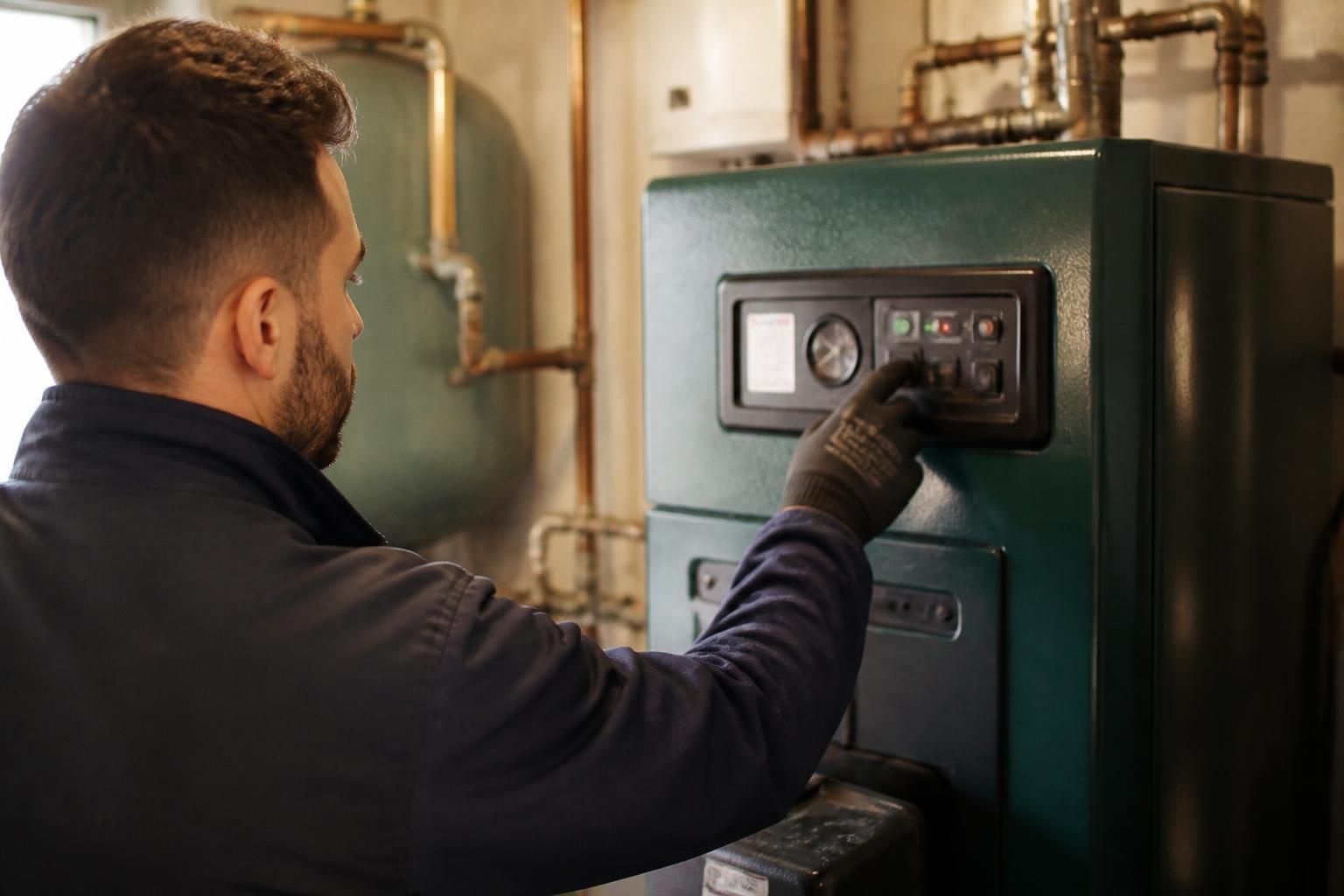
Before an oil or LPG boiler service, prepare the appliance for safe testing by checking its fuel supply, keeping the surrounding area ventilated, making the home ready for a temporary interruption to heating or hot water, and gathering relevant information for the engineer. Do not remove covers, alter burner settings or attempt to clean internal components yourself.
Check the fuel supply without adjusting equipment. An oil boiler needs sufficient oil for the engineer to run and test it. Check the tank gauge if one is fitted and arrange a delivery if the level is very low. For an LPG system, check that the cylinder or bulk tank is not empty and that you have any relevant information about the fuel supply arrangement. Do not disconnect cylinders, operate unfamiliar valves or interfere with the regulator. If the fuel supply appears damaged or you can smell LPG, treat this as a safety issue rather than waiting for a routine service.
Keep ventilation openings clear. Oil and LPG appliances require an appropriate supply of combustion air, and some installations have permanent vents in the room or nearby enclosure. Do not cover, seal or obstruct these openings before the visit. Avoid using the service as an opportunity to install draught excluders, boxing or other alterations around the boiler until a qualified professional has confirmed that they are safe.
Make the household ready for the service. The boiler may need to be switched off while checks are carried out, so plan around the temporary loss of heating or hot water. Let other occupants know that the appliance should not be turned on during testing unless the engineer says it is safe to do so. Keep children and pets away from the work area, particularly where the boiler is installed in a utility room, garage or other shared space.
Prepare questions about the system’s condition. In addition to reporting faults, you may want to ask:
- Which safety controls and combustion components were checked?
- Were any parts showing wear that may need attention later?
- Are there signs of corrosion, poor ventilation or problems with the flue arrangement?
- Does the appliance appear to be operating in line with its manufacturer’s instructions?
- Are there any maintenance tasks the household should carry out between services?
- Will any recommendation require a separate repair, replacement part or follow-up visit?
It can also help to know the boiler’s age, fuel type and approximate installation date if these details are not already clear. If the appliance has recently been repaired, replaced or altered, tell the engineer what work was done and when. This context can help distinguish normal servicing from a separate fault investigation.
Do not try to correct a suspected fault before the appointment. Avoid resetting the boiler repeatedly, relighting it several times, adjusting the oil pump or burner, changing gas pressure settings, or opening the combustion chamber. These actions can conceal symptoms, create a safety risk or affect the accuracy of the service. A boiler that is producing soot, repeatedly locking out, making unusual combustion noises or giving off fumes should be left switched off if it is safe to do so, with professional advice obtained.
If you smell LPG, do not use naked flames or operate electrical switches in the affected area. Move away from the source and follow the safety instructions provided for the installation and fuel supplier. Any suspected carbon monoxide release, fire risk or significant fuel leak should be treated as an urgent safety matter, not as a routine servicing point.
Finally, keep any service checklist or report supplied after the visit. It should record the work completed, safety findings and recommendations, giving you a useful reference for future maintenance and for identifying changes in the boiler’s performance.