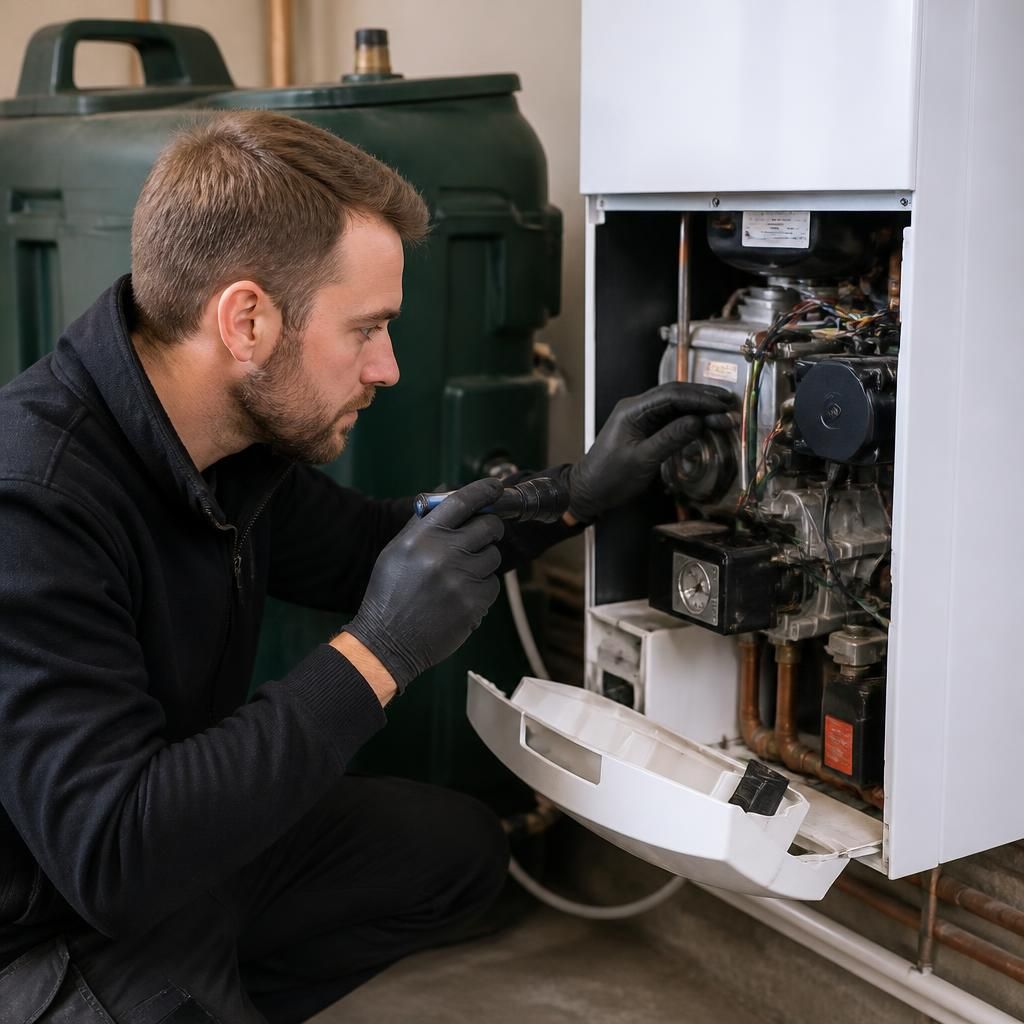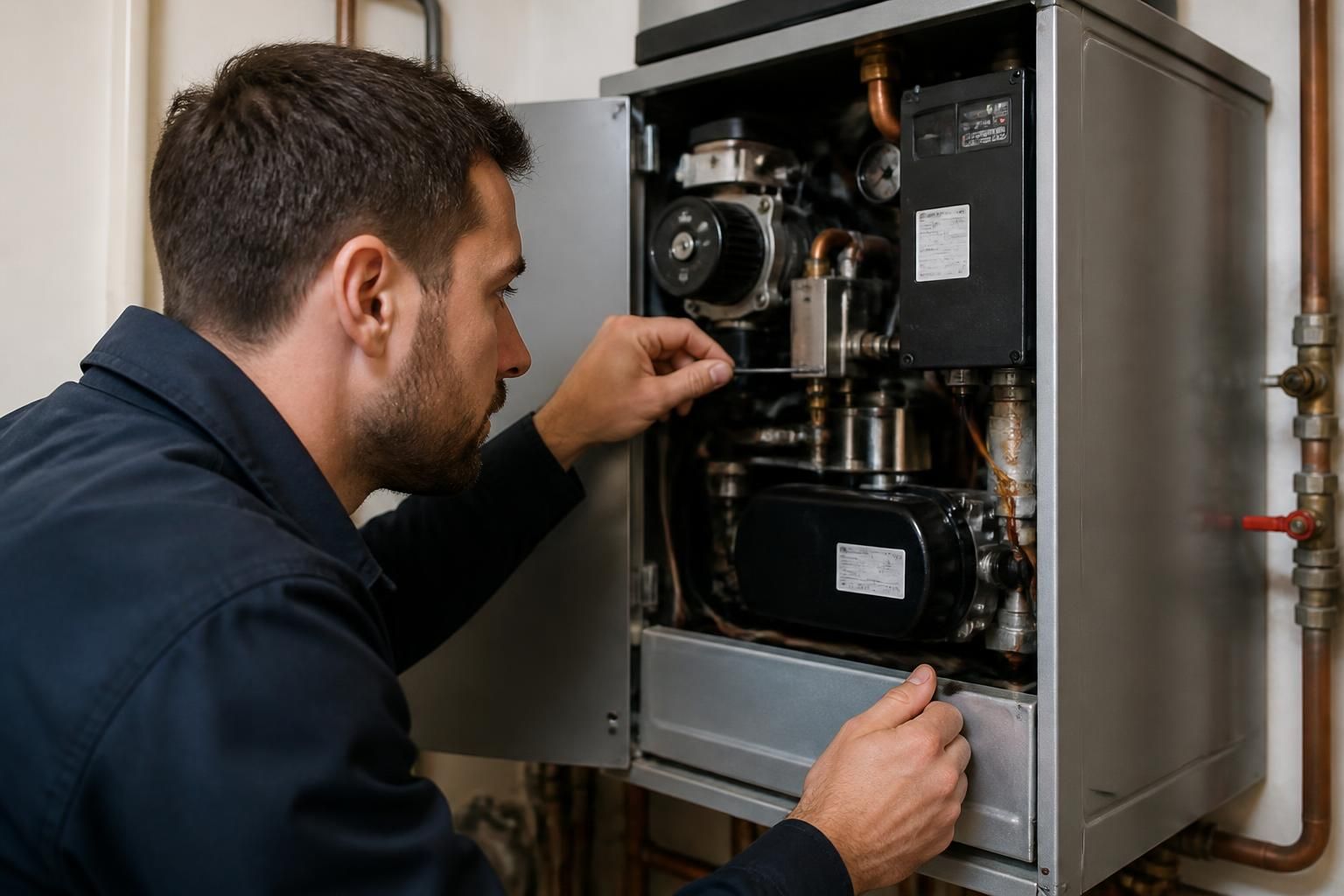
An oil or LPG boiler service is usually a controlled, contained job rather than major building work. The level of disruption depends mainly on the boiler’s location, how accessible its components are and whether the engineer finds a fault that needs separate repair.
During a standard service, the engineer will normally work at the boiler and may need to examine connected components such as the burner, combustion chamber, filters, isolation points and flue termination. They may also check the condition of visible pipework, ventilation arrangements and, where relevant, the oil tank or LPG supply connection. These checks are intended to confirm that the appliance is operating safely and efficiently.
- Access to the appliance: cupboards, utility areas or storage around the boiler may need to be cleared so the engineer can remove covers and reach serviceable parts.
- Access to related equipment: the engineer may need to inspect the flue outlet, fuel supply and other connected components, so access may be required beyond the boiler itself.
- Noise and smells: cleaning, combustion checks and operation of the appliance can create some temporary noise or an odour associated with the fuel-burning equipment.
- Testing afterwards: the boiler and controls may be operated as part of safety and performance checks before the service is completed.
A routine service should not normally involve removing flooring, opening walls or taking apart unrelated parts of the property. If the engineer identifies corrosion, a damaged flue, a blocked filter, combustion problems or another defect, further work may be recommended. That can create additional disruption, particularly if a component must be replaced or the appliance needs more extensive investigation. The engineer should explain the finding and the proposed work before carrying out anything beyond the agreed service.
The location of the boiler also affects how noticeable the work is. A boiler in a utility room may cause little inconvenience apart from restricted access, while one in a kitchen, hallway or occupied living area may temporarily limit use of that space. For a landlord or tenant, it is sensible to keep the route to the appliance clear and identify any cupboards, gates or shared areas the engineer will need to reach.
To keep the appointment as straightforward as possible, remove stored items from around the boiler, make relevant paperwork or previous service information available if you have it, and mention any unusual noises, smells, warning lights or performance changes before the inspection begins. This helps the engineer focus on the appliance and assess reported symptoms without unnecessary delays.
In most cases, the service itself is less disruptive than an emergency repair or replacement because it is a planned inspection and maintenance visit. The main variable is whether the boiler passes its checks or whether the condition of the appliance requires follow-up work. Ideal Plumbing Services can explain any recommended repair clearly, helping homeowners, landlords and tenants distinguish between routine servicing and work that may cause further interruption.