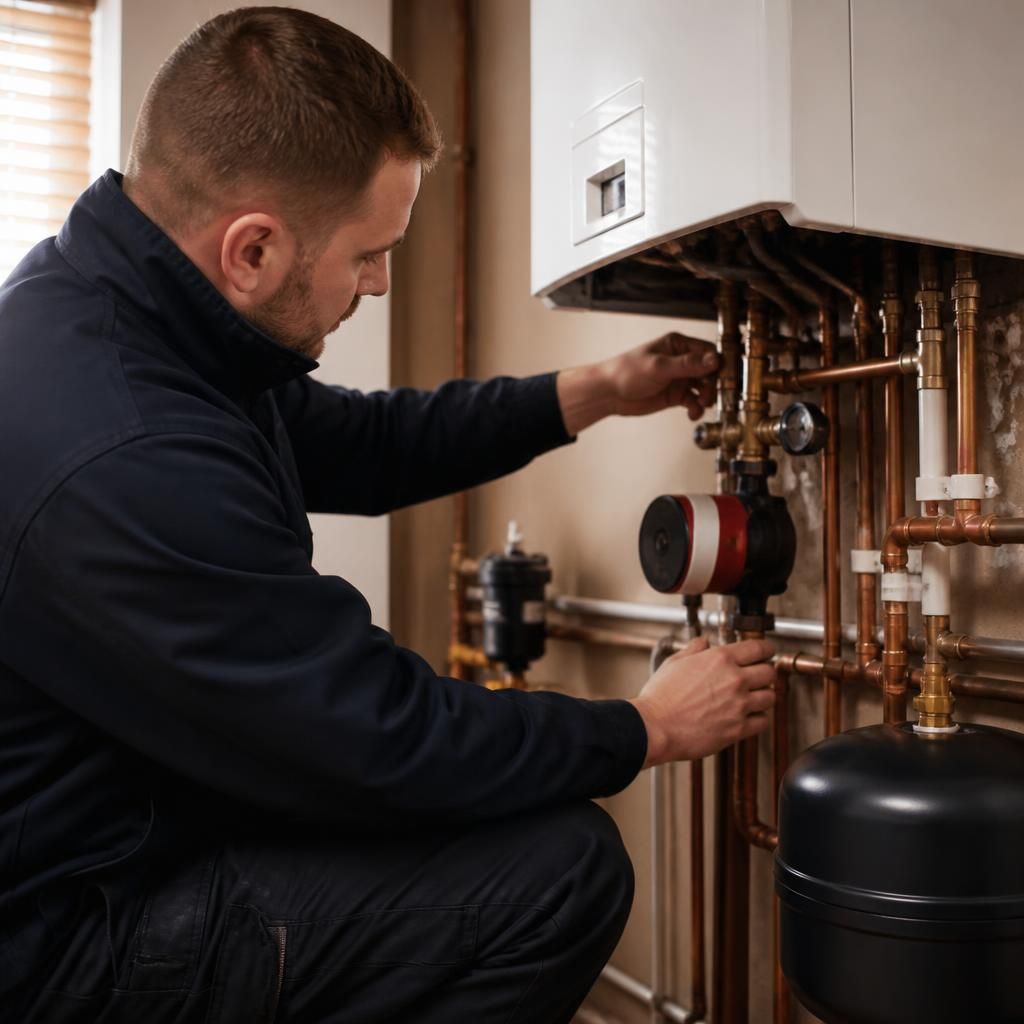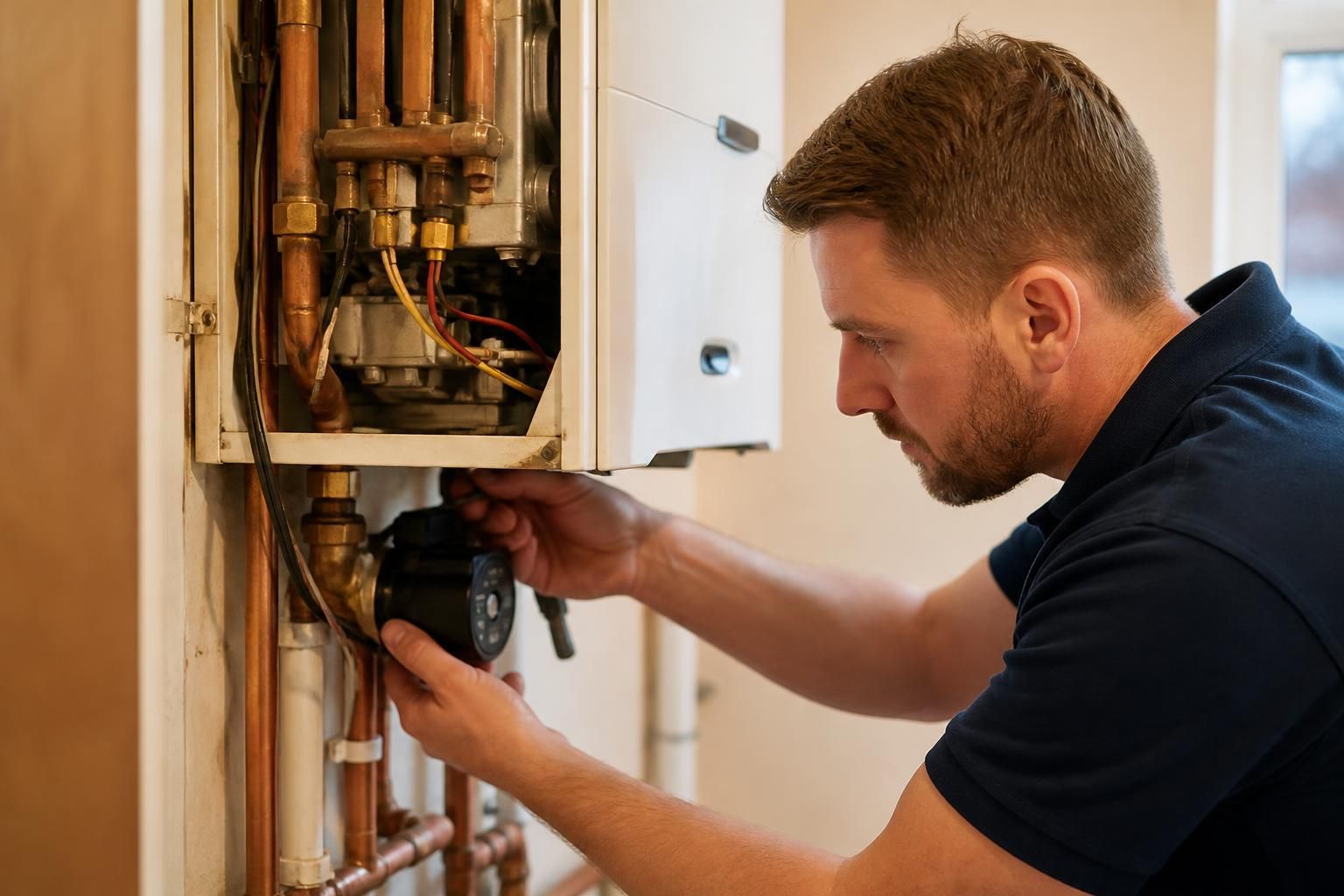
A central heating repair is normally a targeted intervention that restores the existing heating system by correcting the identified fault, rather than removing and replacing every part. Whether this is suitable depends on the condition of the boiler, pipework, radiators, controls and other connected components.
How the repair decision is made
A competent engineer should diagnose the underlying cause before recommending work. This typically involves checking the boiler or heat source, system pressure, controls, circulation, visible pipework and radiators. Error codes, unusual noises, leaks, cold areas and repeated pressure loss can help identify the problem, but the visible symptom is not always the failed component. For example, a cold radiator may result from trapped air, sludge, a faulty valve or poor circulation elsewhere in the system.
Once the fault has been identified, the engineer can assess whether the affected part can be adjusted, cleaned, repaired or replaced individually. This approach avoids removing sound components and helps ensure that the proposed work relates to the actual cause of the problem.
Examples of targeted central heating work
- Replacing a failed thermostat, programmer or other heating control.
- Repairing or replacing a motorised valve that is preventing heat from reaching the radiators.
- Resolving circulation problems linked to a pump or air in the system.
- Replacing a damaged radiator valve or repairing an accessible section of central heating pipework.
- Investigating repeated pressure loss, which may involve checking for leaks, the pressure vessel, safety components or the filling arrangement.
- Cleaning or balancing parts of the system where deposits or uneven flow are affecting performance.
Some repairs require more than changing a single component. A system may need flushing, balancing or control adjustments after the defective part has been dealt with. These are still forms of repair or remedial work, provided the main system remains suitable for continued use.
When a full replacement may be considered
Replacement becomes more relevant when the system has several unrelated faults, extensive corrosion, recurring leaks or components that are no longer economically sensible to repair. The age and previous repair history also matter. A relatively minor repair may not be a practical long-term solution if another major failure is likely to follow, while an older system in sound overall condition may still be repairable.
The condition of the boiler alone does not determine whether the whole central heating system needs replacing. Radiators, pipework, controls and circulation equipment can often be assessed separately. In some cases, replacing one part of the system is appropriate; in others, upgrading only the controls or a particular section may address the problem without a complete installation.
Questions to ask before approving the work
- What component or condition has caused the fault?
- Can the affected part be repaired or replaced independently?
- Are there other defects that could affect the reliability of the repair?
- Will the system need draining, flushing, balancing or recommissioning?
- Would repair remain sensible in view of the system’s age and repair history?
- What work is essential now, and what is only a possible future improvement?
A clear diagnosis should distinguish essential repairs from optional upgrades. It should also identify any safety issue, particularly where the fault involves the boiler, combustion, electrical controls, hot water or a leaking component. Work on gas appliances and associated safety-critical parts should be carried out by an appropriately qualified professional.
Ideal Plumbing Services can assess central heating faults for homeowners, landlords and tenants in Birmingham and across the West Midlands, explaining whether a targeted repair is suitable or whether wider replacement should be considered.