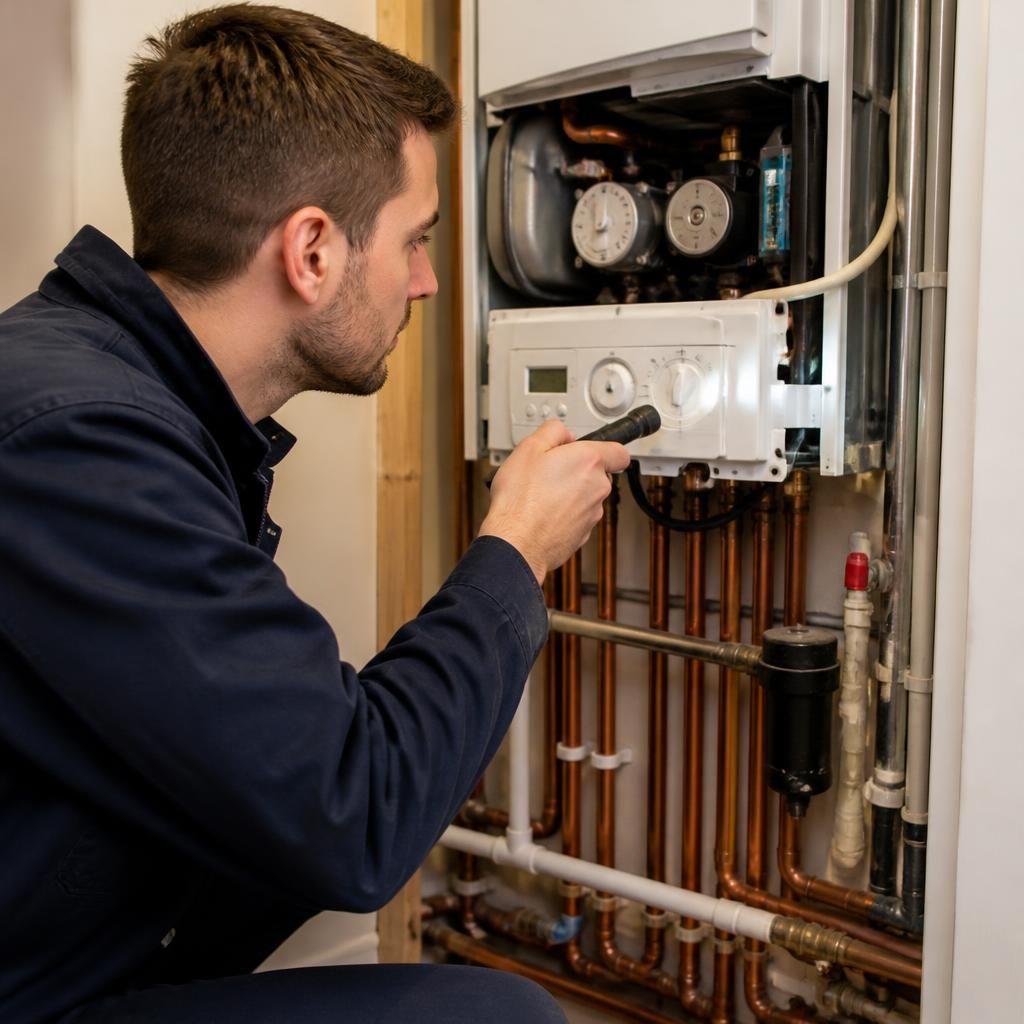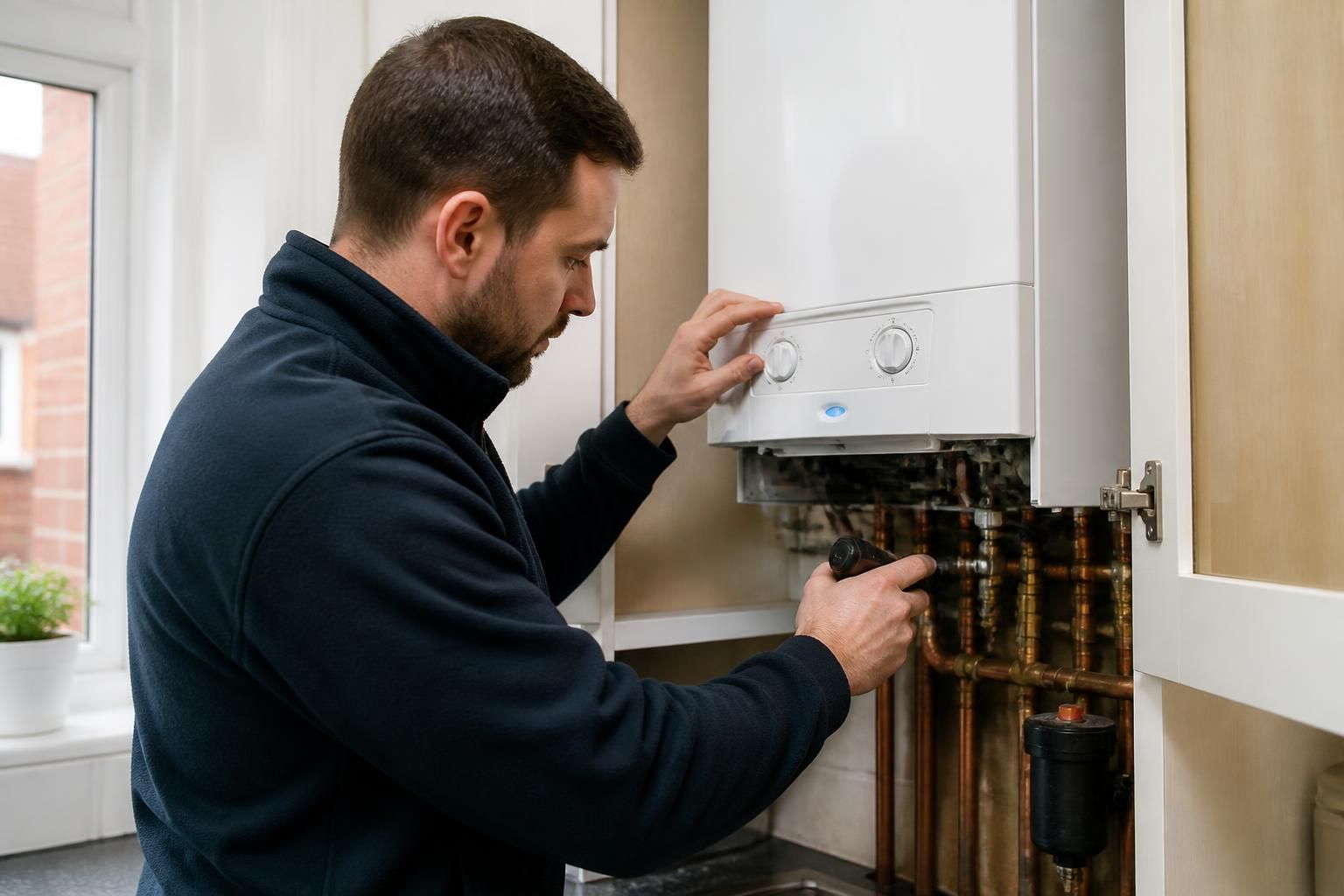
Central heating repairs usually cause limited disruption because the work is focused on a specific fault rather than the entire heating system. A plumber may need to switch off the boiler, drain part of the system or remove a radiator, but most repairs are confined to the affected component and the surrounding area.
The extent of disruption depends on several factors:
- Fault location: A faulty thermostat, valve, pump or electrical control may be accessible without disturbing much of the system. Problems beneath floors, behind boxing or within concealed pipework can require more access work.
- Repair type: Replacing a small component is generally less intrusive than repairing a leaking pipe, flushing contaminated system water or addressing repeated pressure loss.
- System condition: Older or poorly maintained systems may contain sludge, corrosion or seized valves. These issues can make isolation, draining and testing more involved.
- Parts and diagnosis: If the cause is unclear or a specific replacement part is needed, the system may need additional testing before the repair can be completed. This can affect how long heating or hot water remains unavailable.
- Access: Clear access to the boiler, radiators, controls and visible pipework allows the work to be carried out with less interruption. Restricted access may require furniture, panels or flooring to be moved.
What happens during a typical repair
The work normally starts with diagnostic checks, including inspection of the boiler, controls, pressure, radiators and visible pipework. Once the fault has been identified, the relevant section can be isolated. Depending on the repair, this may involve turning off the electrical supply, shutting valves, draining some system water or removing a component.
After the repair, the system is refilled and checked for leaks and correct pressure. Radiators may need bleeding, and the boiler and controls should be tested to confirm that heating and hot water are operating correctly. Where the system has been drained, air can enter the pipework, so further checks may be needed to ensure circulation is stable.
Repairs that are usually less intrusive
- Replacing a thermostat or control component
- Changing an accessible radiator valve
- Replacing a pump or pressure-related component where suitable isolation points are available
- Repairing a visible leak on exposed pipework
- Resolving straightforward ignition, circulation or control faults
These repairs may still require the heating to be switched off while work is undertaken, but they do not normally involve opening walls or lifting large areas of flooring.
Repairs that can cause more disruption
Leaking concealed pipework, damaged radiators, persistent sludge or faults affecting several parts of the system can require more extensive work. A plumber may need to remove access panels, lift flooring, drain a larger part of the system or isolate multiple radiators. If a repair reveals wider deterioration, the available options should be explained before additional work is carried out.
A boiler fault should be assessed by a suitably qualified heating professional. Attempting to open or alter gas-related components yourself can create safety risks and may invalidate required safety checks. For any central heating issue, switch off the system if it is leaking, making unusual noises or showing signs of unsafe operation, and follow the appliance manufacturer's safety guidance.
How to reduce disruption
- Keep the boiler, hot water cylinder, radiators and heating controls accessible.
- Move fragile items and furniture away from the work area.
- Tell the plumber about previous repairs, recurring pressure loss, unusual noises or areas where pipework may be concealed.
- Identify any rooms that must remain accessible, particularly where occupants, children or pets are present.
- Ask which parts of the system will be isolated and whether heating or hot water will be unavailable during the repair.
Ideal Plumbing Services provides central heating repair support for homes across Birmingham and the wider West Midlands. A clear assessment helps establish whether the fault can be resolved with a local repair or whether more involved access and remedial work is needed, allowing the likely disruption to be understood before work begins.