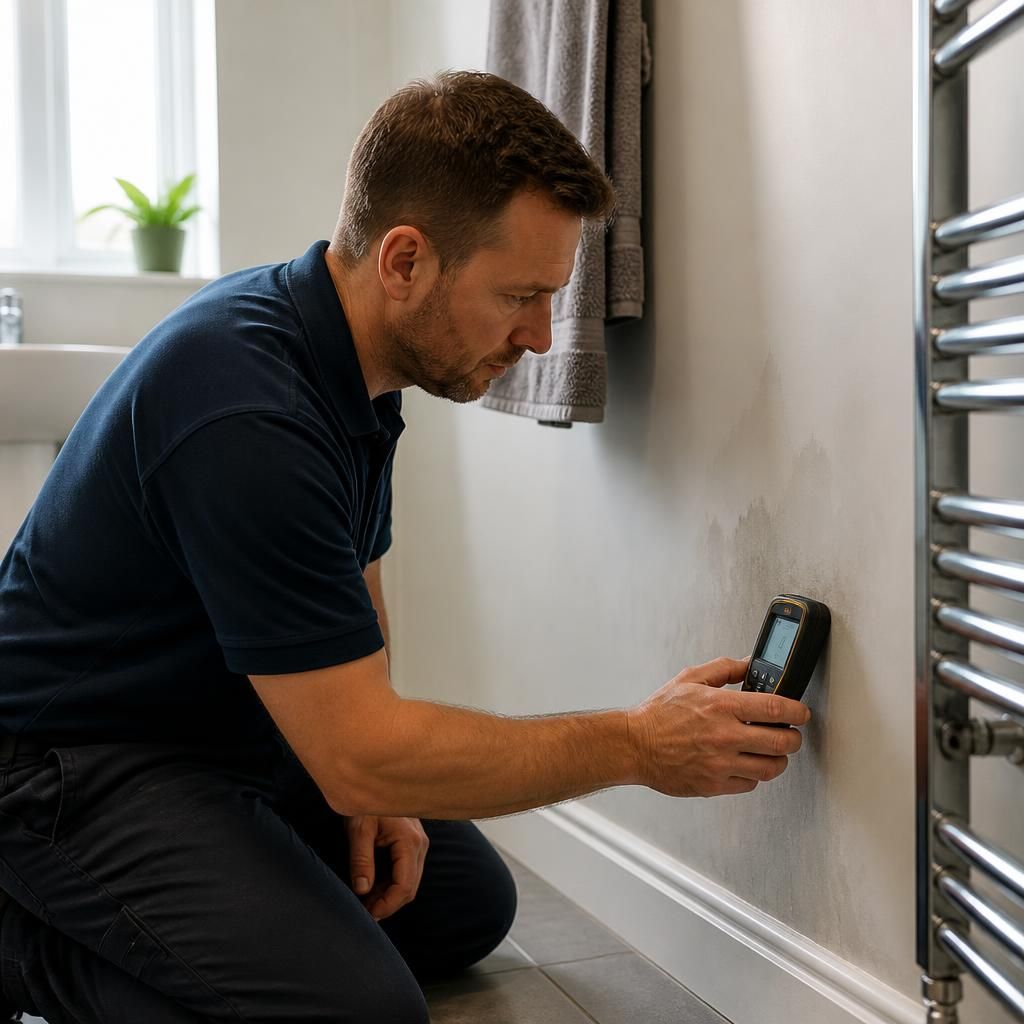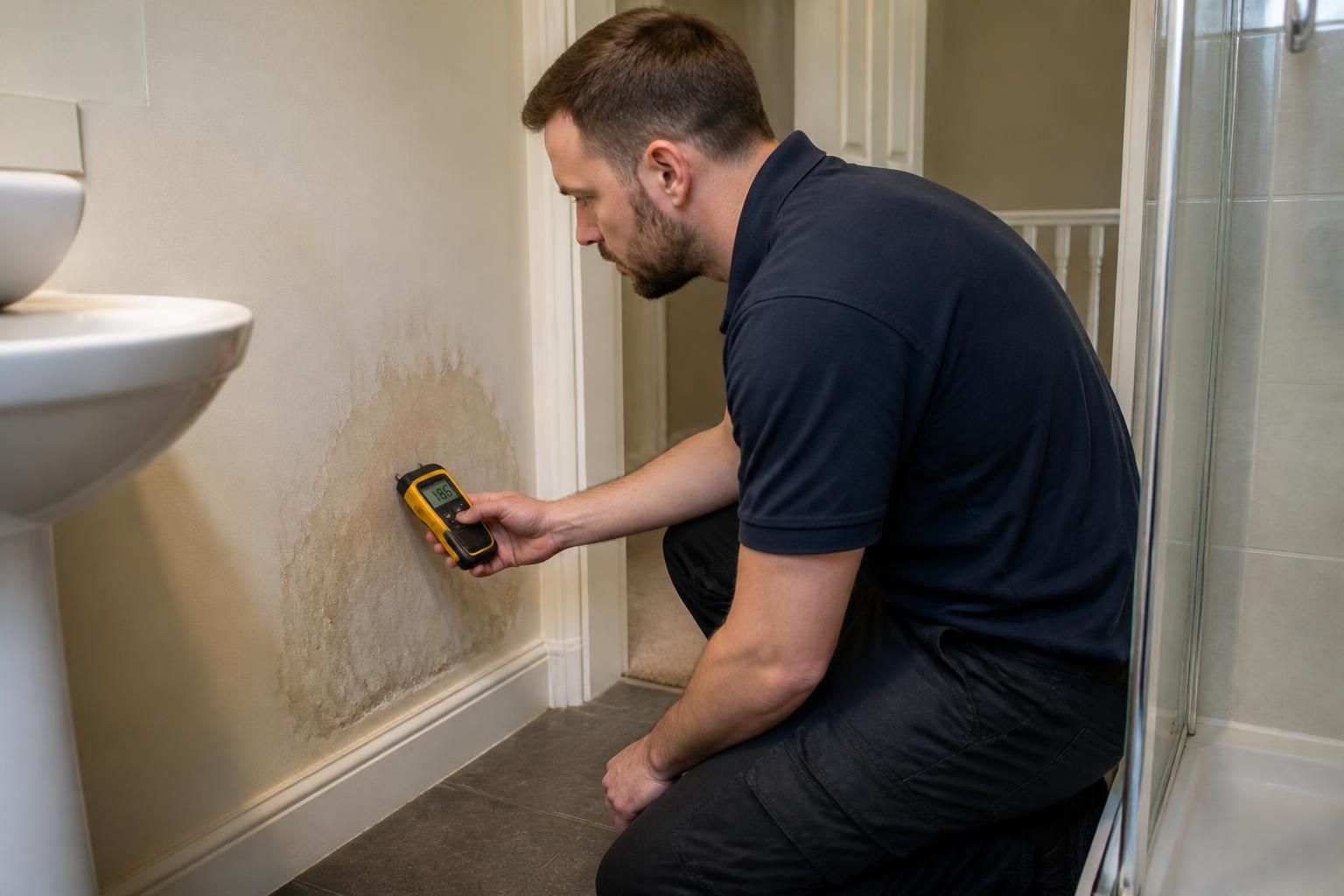
Rental-property leak detection can be arranged through the landlord, letting agent, property manager or tenant, depending on who has identified the problem and who is responsible for the property. The aim is to locate the source accurately before unnecessary sections of a bathroom, kitchen or other area are opened up.
In most cases, the process begins with information about the symptoms. Useful details include:
- where water, staining, dampness or mould has been noticed;
- whether the problem appears continuously or only when a tap, shower, toilet or appliance is being used;
- any change in water pressure, heating performance or water usage;
- whether neighbouring rooms, ceilings or adjoining properties are also affected; and
- any previous repair work or suspected source of the leak.
This information helps the plumber decide which areas need investigating and reduces the need to inspect unrelated parts of the property. A tenant can usually provide valuable first-hand information about when the symptoms occur, while the landlord or agent can confirm the property history and approve any follow-on work.
Arranging access is an important part of leak detection in a rented home. The person booking the inspection should provide the correct address, tenant or agent contact details, and clear instructions for entering the property. Tenants should not be expected to dismantle fittings or carry out intrusive checks themselves. Where access to a bathroom, boiler area, utility space, loft or adjoining room may be relevant, this should be discussed before the visit so that the investigation is not limited by avoidable access problems.
A professional assessment may involve checking visible pipework and fittings, tracing moisture, testing plumbing systems and using specialist detection methods where the source is concealed. The appropriate method depends on the type of property, the construction, the suspected pipework and the symptoms. A visible patch on a wall or ceiling is not necessarily directly below the leak, as water can travel through voids and building materials.
For rental properties, the findings should be recorded clearly for everyone involved. A useful report can identify the suspected or confirmed source, the affected area, any evidence of related damage and whether further access or repair is recommended. Photographs and written observations may also help landlords, agents and tenants distinguish an active plumbing fault from older staining or damage that requires separate attention.
Leak detection and repair are related but separate stages. Detection establishes where the problem is coming from; the repair may involve replacing a faulty seal, valve, pipe, tap, toilet component or other fitting. The proposed repair should be explained to the responsible person before work goes ahead, particularly where opening a wall, floor or ceiling could be necessary. If the source cannot be confirmed during the initial inspection, further investigation may be advised rather than an uncertain repair.
Landlords and property managers can make future investigations easier by keeping records of plumbing alterations, previous leaks and maintenance work. Tenants should report new damp patches, persistent dripping, unexplained odours or changes in water use promptly to the person responsible for maintenance. Early reporting can help limit the spread of moisture and provide more reliable evidence about when the fault began.