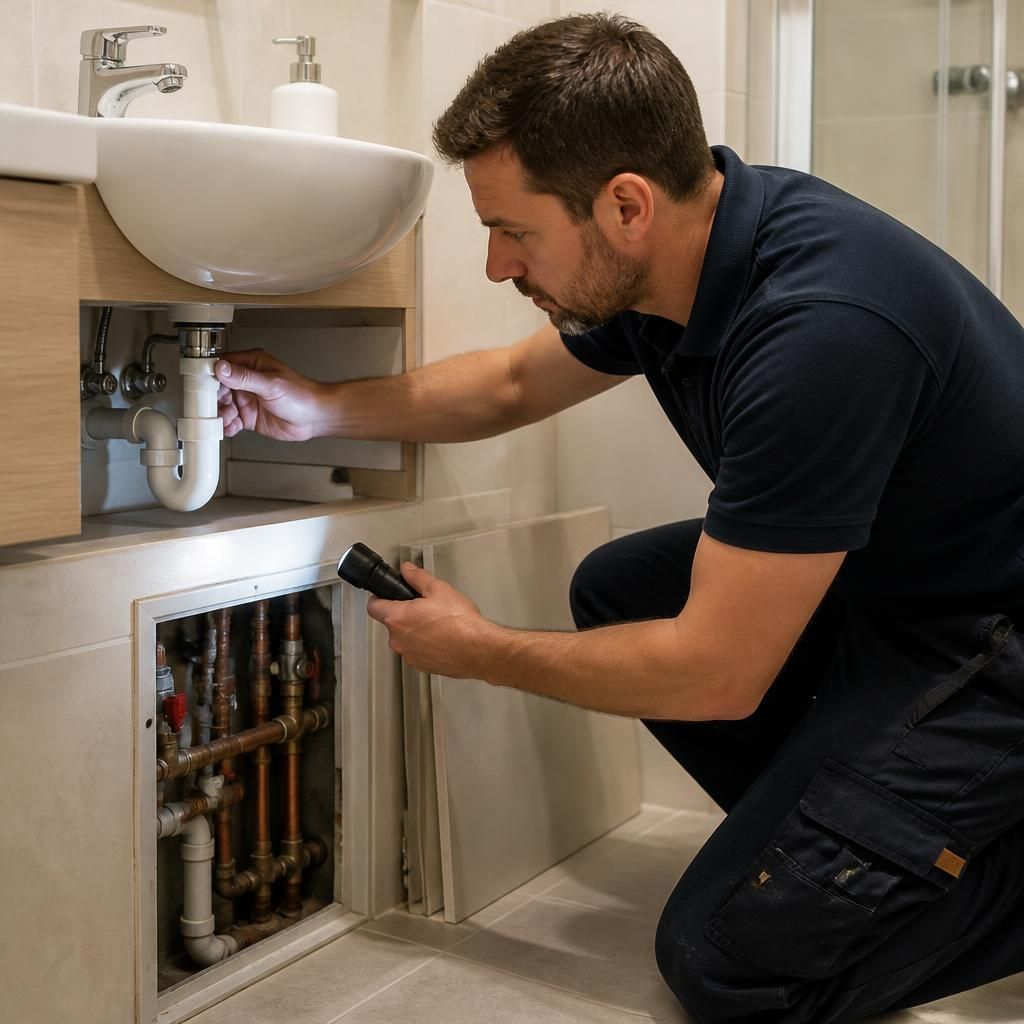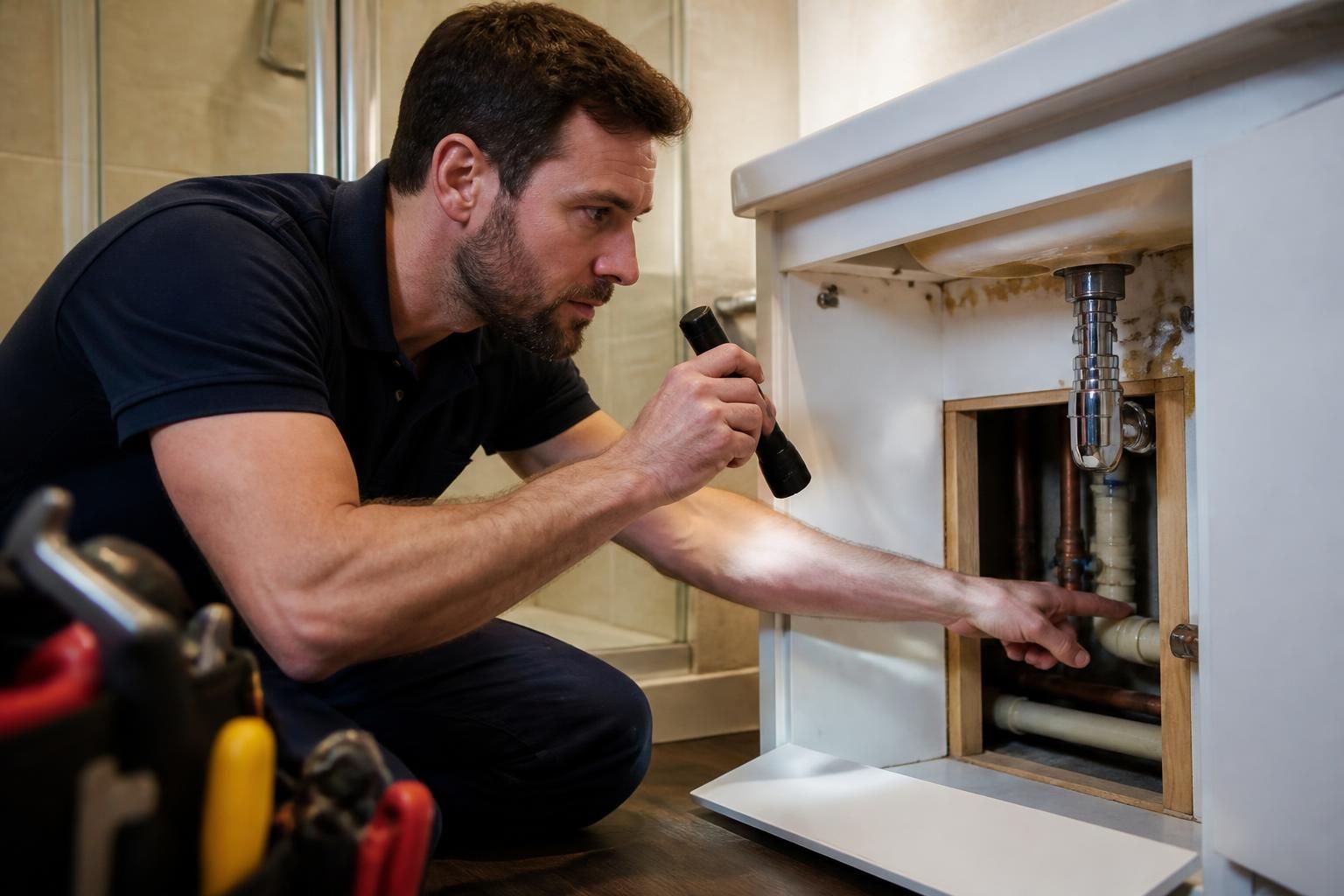
Leak detection is usually carried out in a targeted way, with access planned around the plumbing system and the evidence of water movement rather than every room in the property. The engineer will first assess the reported symptoms, identify the relevant pipework and inspect the areas most likely to contain the source or route of the leak.
Access requirements depend on the type of leak and the layout of the property. A bathroom leak may require access to the bathroom, the room directly below it and, where relevant, an adjoining cupboard or service area. A leak from a central-heating pipe, kitchen supply pipe or concealed water main may involve different locations. Properties with bathrooms above bedrooms, pipework in boxed-in areas or plumbing running through several floors can require a wider inspection.
Areas that may need to be checked include:
- the room where damp patches, staining, mould or dripping have been noticed;
- the room below or beside the suspected source;
- bathroom, kitchen or utility-room plumbing connections;
- under-sink cupboards, access panels and service cupboards;
- the area around boilers, cylinders, radiators or heating pipework where relevant;
- flooring, skirting boards, ceilings and wall surfaces showing signs of moisture; and
- shared access areas where pipework may pass between rooms or floors.
During the assessment, the engineer may compare moisture levels in affected and unaffected materials, inspect visible joints and fittings, and follow the direction of staining or dampness. Specialist diagnostic methods can help narrow down the likely source without inspecting every room. This is important because water does not always appear directly beneath the failed pipe or fitting; it can travel along joists, behind finishes or through service voids before becoming visible.
In some properties, access to an adjoining room is useful even when there is no obvious damage there. For example, the most practical inspection point may be on the reverse side of a bathroom wall, beneath a shower tray or close to a pipe route concealed within a floor. This does not necessarily mean that the whole room needs to be cleared. Access is generally required only to the relevant wall, floor, ceiling, fitting or service area.
For a bathroom or shower-related leak, it helps to make the following areas available before the inspection:
- the bath, shower, basin, toilet and their visible connections;
- the cupboard beneath a basin or adjacent storage unit;
- any removable bath panel or existing access hatch;
- the ceiling or wall beneath the bathroom if staining is present; and
- nearby pipework, isolation valves and the stopcock where these can be reached safely.
Furniture and stored belongings may need to be moved if they prevent access to a damp wall, inspection point or service cupboard. Removing personal items from these areas can make the inspection more straightforward, but there is normally no reason to empty unrelated rooms. If access is restricted by fitted furniture, flooring or other permanent finishes, the engineer can explain what can be assessed without disturbing them and whether additional access would improve the diagnosis.
A visual inspection and non-invasive testing may identify the likely source without opening walls or floors. However, a concealed leak can sometimes require a more detailed investigation. If the evidence points to pipework that cannot be reached from an existing access point, the engineer should explain the limitation and discuss the next practical step before any opening-up work is considered. Leak detection and leak repair are separate stages: locating the problem does not automatically mean that fittings, walls or floors will be removed.
Where the property is rented, the tenant should arrange access in line with the tenancy agreement and obtain the landlord’s or managing agent’s permission where required. If more than one room or dwelling may be affected, coordinating access in advance can prevent the inspection from being limited to only part of the suspected pipe route. Ideal Plumbing Services can assess the circumstances and advise which areas are relevant when arranging professional leak detection for a Birmingham or West Midlands property.