Professional leak detection is designed to preserve bathroom fittings and finishes, but no investigation can guarantee that every surface will remain untouched. The usual approach is to collect evidence through accessible points and non-invasive equipment before considering any opening-up work. This helps identify the source while reducing the risk of damage to tiles, grout, sealant, plasterboard, flooring, vanity units and sanitaryware.
Before testing begins, the plumber will normally discuss the symptoms and inspect visible pipework, joints, traps, valves, toilets, baths, showers and surrounding surfaces. Signs such as staining, loose tiles, swollen flooring, mould, damp odours or a drop in pressure can help narrow down the likely source. This initial assessment may prevent unnecessary disturbance elsewhere in the bathroom.
Detection equipment is selected according to the type of leak and the construction of the room. Common methods include:
- Acoustic detection: sensitive listening equipment can identify the sound of water escaping from concealed pressurised pipework without removing tiles or fittings.
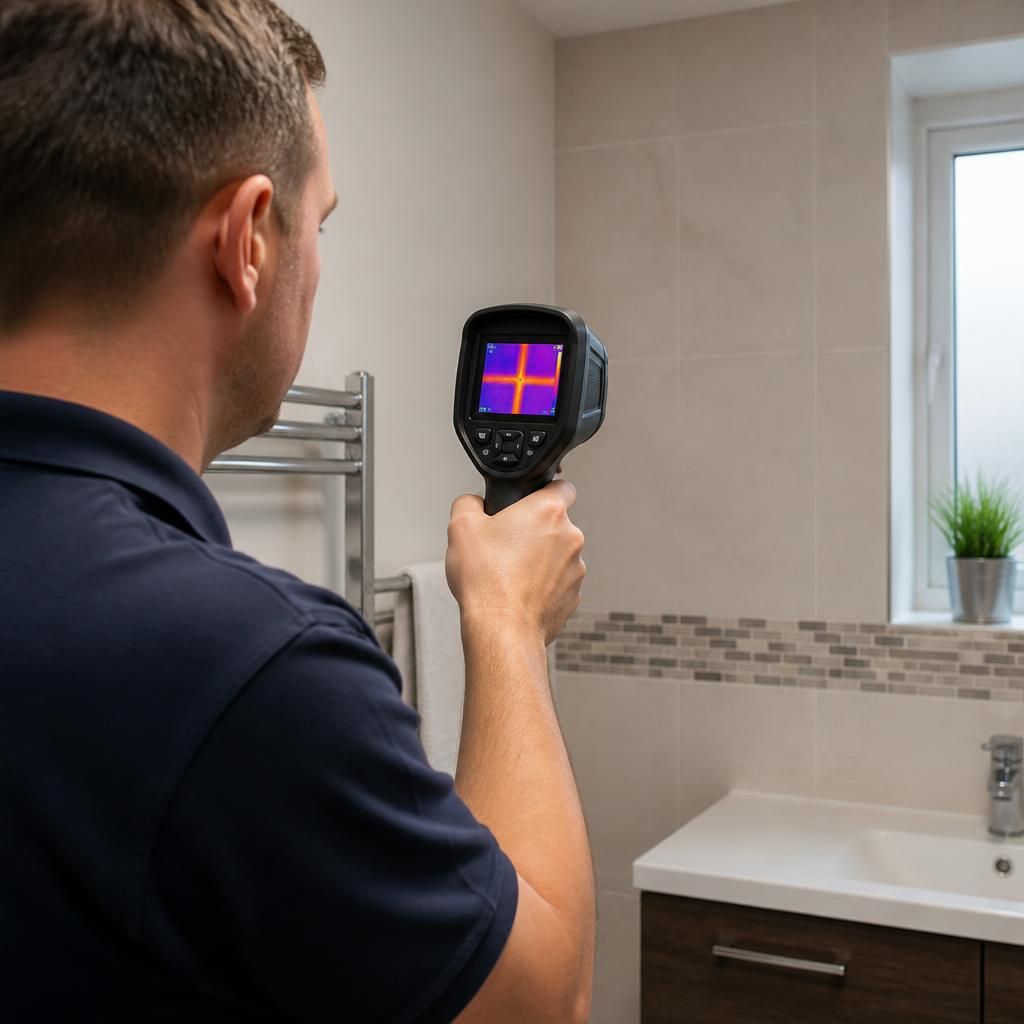
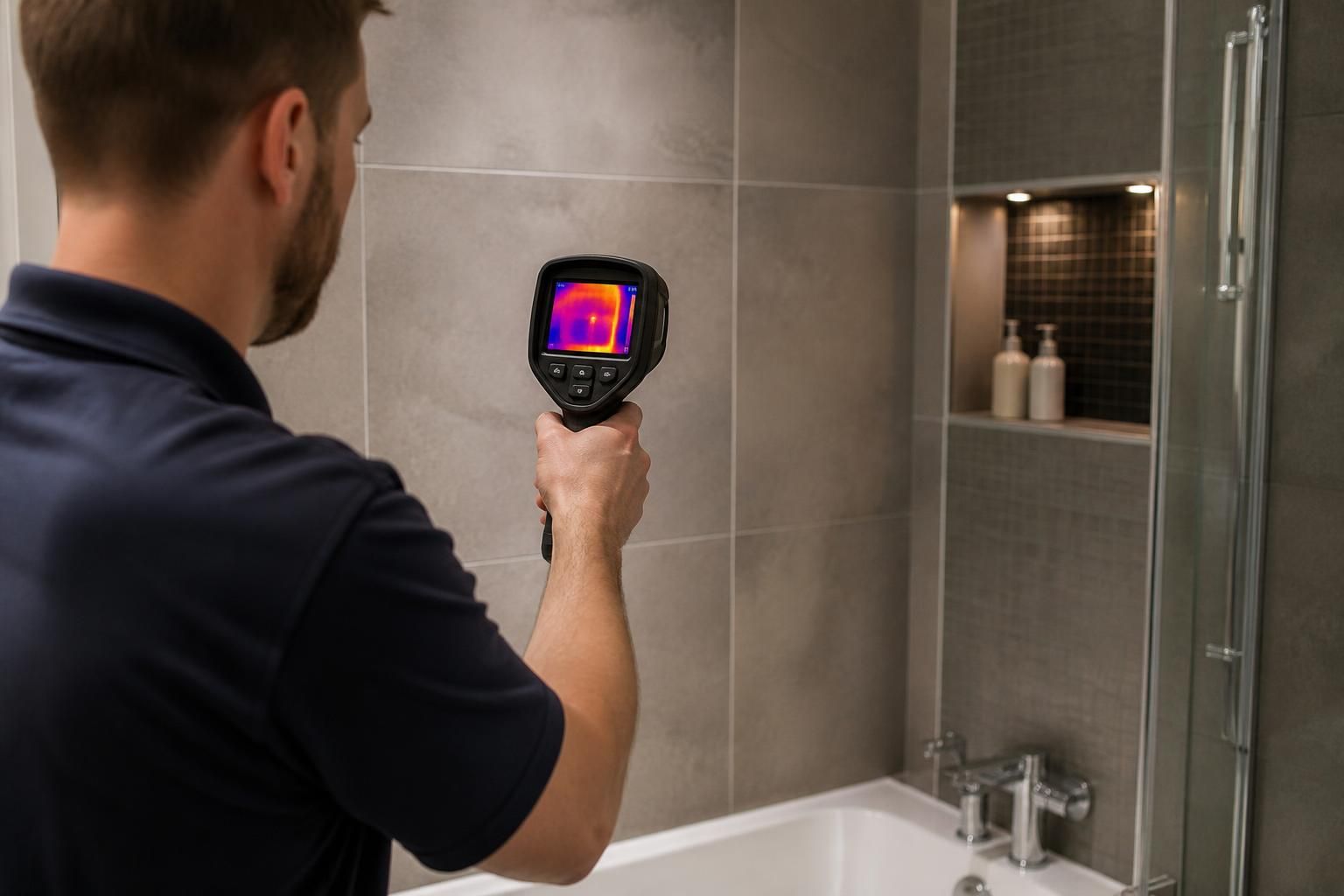
- Thermal imaging: a thermal camera can reveal temperature differences linked to hot-water leaks or moisture movement beneath surfaces. It does not normally require contact with, or removal of, the finish.
- Moisture mapping: moisture meters help compare readings across walls, floors and surrounding areas, indicating where water may have travelled.
- Tracer methods: where appropriate, a harmless tracing medium or controlled plumbing test can help identify a route or confirm which pipe or fitting is involved.
- Drain and pipe inspections: inspection cameras or carefully controlled tests may be used where the suspected problem involves waste pipes, concealed pipework or drainage.
These methods can locate evidence without drilling or lifting finishes. However, moisture does not always appear directly above the leak. Water can travel along joists, behind wall coverings or beneath flooring before becoming visible, so the damp patch may not mark the actual source. A professional will interpret readings alongside the building layout and plumbing system rather than relying on one test alone.
In some cases, limited access is necessary to confirm the diagnosis or complete the repair. This may involve removing an access panel, lifting a small section of flooring, opening a discreet area of plasterboard or taking off a removable plinth. Such work should be explained before it is carried out, with the least disruptive access point chosen wherever possible. Removing tiles, fitted units or sanitaryware should not be the first step when non-invasive checks can provide useful evidence.
The risk of damage is higher when fittings are already deteriorated. Cracked grout, failed sealant, loose tiles, brittle plastic, corroded fixings, swollen timber and water-damaged plasterboard may not tolerate removal or movement. Existing defects should be recorded and discussed before investigation, particularly in older bathrooms or rental properties. This distinguishes damage caused by the leak or prior wear from any access work required to diagnose it.
Protective measures can also reduce avoidable marking. These may include using clean coverings, protecting floors and furniture, keeping tools away from glazed surfaces, isolating water supplies when necessary and avoiding unnecessary pressure on wall-mounted or fitted items. After testing, any opened access point should be left secure, while the repair and reinstatement requirements should be clarified separately. Detection itself may identify the source without repairing the underlying leak or restoring finishes affected by earlier water damage.
When arranging an inspection, it is useful to provide details of when the dampness appears, whether it changes when the shower, bath or toilet is used, and whether the affected area is below or beside another room. Tell the plumber about concealed services, recent bathroom work and any surfaces that are particularly fragile. Ask which tests are proposed, whether any opening-up is likely, how existing damage will be handled and whether reinstatement is included in the quoted work.
A careful investigation should therefore minimise disturbance rather than promise that access will never be required. The most suitable method depends on the plumbing layout, the suspected source, the materials used and the condition of the bathroom. If water is near electrical fittings, spreading rapidly or causing structural deterioration, stop using the affected fixture where possible and arrange a qualified assessment before carrying out cosmetic repairs.