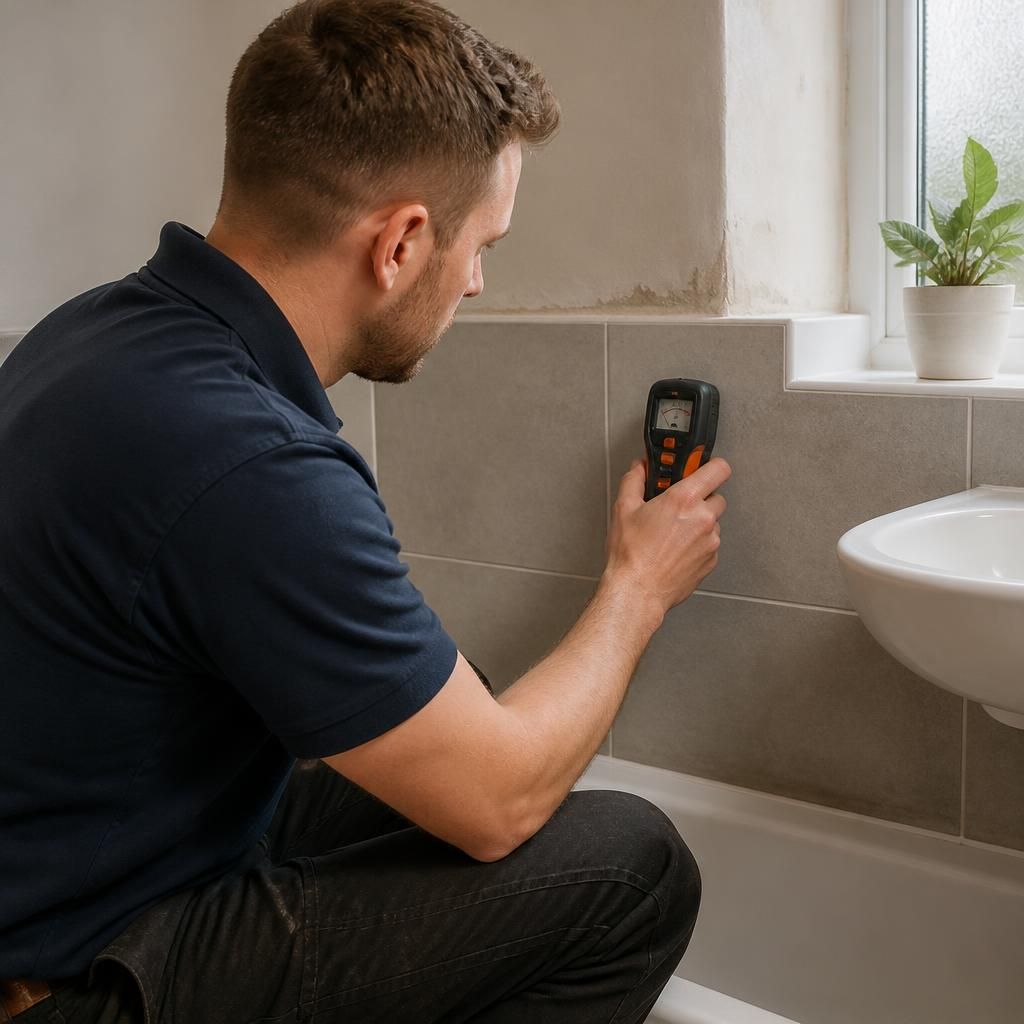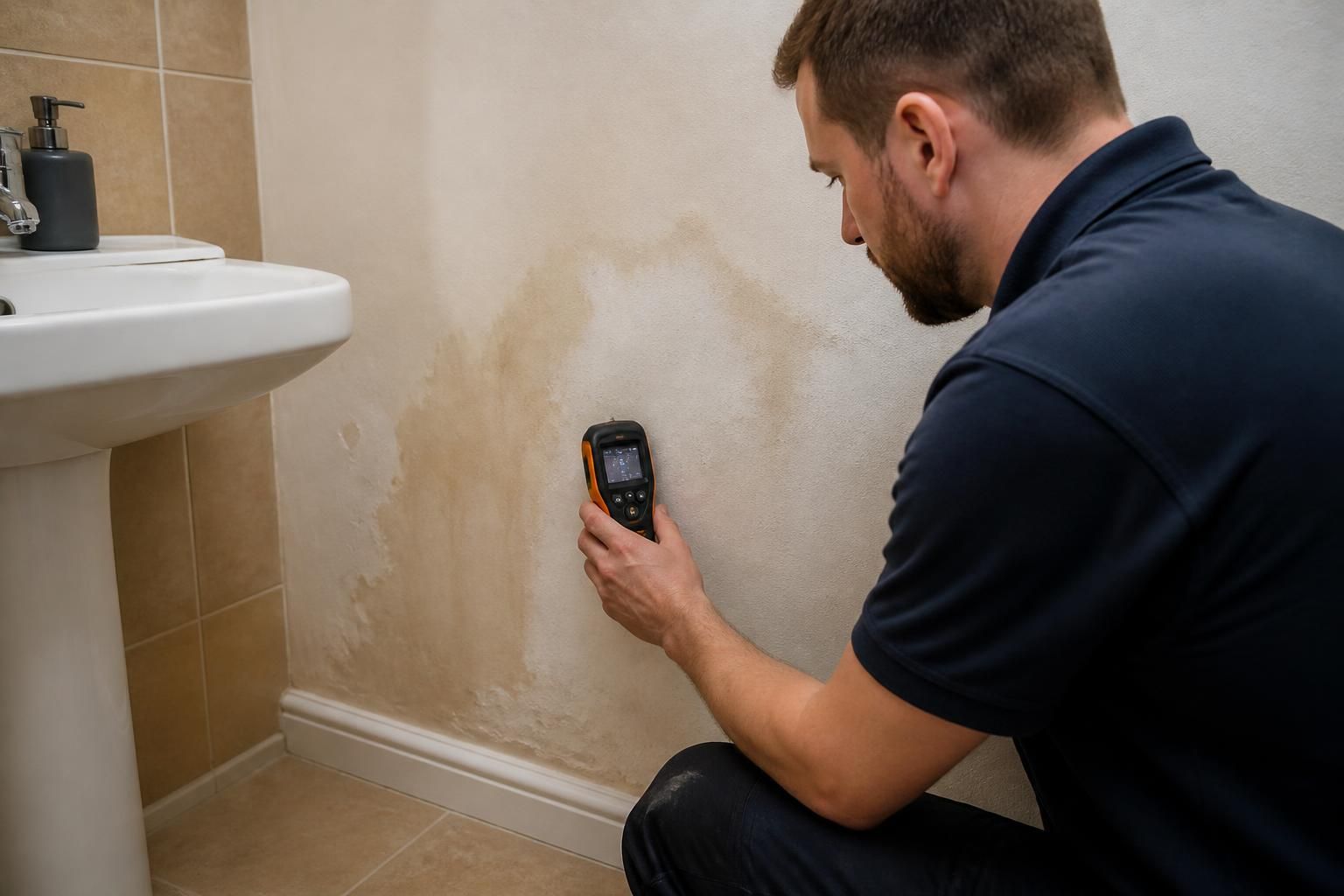
Professional leak detection is normally a controlled inspection rather than a major interruption to the property. The main disruption is likely to be providing access to the suspected area, moving nearby belongings and temporarily avoiding use of affected plumbing while the source is assessed.
The level of disruption depends on the leak’s location, how clearly its symptoms identify the source and whether the affected pipework is accessible. A visible leak beneath a basin, around a toilet or at an exposed connection can usually be investigated with little disturbance. A concealed leak may require more careful tracing because water can travel away from the original fault through walls, floors or ceilings.
A typical inspection may include:
- Discussing when the problem was first noticed and which fixtures or rooms appear to be affected.
- Inspecting visible pipework, valves, sanitaryware, seals and surrounding surfaces.
- Comparing signs of dampness, staining, temperature or moisture across relevant areas.
- Checking whether the suspected pipe, appliance or fitting is connected to the symptoms.
- Identifying the most likely source before any repair or access work is considered.
Preparation can help keep the visit orderly. Clear items from beneath sinks, around toilets and beside appliances where possible. Remove personal belongings from visibly damp areas, but avoid disturbing damaged plaster, flooring or fittings before they have been assessed. If water is actively escaping, isolate the relevant supply where it is safe to do so and avoid using the associated fixture until the inspection is complete.
Access is usually focused on the suspected route rather than the whole property. The plumber may need to examine neighbouring surfaces or the room below if the signs suggest that water has migrated. This does not automatically mean that floors, walls or fittings will need to be removed. Any intrusive investigation should be based on the evidence available and discussed before it is undertaken.
There may be some temporary inconvenience during the assessment. Water use may need to be restricted, a bathroom or kitchen may be unavailable for part of the inspection, and furniture may need to be moved away from the working area. These measures help prevent further damage and make it easier to distinguish an active leak from residual dampness.
Leak detection and leak repair are separate stages. Finding the source may be relatively contained, while the eventual repair can involve replacing a failed connection, resealing a fitting or opening a particular section of the building. The likely repair method should be explained once the cause and position of the leak are clearer, so the property owner can understand what further disruption may be involved.
For landlords and tenants, it is useful to record existing marks or damage before the inspection and agree how access will be provided. Tenants should report suspected leaks promptly to the landlord or managing agent, particularly where water is affecting another room, an electrical fitting or a neighbouring property.
Overall, the inspection itself is generally planned around the affected plumbing and nearby surfaces. Clear information about the symptoms, sensible preparation and prompt attention to active water leaks can all help limit unnecessary disturbance.