Access during a plumbing leak investigation is managed in stages, beginning with the least disruptive checks and becoming more targeted only when the evidence indicates that further inspection is necessary. This approach helps establish whether the problem is visible, concealed, or travelling from another part of the property.
Before starting, the plumber will usually discuss the reported symptoms with the occupant. Useful details include where staining, dampness, mould, unusual smells or sounds have appeared, when they were first noticed, and whether they change when taps, toilets, heating or appliances are used. This information helps focus the inspection rather than opening several areas without a clear reason.
Access is normally considered in the following order:
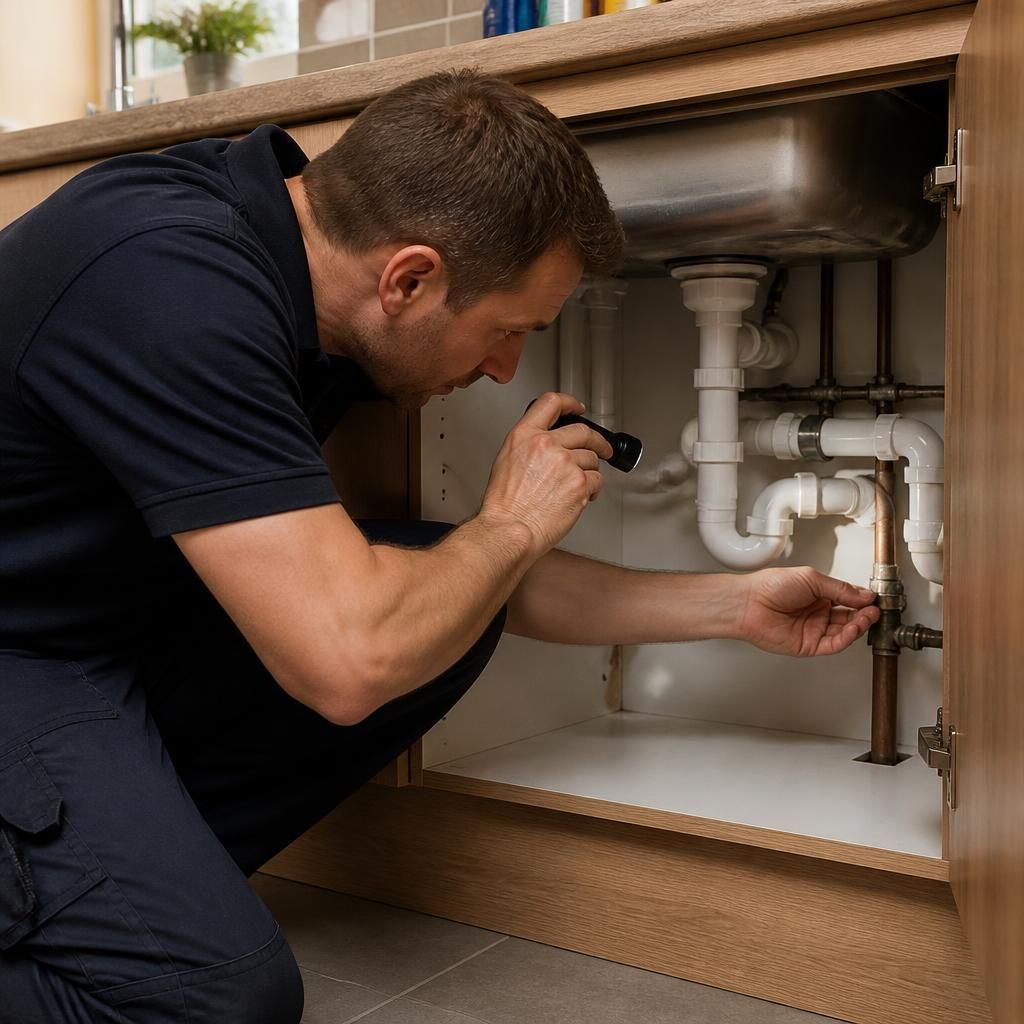
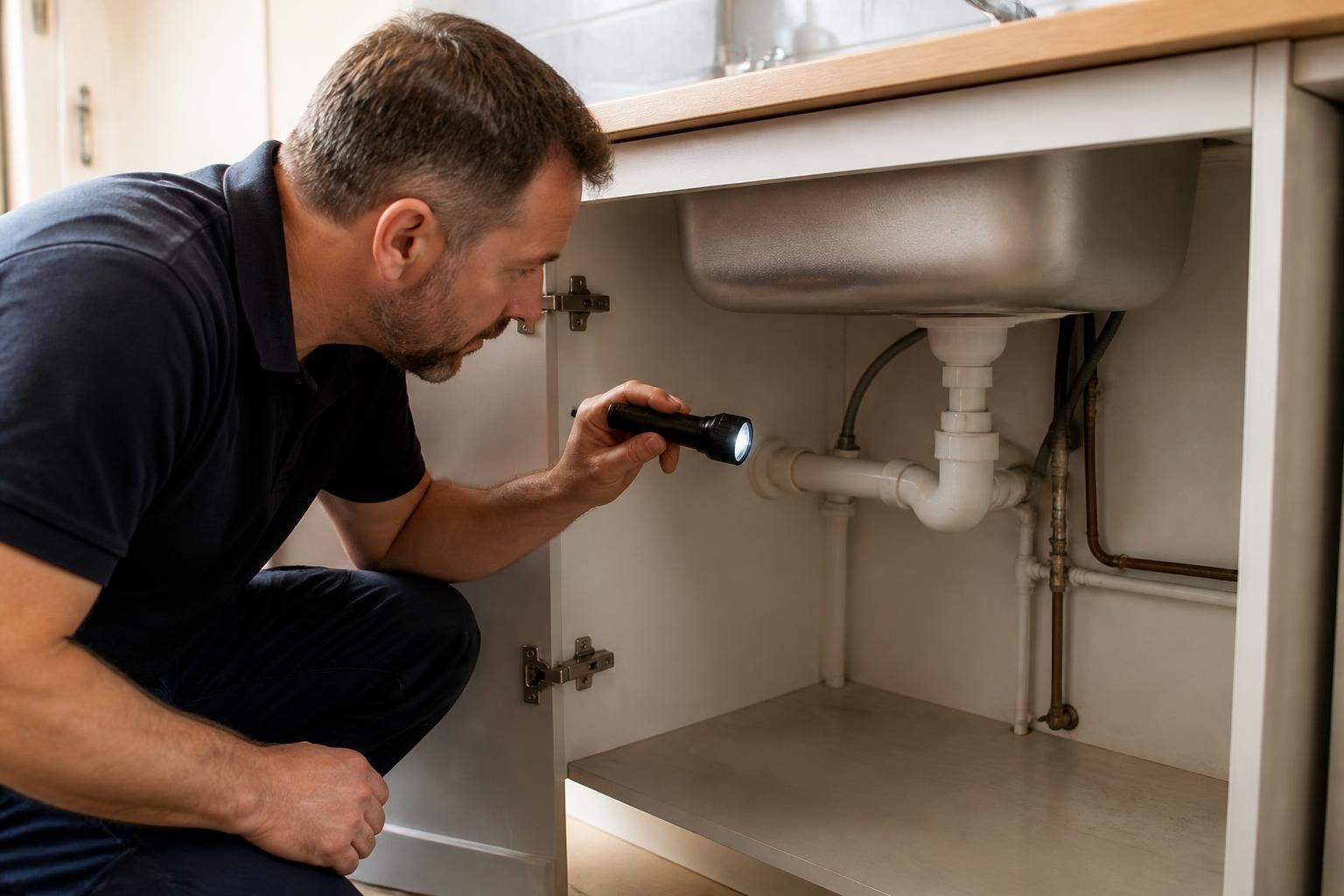
- Visible plumbing: pipework, valves, traps, taps, toilets, radiators, boilers and appliance connections may be checked first.
- Accessible spaces: cupboards, service voids, loft areas and removable panels can provide routes to concealed pipework without disturbing finished surfaces.
- Adjacent areas: the investigation may extend beyond the room where damage is visible because water can travel along floors, walls, joists and pipe channels.
- Concealed sections: if other evidence points to a hidden leak, limited access through a panel, flooring, wall finish or ceiling may be considered.
The occupant should be told what the plumber needs to inspect and why. Permission should be obtained before moving belongings, removing a panel or lifting a covering. Where the property is rented, the tenant may also need to involve the landlord or managing agent before any opening-up work is authorised. The investigation can then be kept within the agreed scope.
Furniture and stored items may need to be moved to reach an inspection point. Ideally, the occupant clears small items in advance, while heavier or delicate belongings should be discussed before they are handled. The work area should be kept as contained as practical, with suitable protection used around furnishings and flooring where an inspection requires tools or contact with dusty surfaces.
Many checks can be carried out without damaging the property. These may include visual examination, moisture readings, checking accessible joints and valves, comparing dampness in nearby materials, and observing changes when individual water outlets or appliances are operated. The plumber may also inspect the meter or other relevant controls where this forms part of tracing water use. Non-invasive checks can indicate the likely location, but they do not always identify the exact failed component.
If a concealed leak is suspected, access should be proportionate to the information available. A removable access hatch or existing service opening may be preferable to disturbing a finished surface. If opening-up is required, the plumber should explain the proposed location and the likely purpose of the inspection before proceeding. This is particularly important where tiles, plasterboard, flooring, joinery or decorative finishes could be affected.
Safety also determines how access is arranged. The work area should be kept clear, children and pets kept away from tools and exposed sections, and electrical equipment treated cautiously where water has entered walls, ceilings or floors. If there is a risk from saturated materials, unstable ceilings or contact between water and electrical installations, the area may need to be restricted until it has been made safe.
For flats, maisonettes and properties with adjoining dwellings, access may involve more than one room or address. Water can pass between floors or through shared building elements, so the source may not be directly above or beside the visible damage. Access to communal areas or another property should be arranged through the relevant owner, tenant, managing agent or building representative rather than assumed.
Throughout the investigation, useful records include photographs of visible damage, notes about areas inspected, moisture readings where taken, and details of any sections that could not be accessed. These records help distinguish the source of the leak from the route taken by the water and can support later repair decisions or discussions with a landlord or insurer.
Once the suspected source has been assessed, the plumber should explain whether further access is needed for a repair, whether a temporary isolation is appropriate, and what surface restoration may be separate from the plumbing work. Keeping investigation access clearly separate from repair and reinstatement avoids confusion about what has been inspected, altered or left pending.