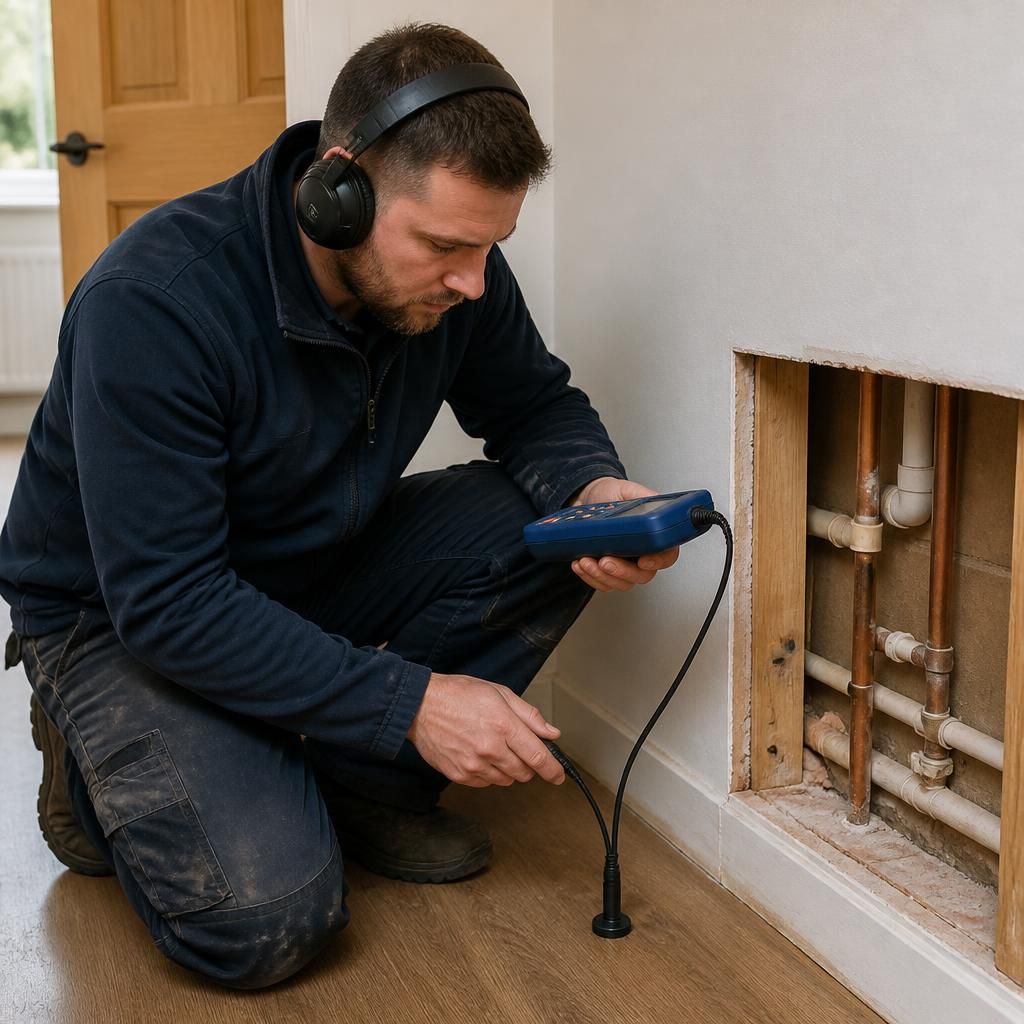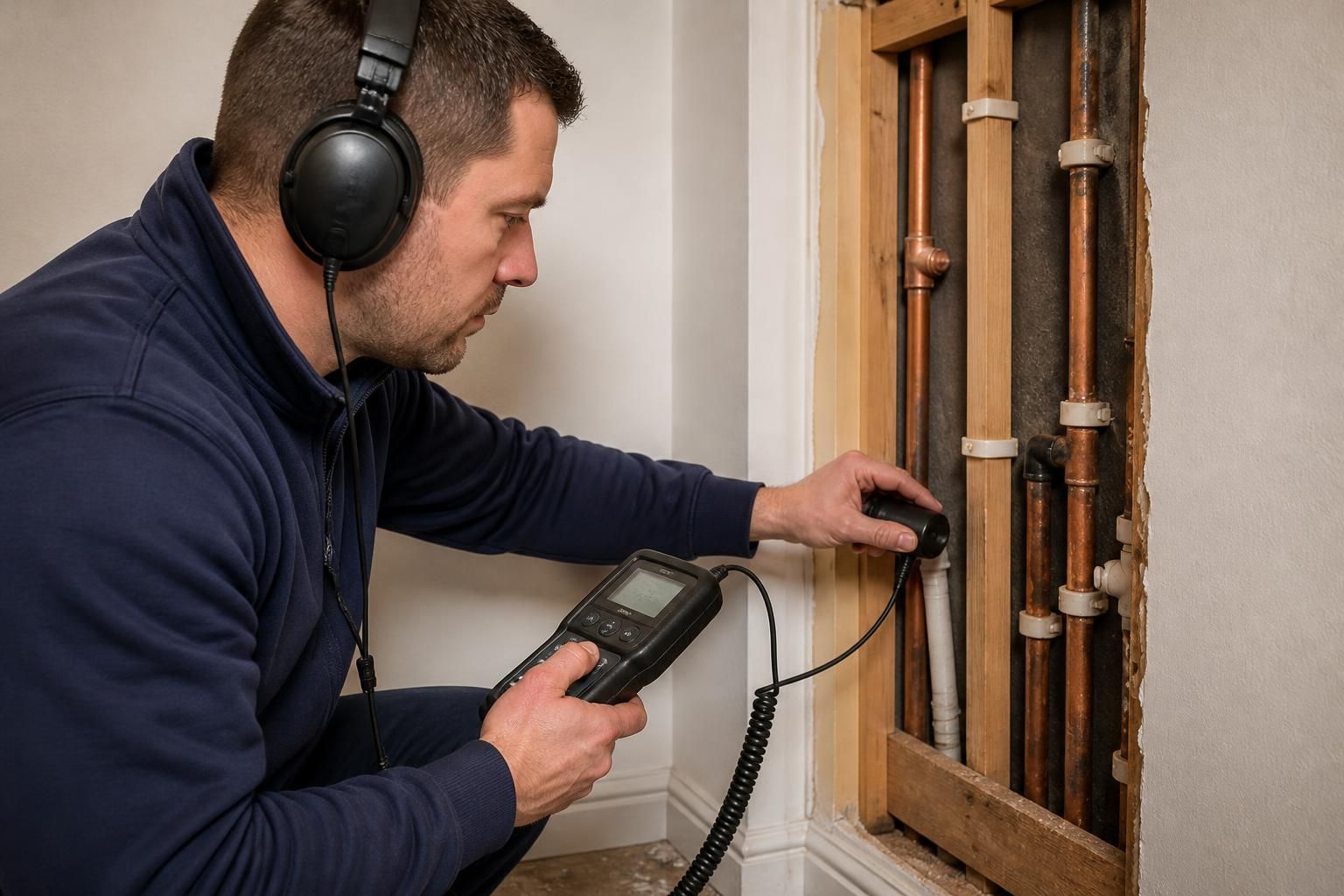
Professional leak detection is a structured investigation that combines information gathering, targeted testing and specialist measurement to identify which plumbing system is affected, where water is escaping and how far it has travelled. The work is designed to distinguish the original leak from secondary dampness, condensation or an unrelated plumbing fault before repair work is recommended.
1. Initial assessment
The investigation begins with a discussion of what has been noticed, such as a damp patch, staining, mould, a drop in water pressure, an unexplained increase in water use or a sound of running water. The location, appearance and timing of the symptoms can help establish whether the problem is likely to involve a pressurised water supply, central-heating pipework, a waste pipe or a drainage run.
The plumber will also consider the layout of the property and the position of visible fixtures, stop valves, boilers, radiators, tanks, bathrooms and kitchens. This creates a working picture of the pipe routes and helps identify which areas need to be tested first.
2. Checking visible plumbing
Accessible pipework, joints, valves, taps, toilets, appliances and fittings are examined for signs of seepage. This may include corrosion, limescale, damaged seals, loose connections, water marks or fresh moisture. Visible checks are important because a concealed leak is not always the cause of a damp area; water can travel along floors, ceilings and wall cavities from a different entry point.
Where appropriate, the supply may be isolated and the water meter or pressure behaviour observed. A pressure test can help indicate whether a closed system is losing water, although the result must be interpreted alongside the type and condition of the pipework. Pressure testing alone does not always identify the precise location of a fault.
3. Selecting suitable detection equipment
The equipment used depends on the type of suspected leak and the construction of the property. Common methods include:
- Acoustic detection: sensitive listening equipment can pick up the sound and vibration created when pressurised water escapes from a pipe. Background noise, thick walls and the material of the pipe can affect the readings.
- Thermal imaging: an infrared camera can show temperature differences caused by warm or cold water moving through building materials. It is particularly useful where the temperature of the leaking water contrasts with the surrounding surface.
- Moisture measurement: moisture meters help compare readings across floors, walls and ceilings. They can help map the spread of dampness, but a high reading does not by itself prove where the water entered.
- Tracer methods: specialist tracer gas or a suitable dye may be used in appropriate circumstances to track a route that cannot be seen directly. The method must be chosen carefully so that it is compatible with the plumbing system and does not create further contamination.
- Drain inspection: where the suspected issue involves waste or drainage pipework, inspection equipment may be used to assess internal condition, connections and possible breaks.
These methods are often used together. For example, moisture readings may identify the affected zone, while acoustic or thermal checks help narrow down the source. Equipment produces useful evidence, but accurate interpretation remains essential because building materials, insulation, ambient temperature and existing damp can influence the results.
4. Separating the plumbing system involved
A property may contain several independent water systems, so the investigation should establish whether the fault relates to mains cold-water pipework, hot-water pipework, central-heating circuits or drainage. Testing one system at a time can prevent a symptom from being wrongly attributed to the wrong source.
Heating leaks may show as pressure loss, repeated need to top up the system, staining near radiators or dampness around concealed heating pipes. A supply-pipe leak may continue even when taps and appliances are not being used. Drainage problems often appear when a bath, shower, sink, washing machine or toilet is discharged. The pattern of the symptoms helps determine which tests are appropriate.
5. Confirming the likely source
A professional investigation should not rely on a single unusual reading. Findings are compared with the visible condition of the property, the pipe layout and the behaviour of the suspected system. Where possible, the suspected section is tested again or isolated to confirm that the evidence is consistent.
This confirmation stage helps distinguish an active leak from residual moisture. Water trapped in plaster, flooring, insulation or masonry can remain after a plumbing fault has stopped, so a damp surface does not necessarily identify an ongoing escape of water. Similarly, condensation and penetrating damp may produce symptoms that resemble a plumbing leak but require a different solution.
6. Assessing access and disruption
The purpose of specialist detection is to narrow the investigation before any opening-up is considered. Depending on the findings, access may be possible through existing service panels, cupboards, floor voids or other accessible points. If a concealed pipe must eventually be exposed, the evidence should help limit the work to the most relevant area rather than removing large sections without a clear reason.
Detection cannot guarantee that every pipe will be accessible or that no opening-up will be needed. Pipework may run beneath solid floors, behind tiled finishes or within insulated cavities, and some building materials can restrict the information provided by instruments. A responsible assessment should explain these limitations before intrusive work is proposed.
7. Recording the findings
Once the investigation is complete, the findings should be explained in practical terms. This normally includes the suspected source, the system involved, the evidence supporting the conclusion, any areas of secondary moisture and whether further inspection is advisable. Photographs, moisture readings or a marked-up location can be useful when discussing the repair with a homeowner, landlord, tenant, insurer or another contractor.
The outcome may be a confirmed leak location, a narrowed search area or evidence that the reported dampness is not being caused by the plumbing. If the source cannot be confirmed without additional access or testing, that limitation should be stated clearly rather than presenting an assumption as a definite diagnosis.
When professional detection is particularly useful
- The source of damp staining is not directly visible.
- Water appears beneath a floor, inside a wall or below a ceiling.
- A heating system is losing pressure without an obvious external leak.
- A water meter or supply appears to indicate ongoing use when fixtures are not operating.
- Several possible faults exist and unnecessary removal of flooring, plaster or tiling should be avoided.
- A leak has stopped showing visible water but the affected materials remain damp.
In short, professional leak detection involves diagnosis before repair: gathering evidence, testing the relevant system, interpreting specialist readings and identifying the most credible source. The result should give the property owner enough information to decide what repair or further investigation is justified, rather than relying on guesswork or replacing accessible fittings without confirming the underlying fault.