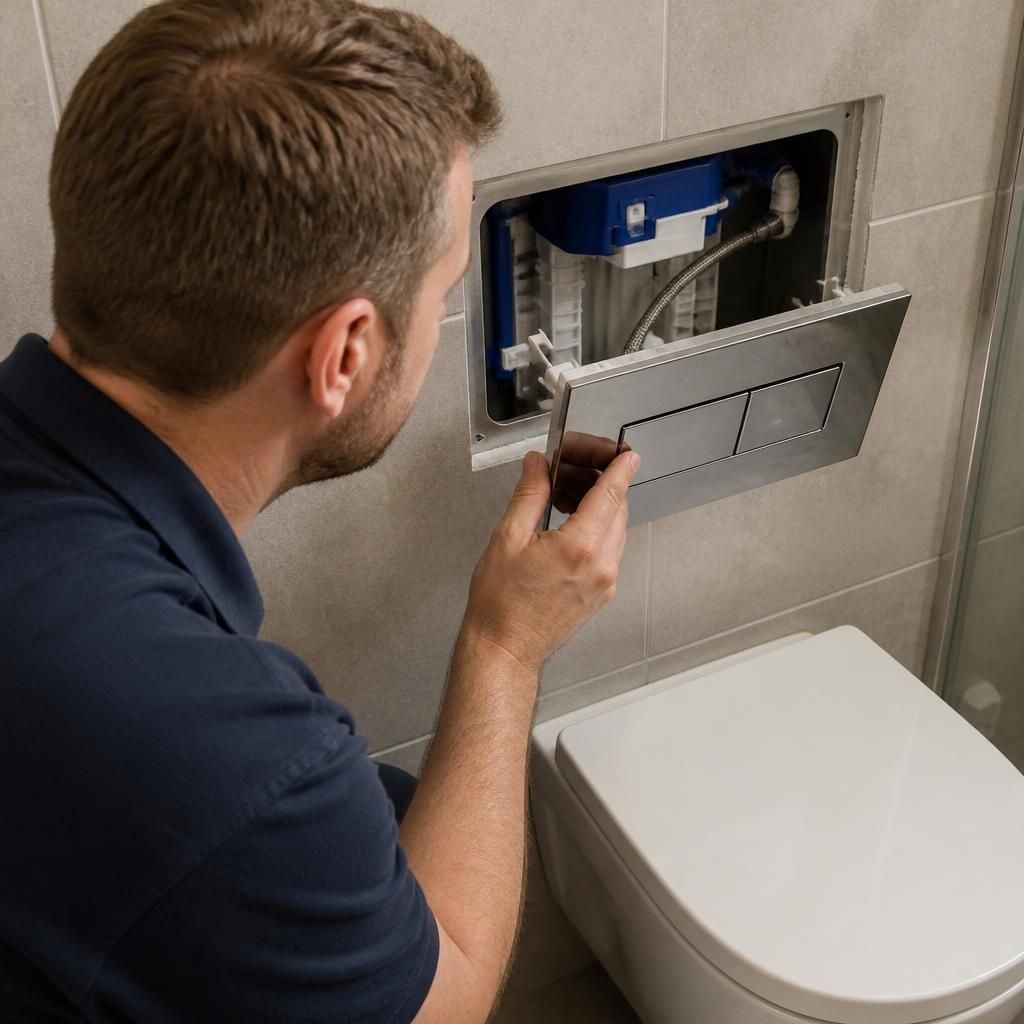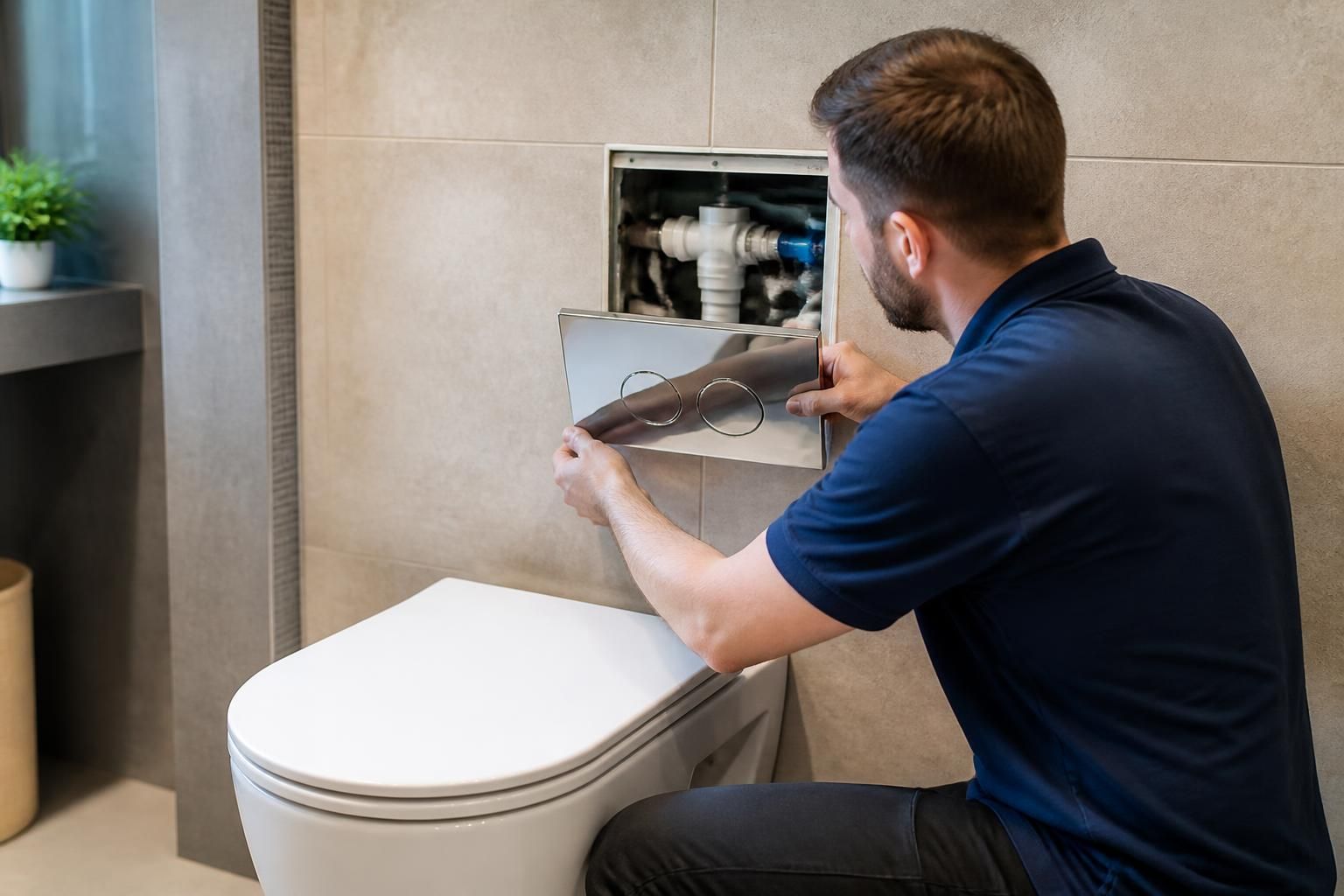
Yes, wall-mounted toilets are generally repairable. Most faults can be addressed without removing the pan because the flush plate, service opening or concealed cistern provides access to the internal mechanism. The appropriate repair depends on whether the problem is with the flushing components, water supply, waste connection, pan, or supporting frame.
Common repairs include:
- Replacing or adjusting a faulty flush valve, button mechanism or cable.
- Repairing an inlet valve that causes the cistern to fill slowly, continuously or not at all.
- Renewing seals and connectors inside the concealed cistern.
- Replacing a damaged flush pipe or waste seal.
- Investigating water escaping around the pan or into the wall cavity.
- Checking a pan that moves, sits unevenly or has become detached from its supports.
A plumber will usually begin by identifying the source of the fault and isolating the water supply. The flush plate is then removed, where suitable, to inspect the operating mechanism and reach the concealed cistern. If the fault is not visible through this opening, access may be available through a separate service panel. This approach can allow individual components to be repaired or replaced rather than removing the entire toilet.
Wall-mounted toilets are supported by a concealed metal frame fixed behind the wall, so movement of the pan needs careful assessment. A loose fixing, damaged bracket or problem with the frame can place strain on the ceramic pan, flush pipe and waste connection. These issues require more than a simple adjustment to the flush mechanism. The supporting structure and all connected components should be checked before the toilet is put back into use.
A continuously running toilet commonly points to an inlet valve, flush valve or seal problem. A weak flush may result from an incorrectly adjusted mechanism, restricted water flow or an obstruction. If water appears around the base of the pan, the waste connection, pan seal or concealed pipework may need inspection. Water staining, dampness or a musty smell near the wall should be treated as a possible concealed leak rather than just a cosmetic issue.
Some repairs involve replacing a standard internal component, while others require a compatible part for the particular concealed cistern or frame. The flush plate design, access arrangement and condition of the existing fittings can affect the work involved. Where a component is worn but the frame and pan remain sound, repairing the individual part is often more appropriate than replacing the complete toilet installation.
Do not force a stuck flush plate, continue using a pan that moves, or seal around visible water without finding its source. If the isolation valve can be safely reached, the water supply can be turned off to limit further leakage while the fault is assessed. Ideal Plumbing Services provides wall-mounted toilet repairs for homeowners, landlords and tenants in Birmingham and across the West Midlands, with the work based on the fault identified during inspection.