Bathroom tiles and toilet fittings are not normally damaged by a properly planned repair. The level of disturbance depends on the fault and the toilet’s design: replacing an accessible inlet valve may involve little more than removing the cistern lid, while a failed pan connector, concealed leak or damaged fixing may require the toilet to be moved to reach the connection safely.
Repairs that usually involve minimal disturbance
- Replacing a flush valve, fill valve or internal cistern seal.
- Adjusting or replacing a flush button, handle or lever.
- Renewing an exposed flexible connector or isolation valve.
- Replacing accessible washers, seals or small sections of visible pipework.
These jobs are generally completed through the cistern or around the exposed pipework. Removing the toilet is not automatically necessary, although the exact access required can only be confirmed after the fault has been inspected.
When more access may be required
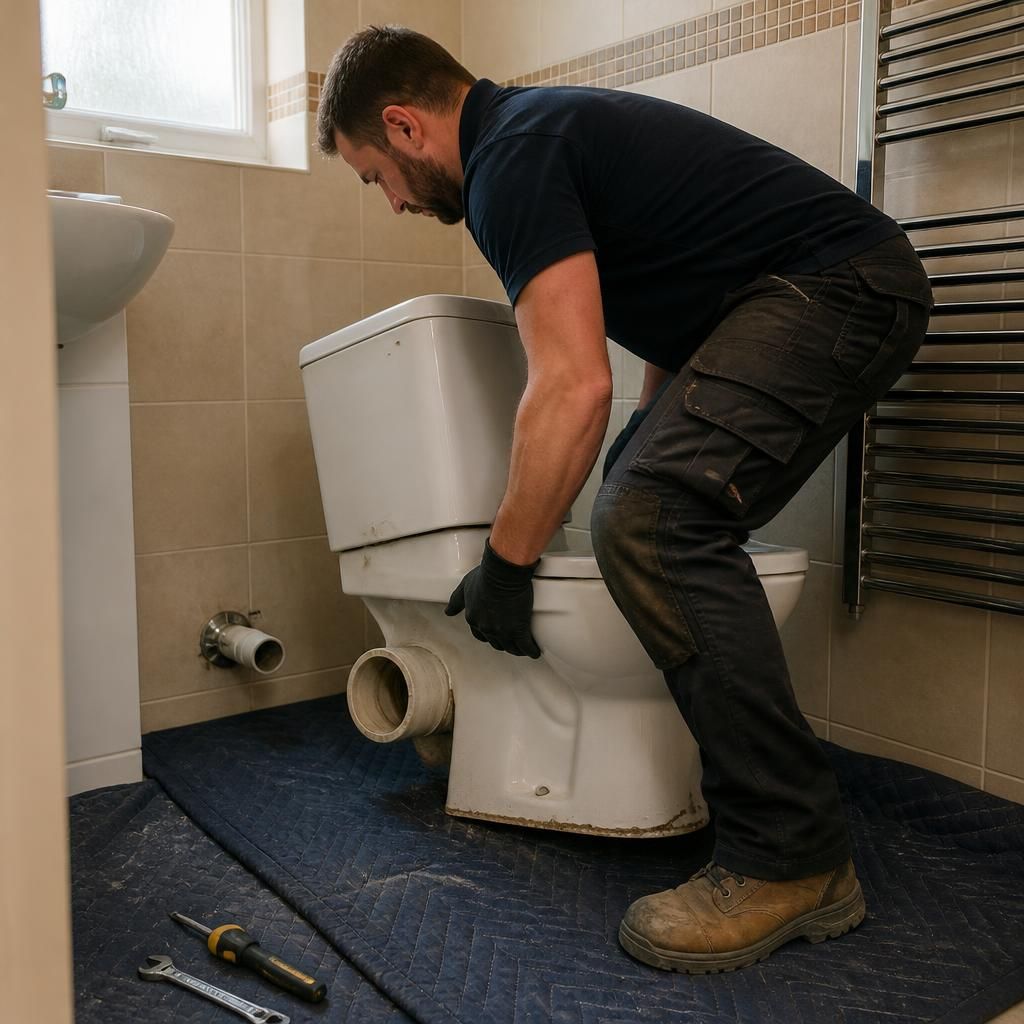
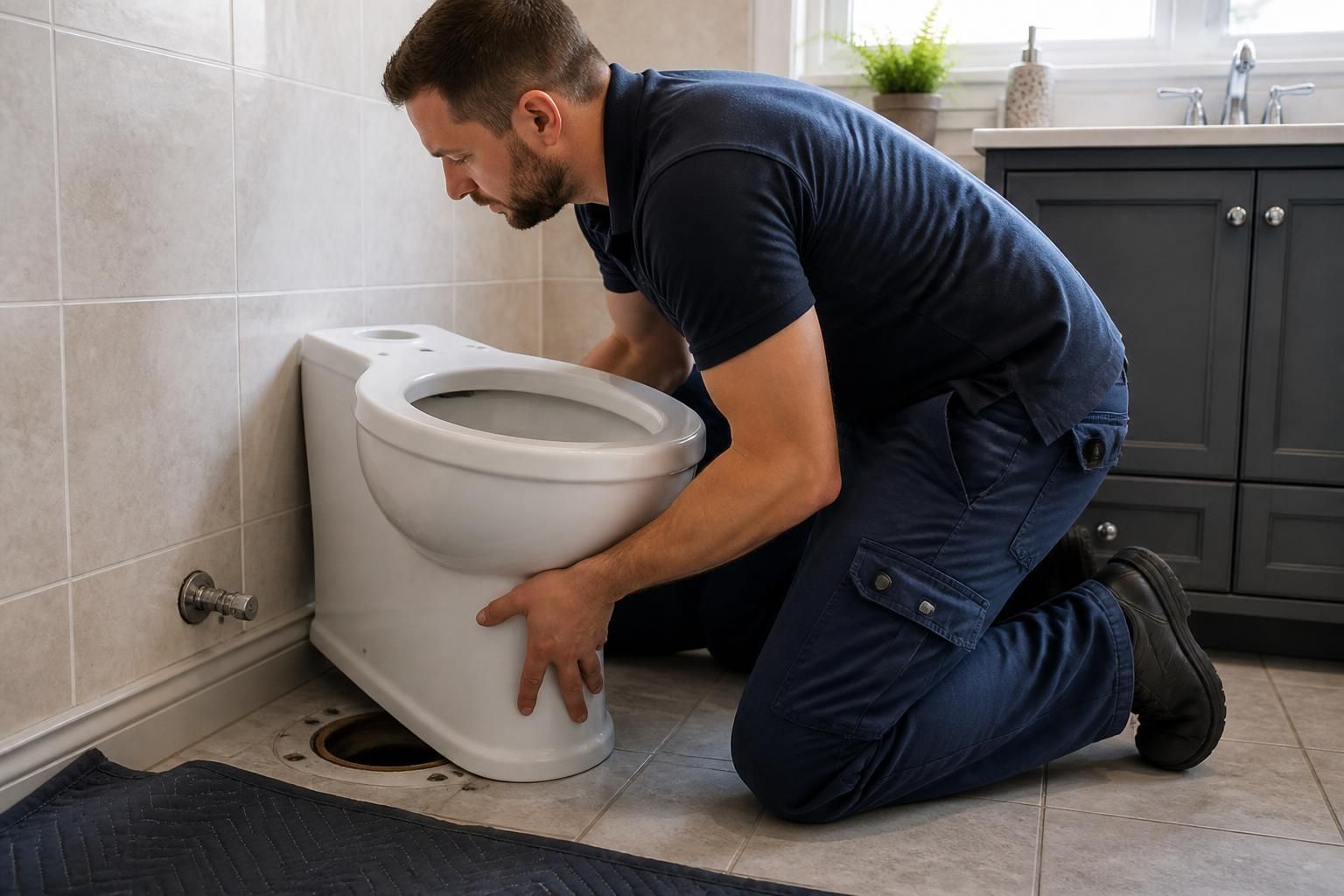
A plumber may need to loosen or remove the toilet where the leak comes from the pan connector, waste connection, floor seal, concealed pipe or the joint beneath the pan. Wall-mounted toilets can have different access requirements because the cistern and supporting frame may be behind a panel or within a boxed-in section. In that situation, the access panel is checked first; opening surrounding tiles or boxing-in should not be the first option where the fault can be reached through existing access.
Older sealant, seized fixings, brittle plastic and tiles that have already become loose can make removal more delicate. In some bathrooms, the toilet may have been installed before the surrounding floor or wall tiles, leaving edges partly covered by the pan. This can increase the possibility of disturbing grout or sealant when the fitting is lifted, even when the work is carried out carefully. A plumber should identify these conditions before starting rather than treating removal as routine.
How surrounding surfaces should be protected
- Turn off the water supply and drain the cistern before disconnecting components.
- Use suitable tools to avoid slipping against ceramic, chrome or tiled surfaces.
- Protect the floor and nearby fittings during removal and handling.
- Support the toilet correctly rather than placing stress on the pan, cistern or pipe connections.
- Remove old sealant in a controlled manner and avoid levering against tiles.
- Keep disconnected pipework capped or protected while the repair is being completed.
These steps reduce the risk of chipped ceramic, scratched fittings, cracked grout and damage caused by water left in the cistern or trap. They also help prevent a repaired connection from being put under strain when the toilet is repositioned.
What can cause damage during or after the repair?
Damage is more likely when excessive force is used on seized components, when the toilet is dragged across a tiled floor, or when a fitting is reconnected with poor alignment. Tightening a fixing too far can also crack ceramic. A leak that is not fully resolved may allow water to reach tile joints, flooring, skirting boards or the cabinet beneath a basin. For this reason, the repair should include a check of the surrounding area, not just replacement of the visibly faulty part.
Tiles that are already cracked, hollow-sounding or loose may move when an adjacent toilet is removed. That does not necessarily mean the repair caused the underlying weakness. The condition of the tiles, grout and sealant should be recorded and explained before work begins if it could affect removal.
What happens after the repair?
Once the faulty component has been replaced, the toilet should be reconnected without forcing the pipework and checked for leaks while the cistern fills and flushes. The base, waste connection, supply connection and any accessible joints should be inspected under normal use. Where sealant has been removed, the correct finishing treatment may be discussed after the area is clean and dry. Replacing damaged tiles, extensive regrouting or repairing concealed building work may be separate from the plumbing repair, so the scope should be agreed in advance.
If you are concerned about particular tiles, a concealed cistern, a wall-mounted pan or expensive bathroom fittings, point these out before the toilet is dismantled. A Birmingham plumber can then assess the access route, explain what may need to be disturbed and distinguish the plumbing repair from any decorative making-good work.