A toilet that leaks into the bowl has an internal leak between the cistern and the pan. Diagnosis involves determining whether water is escaping through the flushing mechanism, passing over the overflow, or entering through a damaged seal or incorrectly adjusted component. The pattern of the water movement usually indicates which part requires attention.
Useful signs to look for include:
- A faint, continuous trickle down the back of the pan.
- Ripples or movement on the surface when the toilet has not been used.
- A hissing or filling sound caused by the cistern repeatedly topping itself up.
- Water running into the overflow because the cistern level is set too high.
- A flush that feels loose, remains partly engaged or needs repeated pressing.
The first diagnostic distinction is between an internal leak and water escaping externally. A dry area around the base, pan connector and cistern connections helps rule out an external leak, while a visible trail inside the pan points towards a cistern or flush-valve fault. Condensation on the cistern can also be mistaken for a leak, but condensation normally appears as moisture on the outside surface rather than a steady flow into the bowl.
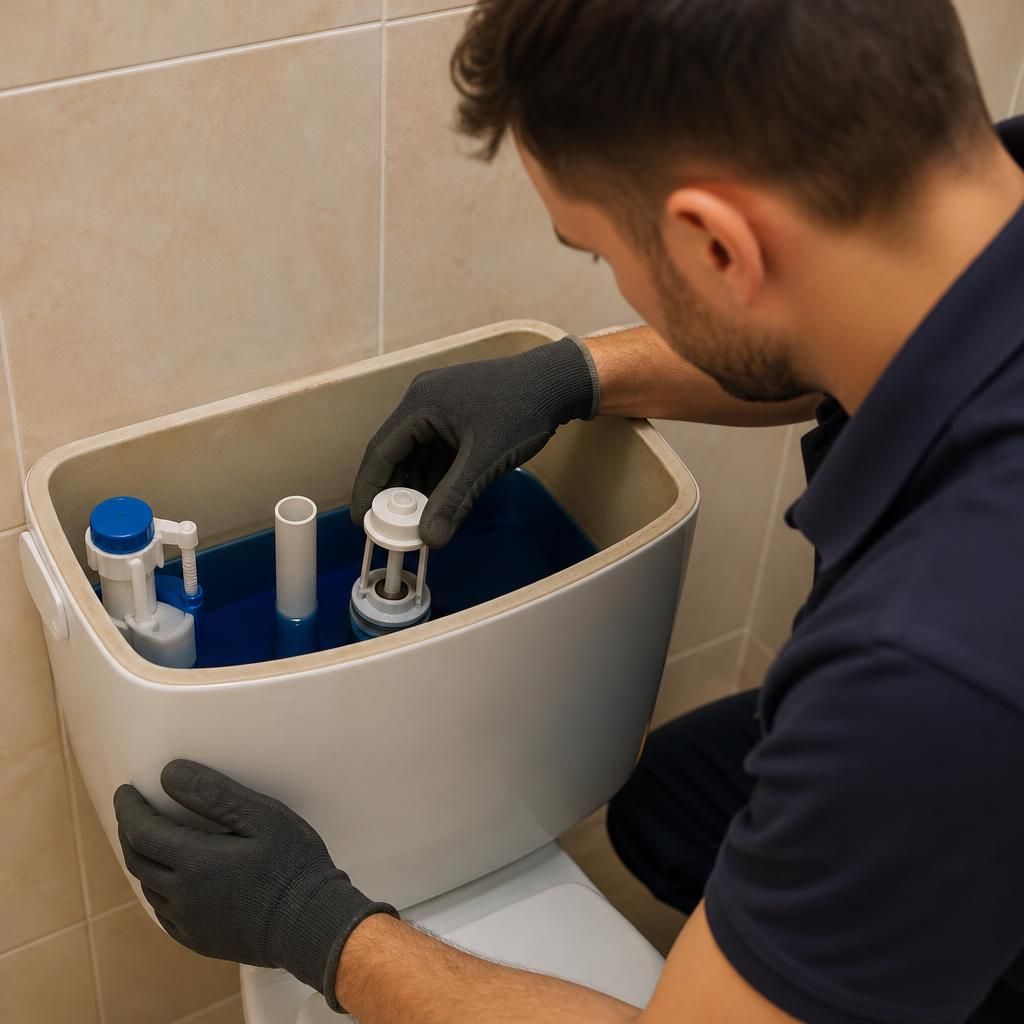
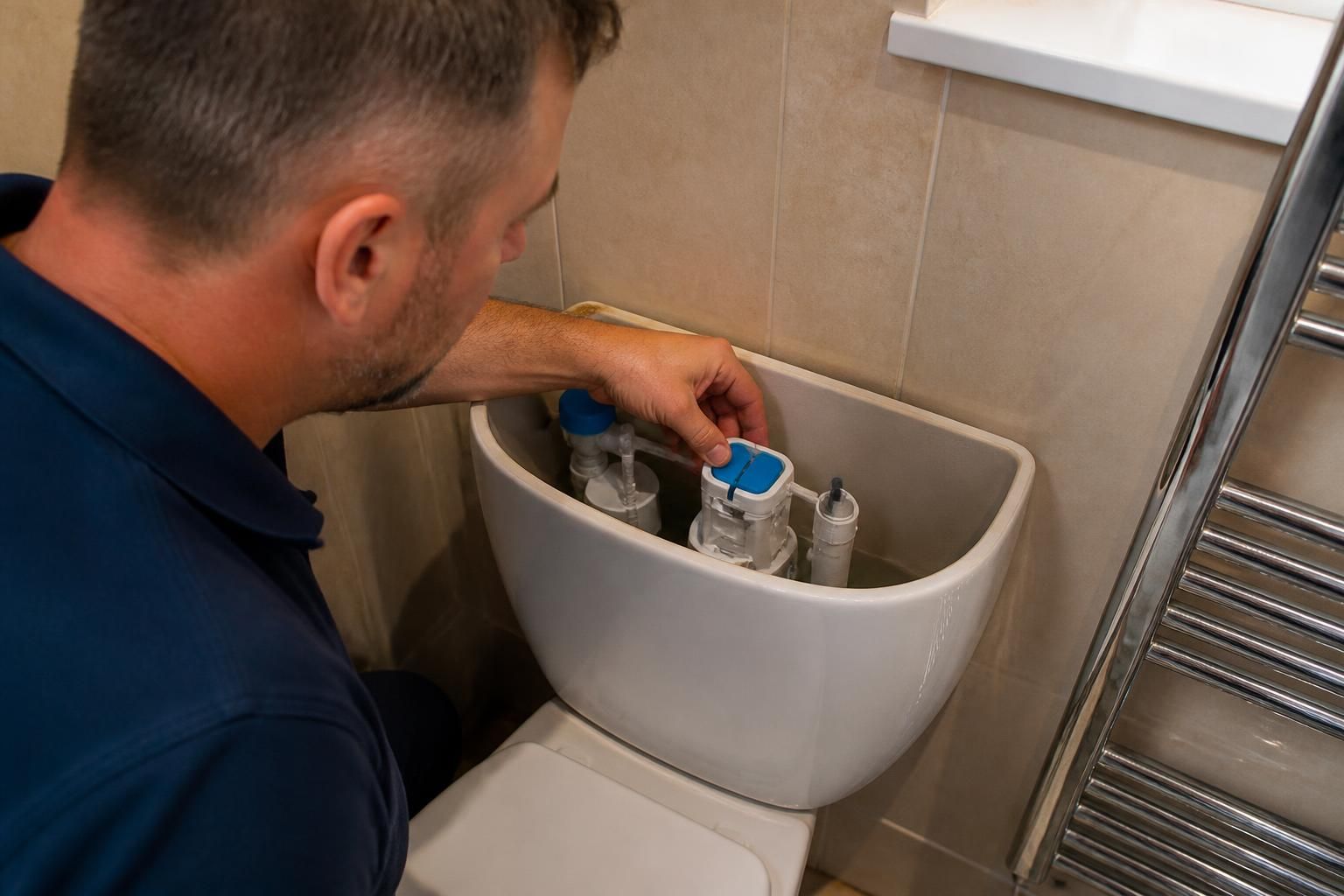
A plumber will examine how the flush mechanism returns after operation. A button, handle, chain or linkage that does not fully reset can hold the valve slightly open. The condition of the valve seat and rubber washer is also important: scale, grit, distortion or deterioration can prevent a proper seal even when the operating mechanism appears to work normally. These faults can produce a very small leak that is difficult to see without observing the toilet for a period of time.
The cistern’s filling arrangement is checked separately. If the inlet valve does not shut at the correct level, water may continue rising until it discharges through the overflow and into the bowl. The float, adjustment mechanism and inlet valve are assessed for incorrect positioning, wear or debris. This is different from a flush-valve leak because the water level is generally too high rather than escaping through a valve that should be closed.
Diagnosis should also consider the age and type of the toilet. Concealed cisterns, close-coupled toilets and wall-mounted designs can use different access points and operating linkages. Restricted access may make it necessary to inspect the flush plate, service opening or removable cistern cover rather than the visible bowl alone. A replacement part must match the existing mechanism and seal arrangement; fitting an unsuitable component can leave the original problem unresolved.
Before arranging a repair, check whether the leak changes after the toilet is flushed, whether it is constant or intermittent, and whether it stops when the cistern is prevented from refilling. Do not force a stuck button or handle, as this can damage the linkage. If the toilet is wasting water continuously, the local isolation valve can be used where it is accessible and operates safely, but the toilet may then be unavailable until the fault is corrected.
Once the faulty area has been identified, the repair may involve cleaning a sealing surface, adjusting the water level, replacing a washer or flush-valve seal, or renewing the complete inlet or flush mechanism. A competent plumber will normally test the toilet through several flush cycles and check that the cistern stops filling correctly and that no water continues to pass into the pan. Ideal Plumbing Services provides residential toilet plumbing repairs for homeowners, landlords and tenants across Birmingham and the West Midlands, including diagnosis where the cause is not visible from the outside.