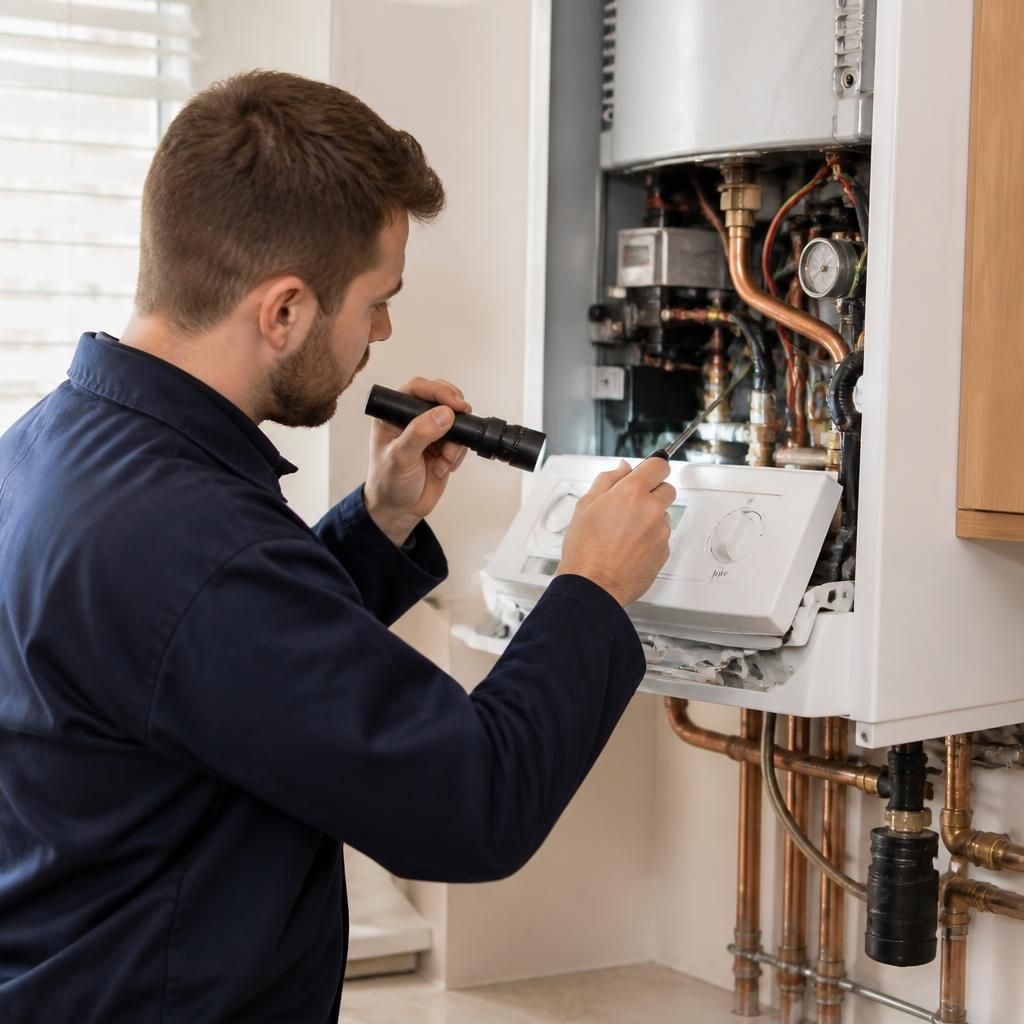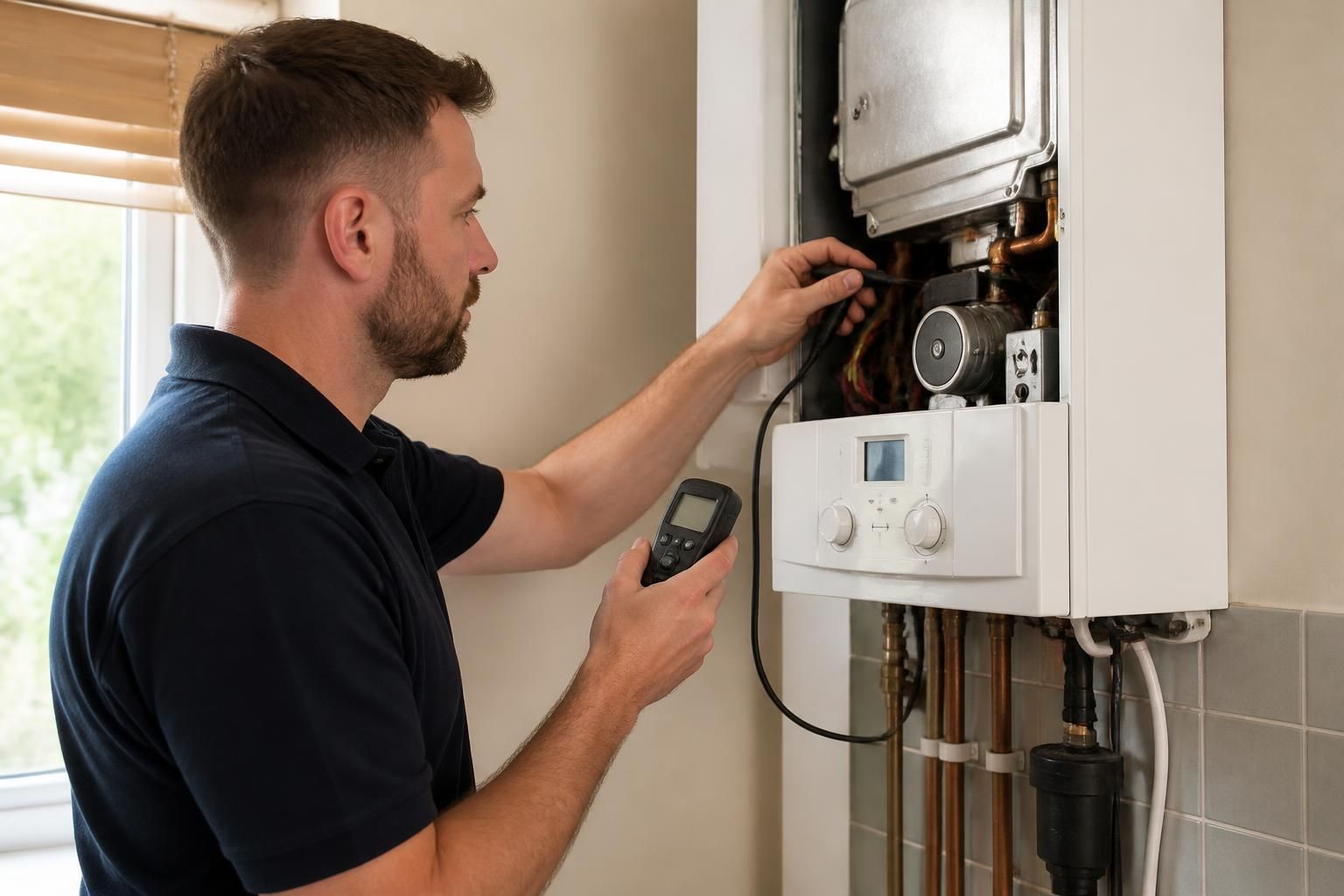
A boiler service is a planned inspection and maintenance visit carried out by a qualified heating engineer. For most households, the appropriate cycle is yearly, with the precise timing guided by the boiler manufacturer’s instructions, the appliance’s condition and how it is used.
Why the interval matters
Regular servicing allows an engineer to examine the boiler before minor issues develop into more disruptive faults. The checks are intended to assess safe combustion, ventilation, flue condition, pressure, controls and the general operation of the appliance. Components can deteriorate gradually, so a boiler may continue to provide heating and hot water while still requiring attention.
A service is also different from a repair. Servicing is preventative maintenance and inspection; a repair addresses a known fault, such as repeated shutdowns, unusual noises or a loss of heating. A service cannot prevent every breakdown, but it can identify wear, unsafe operation or developing problems that need further work.
When a boiler may need attention sooner
- After the boiler has been moved, altered or repaired
- When the manufacturer specifies a shorter servicing interval
- If the boiler repeatedly loses pressure or switches itself off
- If radiators are not heating properly or hot water performance changes
- If there is an unusual smell, noise or visible sign of damage
- When a carbon monoxide alarm sounds, in which case the appliance should not be used until it has been assessed
These symptoms should not be left until the next planned service. A service date is a maintenance guide, not a substitute for investigating a suspected fault or safety concern.
New, older and infrequently used boilers
A newly installed boiler still needs to enter a regular servicing routine once it has been commissioned and used. The installation paperwork and manufacturer’s instructions should be checked for any specific requirements. Older boilers may benefit from particularly careful inspection because seals, electrical connections, heat exchangers and other working parts can wear with age. A boiler used only occasionally should not automatically be serviced less often, as inactivity does not remove the need for safety checks.
What to keep after the service
Keep the service record, any engineer’s findings and details of recommended remedial work. This provides a useful maintenance history and makes it easier to track recurring faults or changes in performance. If the engineer identifies a problem, ask whether it affects safety, whether the boiler can continue to be used and what work is required before deciding on a repair or replacement.
Landlord responsibilities
Landlords in Great Britain must arrange a gas safety check on relevant gas appliances and installations at least every 12 months. A gas safety check and a boiler service are separate procedures: the safety check concerns gas safety and certification, while a service is a broader inspection and maintenance process. A landlord should therefore confirm that the required gas safety obligations and the manufacturer’s servicing recommendations have both been addressed.
For homeowners, arranging the next service around the same time each year is a practical way to maintain a consistent record. A qualified heating engineer can confirm the appropriate interval for the particular appliance and explain whether any additional inspection or repair is needed.