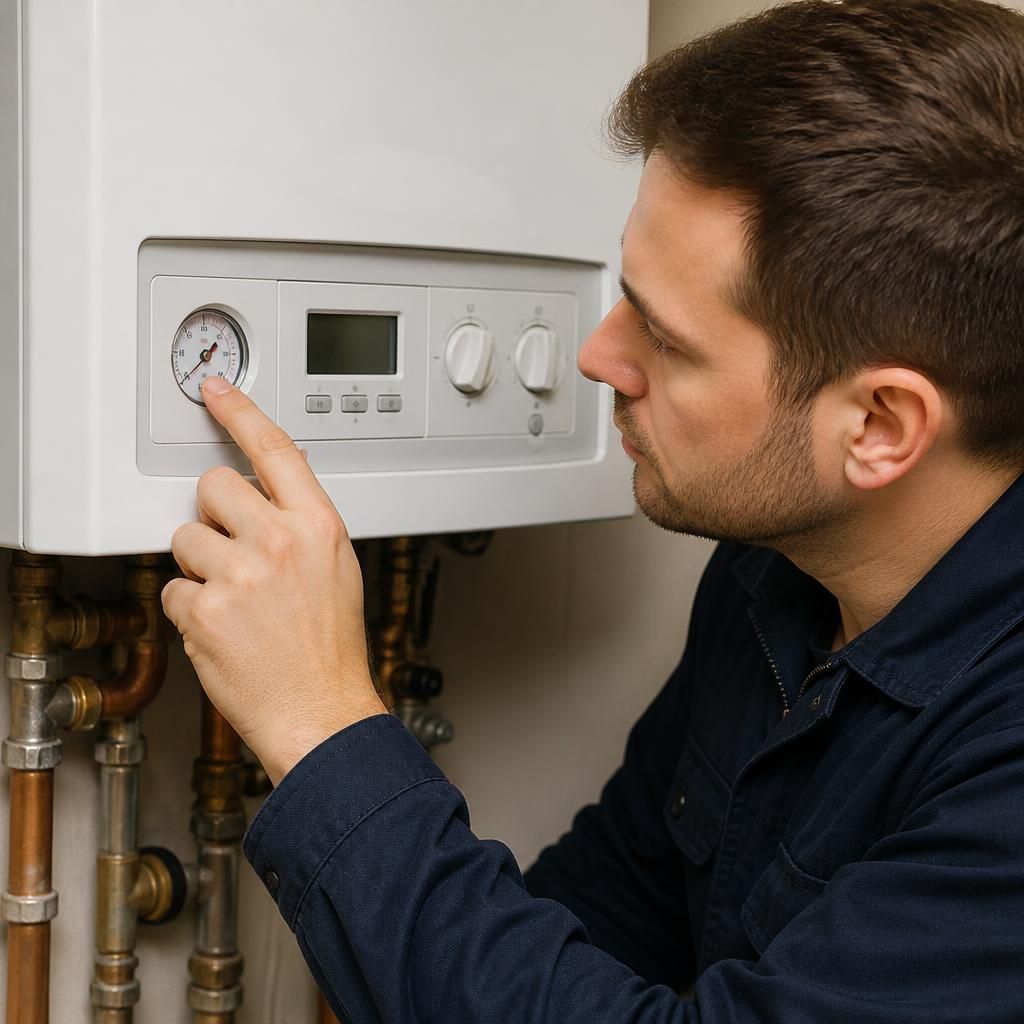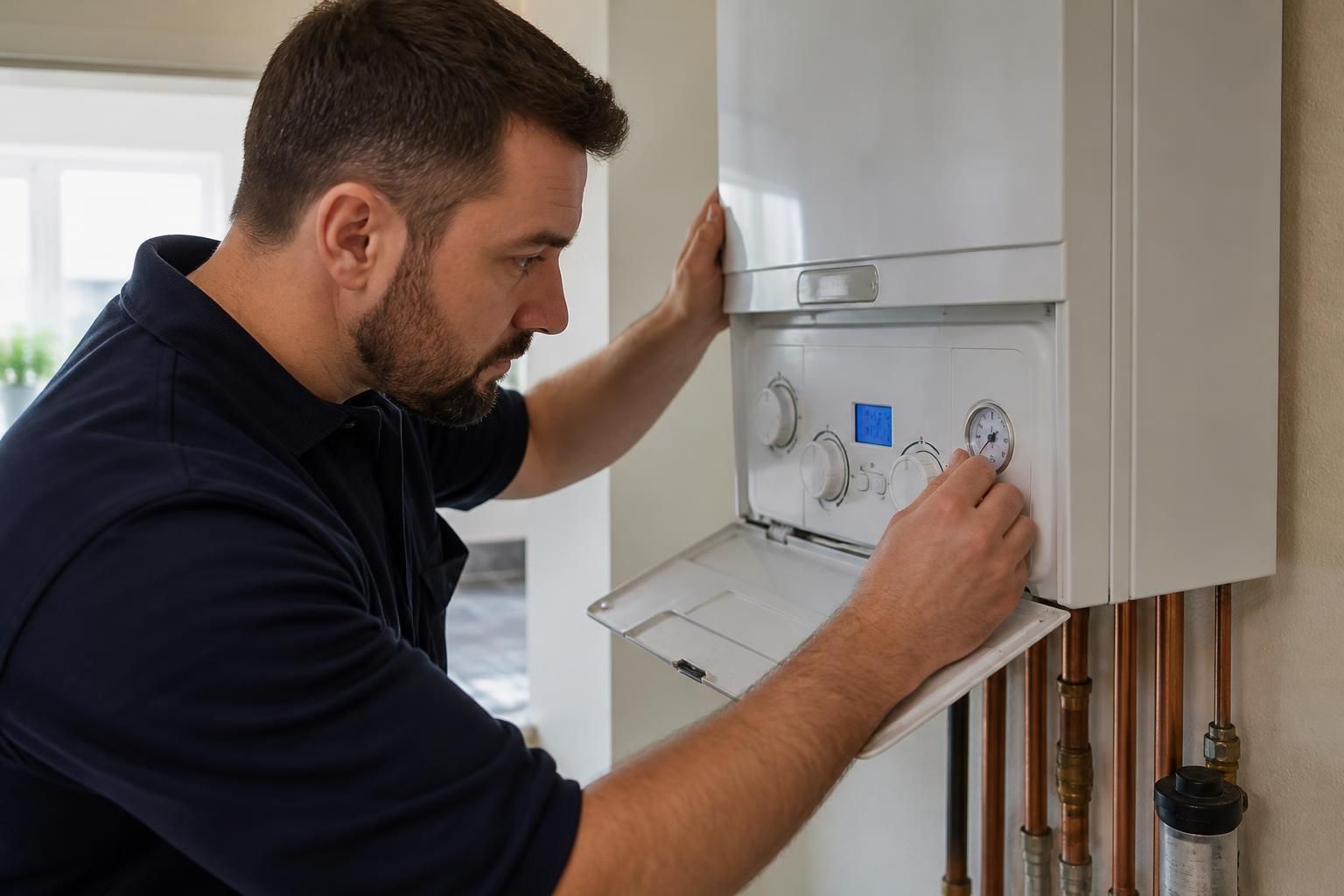
A boiler usually needs repairing when its heating performance, controls, combustion or safety systems are no longer operating correctly. Some faults are inconvenient, while others can indicate a safety risk and require the appliance to be switched off and assessed by a qualified heating engineer.
Changes in heating controls can indicate a fault even when the boiler appears to be running. If the thermostat setting does not correspond with the room temperature, the boiler responds unpredictably to programme changes, or the controls become unresponsive, the problem may involve the thermostat, receiver, wiring or boiler control board rather than the heating system itself.
Frequent on-and-off cycling is another warning sign. This happens when the burner starts and stops repeatedly instead of completing a normal heating cycle. Possible causes include restricted water circulation, a faulty sensor, incorrect system settings or a component that is struggling to operate correctly. Continued cycling can place additional strain on the boiler.
A rise in energy use without a clear change in heating habits may suggest that the boiler is losing efficiency. It can be caused by poor combustion, a failing component, incorrect system pressure control or sludge and scale affecting heat transfer. Higher bills alone do not prove that the boiler is faulty, so an engineer should test the appliance before any repair is recommended.
A blank display or loss of electrical function may point to a power supply problem, fuse issue, wiring fault or internal component failure. Check that the boiler's electrical supply has not been switched off, but do not remove the casing or attempt to repair electrical parts yourself.
Signs of combustion or flue problems should be treated particularly seriously. These can include black marks or soot around the appliance, a flame that is yellow rather than blue on a gas boiler, unusual staining near the flue, or a carbon monoxide alarm activating. Turn the appliance off, leave the property if carbon monoxide may be present, and seek appropriate emergency guidance. Never use a boiler that may be producing unsafe combustion gases.
A smell of gas is not a routine repair issue. Avoid naked flames and electrical switches, ventilate the property if it is safe to do so, leave the building and contact the relevant gas emergency service. Do not investigate the boiler casing or attempt to locate the leak yourself.
Visible deterioration around the appliance, such as corrosion, damaged pipe insulation, cracked seals or staining beneath connections, should be examined by a professional. Even where there is no obvious escape of water, corrosion can affect components and may develop into a more serious fault.
Some symptoms can have more than one cause. For example, a control problem may be mistaken for a boiler fault, while a circulation issue elsewhere in the central heating system may affect boiler operation. A proper assessment normally includes checking the appliance controls, electrical supply, combustion, flue, sensors, pump, heat exchanger and system components. The engineer should explain the fault, identify whether a repair is suitable and provide details of any recommended work.
Do not remove the boiler casing, alter gas settings, bypass safety controls or repeatedly attempt a reset to keep a faulty appliance operating. Gas boiler repairs must be carried out by an appropriately qualified engineer, and electrical work should be undertaken by a competent professional. Keep the boiler's model details and any recent service information available, as these can help with diagnosis.
Ideal Plumbing Services provides boiler repair assessments for homeowners, landlords and tenants in Birmingham and the wider West Midlands. Its engineers can investigate boiler faults and advise whether repair or replacement is the more appropriate option, with clear information about the work required and no hidden charges.