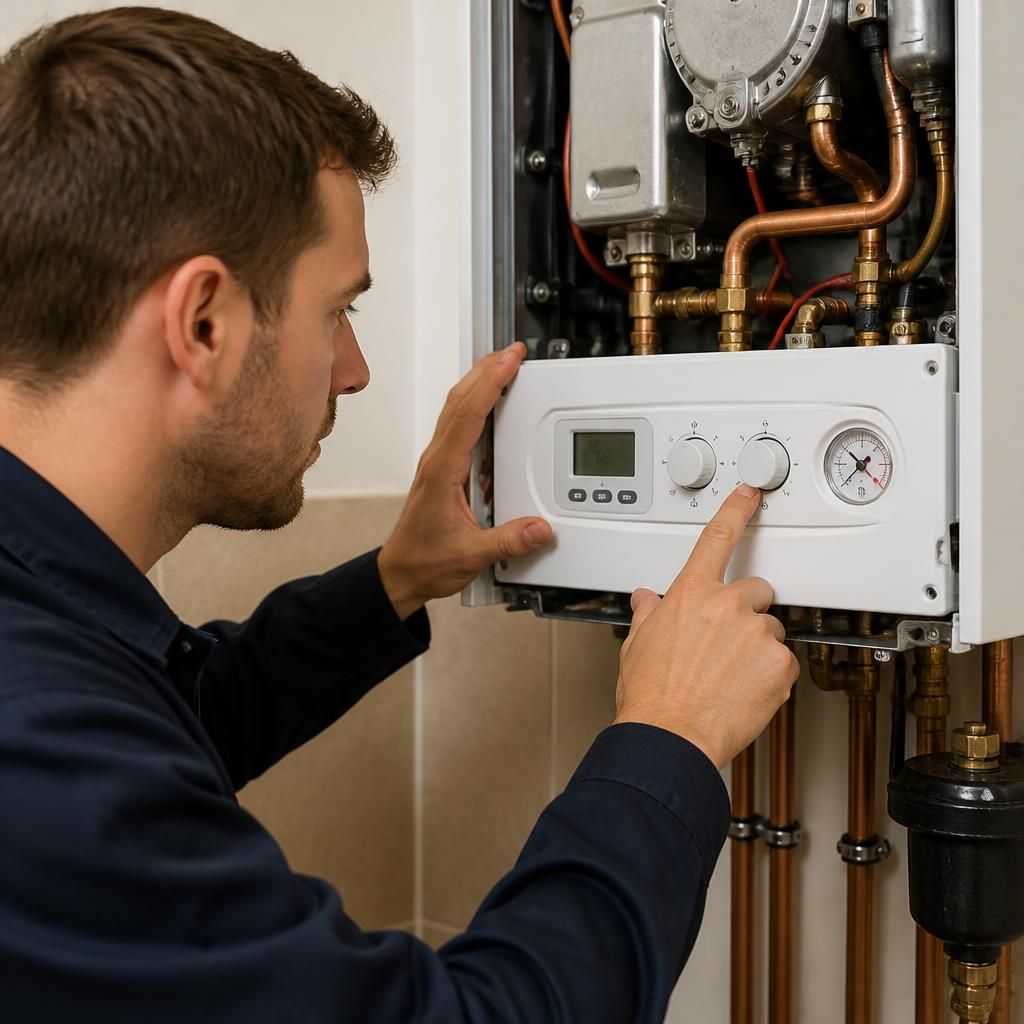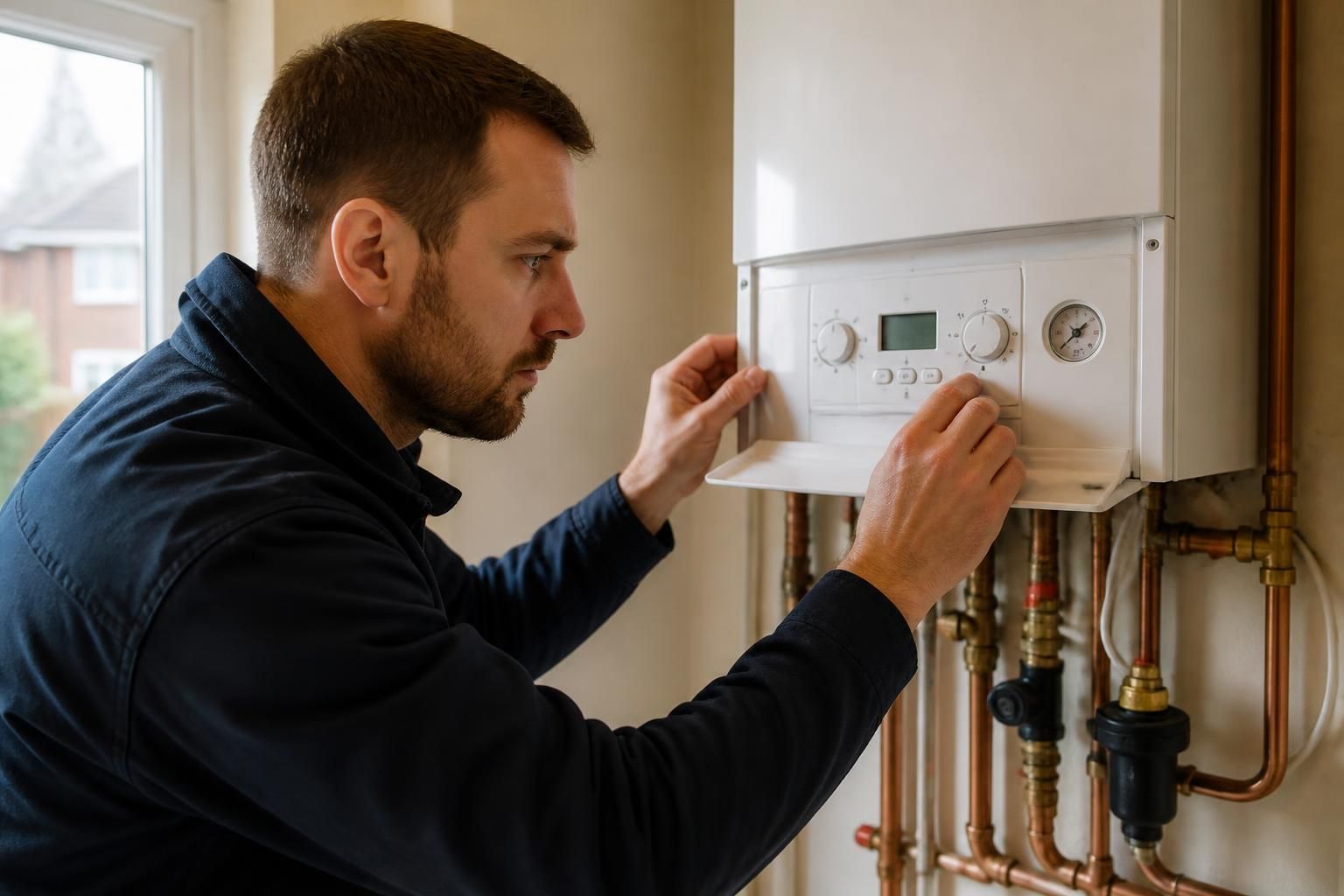
The right choice depends on the boiler’s overall condition rather than the immediate fault alone. A proper assessment should consider the cause of the problem, the condition of key components, the appliance’s service history, its operating efficiency, the availability of parts and the likely cost of further maintenance.
When repairing the boiler is usually sensible
- The fault has a clear cause and does not indicate wider deterioration.
- The boiler has been maintained properly and has a sound operating history.
- The required part is available and the repair restores safe, dependable operation.
- The appliance still provides suitable heating and hot water for the property.
- The repair cost is reasonable when compared with the condition and expected service life of the boiler.
Common repairable faults include issues with controls, thermostats, pumps, valves, ignition components and electrical connections. A fault code can help identify the affected system, but it does not always confirm which component has failed. Testing is needed before parts are replaced, particularly where several components could produce similar symptoms.
When replacement deserves serious consideration
- The boiler has developed several unrelated faults over time.
- Important components are deteriorating or repeatedly failing.
- Replacement parts are obsolete, difficult to obtain or disproportionately expensive.
- The appliance is no longer providing consistent heating or hot water.
- The boiler is inefficient compared with current models and is costly to operate.
- The repair would only provide a temporary solution to an ongoing problem.
- The boiler is unsafe, cannot be brought back into safe operation or does not meet the property’s requirements.
Repeated pressure loss, unusual noises, frequent shutdowns, leaks, persistent error codes or changes in flame behaviour should not be treated as minor inconveniences. They may indicate an underlying issue affecting the heat exchanger, expansion vessel, pump, flue, condensate system or another essential part. Continuing to reset a boiler without finding the cause can allow a fault to worsen and may create safety risks.
How boiler age affects the decision
Age alone does not determine whether a boiler should be replaced. A well-maintained older appliance with a straightforward fault may still be suitable for repair. However, age becomes more relevant when combined with declining reliability, poor efficiency, unavailable parts or a history of expensive work. The engineer should consider the boiler as a complete system rather than judging it solely by the latest failed component.
A newer boiler may also be affected by a fault that is economical to repair. Replacing an otherwise sound appliance because of one serviceable component can create unnecessary expense. Conversely, repeatedly paying for repairs on an unreliable appliance may cost more over time than installing a suitable replacement.
Comparing the total cost
Do not compare only the repair invoice with the purchase price of a new boiler. A replacement assessment should include installation work, necessary system modifications, controls, flue requirements, removal of the existing appliance and any remedial work. The comparison should also take account of likely future repairs and the boiler’s energy performance.
An engineer should explain whether the proposed repair addresses the root cause or only one symptom. If replacement is recommended, ask what has made it necessary, which parts of the existing system can remain, and whether the new boiler is correctly sized for the property. Oversizing can lead to inefficient cycling, while an undersized appliance may struggle to meet demand.
Safety should come first
If a boiler smells of gas, shows signs of scorching, produces unusual fumes, leaks significantly or repeatedly shuts down, stop using it and seek assessment from a suitably qualified engineer. Never remove the casing or attempt to repair gas or combustion components yourself. Gas boiler work must be carried out by an appropriately registered professional, with safety checks completed after the work.
Carbon monoxide can be produced by faulty or incorrectly installed combustion appliances. A carbon monoxide alarm provides an additional warning measure, but it does not replace professional servicing, correct ventilation or investigation of boiler faults.
What a professional assessment should cover
- Visual inspection of the boiler, flue, pipework and surrounding area.
- Review of fault history, pressure issues and previous repairs.
- Operational and safety testing to identify the actual cause of the problem.
- Assessment of major components and the condition of the system.
- Clear explanation of repair options, replacement implications and likely additional work.
- A written quotation that separates necessary work from optional improvements.
Ideal Plumbing Services provides boiler assessments, repairs and replacement guidance for homeowners, landlords and tenants in Birmingham and across the West Midlands. The useful outcome of an assessment is not simply a recommendation to repair or replace, but a clear explanation of why that option is appropriate for the appliance, the property and the expected future maintenance needs.