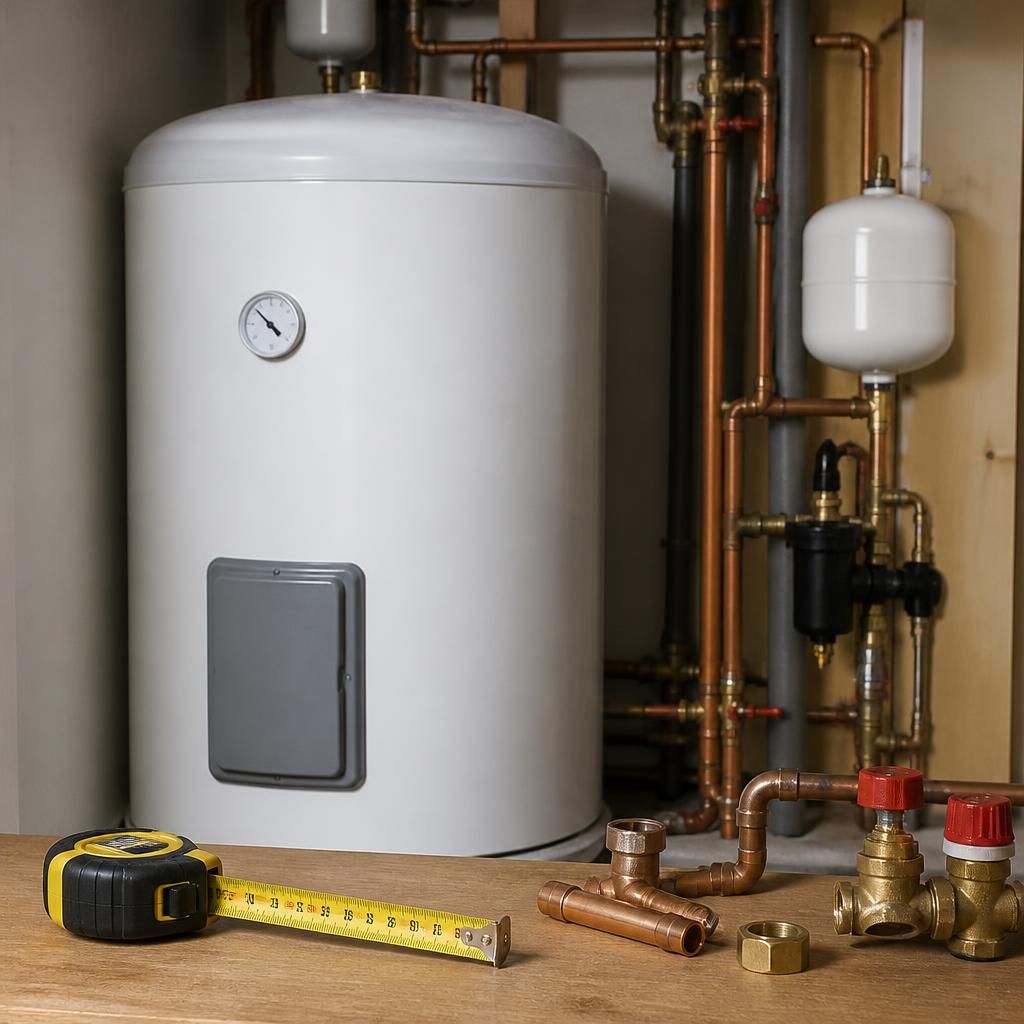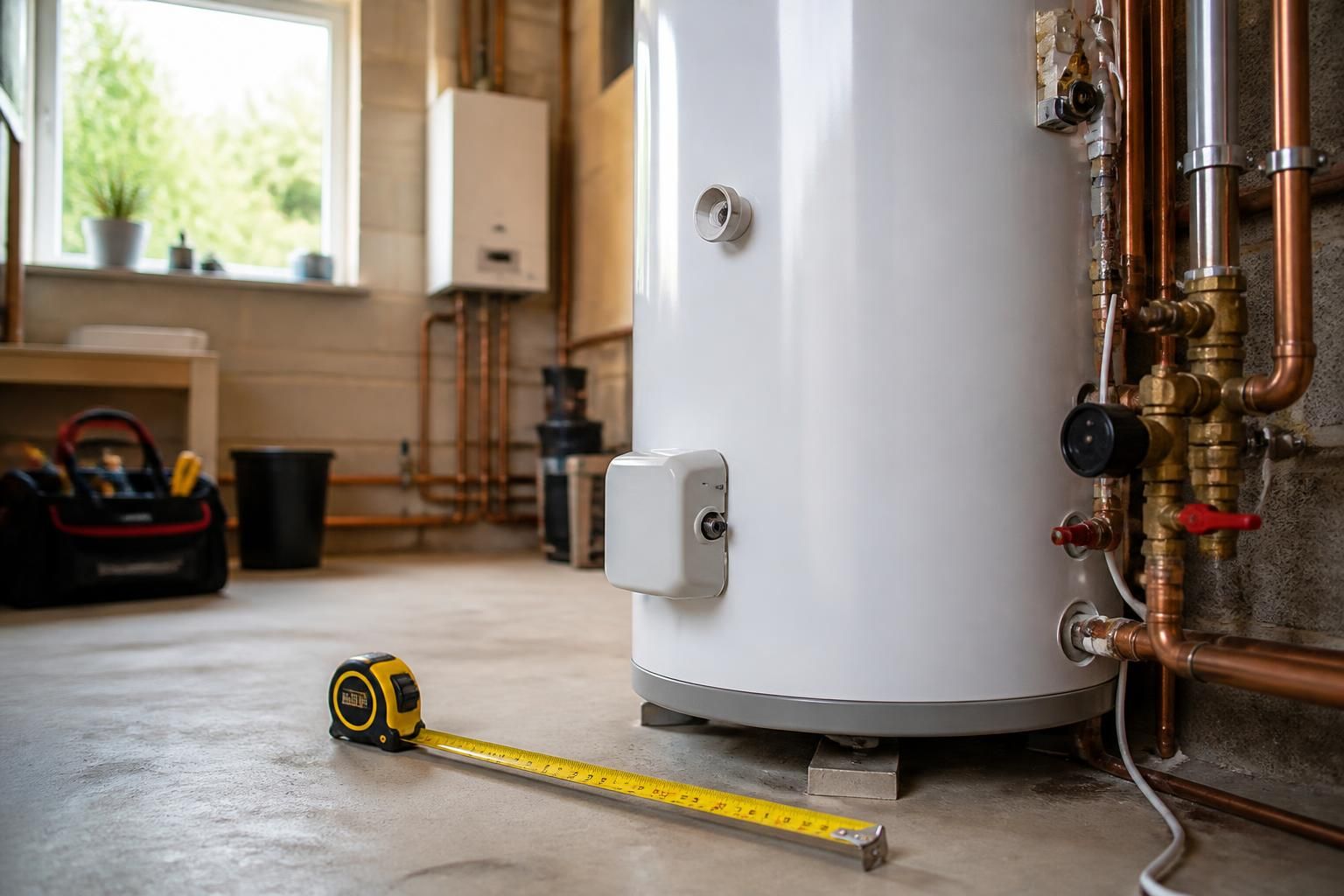
The right water heater size is the smallest capacity or output that can meet your maximum hot-water requirement without excessive waiting or frequent reheating. Choosing correctly means assessing how the heater produces hot water, how much usable hot water it can deliver, how quickly it recovers, and whether the property’s water and energy supplies can support its rated performance.
Start by identifying the heater type. Storage heaters hold a quantity of heated water in a cylinder or tank, so sizing is usually expressed as a storage capacity. An instantaneous heater does not store a significant volume; it heats water as it passes through, so the important measurement is its output and the flow rate it can maintain. A direct replacement should not automatically be the same size as the existing unit, particularly if the old system was poorly matched to the way the property is used.
For a storage heater, the nominal cylinder capacity is not the same as the amount of hot water available at the tap. Stored water is commonly blended with cold water at the outlet, which can increase the usable volume, while the actual result depends on the storage temperature, controls, incoming cold-water temperature and the heater’s recovery rate. The recovery rate describes how quickly the heater can raise fresh water to the required temperature after stored hot water has been used. A smaller cylinder with rapid recovery may perform better than a larger cylinder with slow recovery in some installations.
Consider peak demand rather than average demand. The design should allow for the period when hot-water use is concentrated, rather than relying on a daily average. A system that seems adequate during light use may struggle when demand is closely grouped together. Conversely, selecting a substantially oversized cylinder can increase standing heat loss, occupy more space and take longer to heat, without providing a practical benefit if the additional capacity is rarely used.
- Storage capacity: whether the stored volume can cover the anticipated peak period.
- Recovery rate: how soon the heater can replenish the available hot water.
- Output rating: the rate at which an instantaneous heater can raise water to the required temperature.
- Flow performance: whether the incoming supply can deliver the flow the heater requires.
- Control strategy: whether timers, thermostats and temperature controls allow heating to match the property’s usage pattern.
Instantaneous models need particular care because their stated output may only be achievable at a specified flow rate and temperature rise. Increasing the flow can reduce the temperature rise, while demanding a higher temperature can reduce the available flow. The incoming mains pressure and flow should therefore be measured rather than assumed. A heater with a high output rating will not deliver its intended performance if the supply pipework or incoming service cannot provide enough water.
Storage systems also require checks beyond the cylinder’s capacity. The installer should confirm that the heat source, electrical circuit or other energy supply is suitable for the heater’s load, and that the distribution pipework can deliver hot water effectively. Long or poorly insulated pipe runs can cause delay and heat loss, which may be mistaken for inadequate heater capacity. The cylinder’s recovery time, insulation and control arrangement should be considered alongside its stated volume.
Allow for future requirements, but avoid speculative oversizing. Planned changes such as an additional bathroom, a new appliance or a change in how the property is occupied can alter the design requirement. These possibilities should be discussed before installation, but selecting a much larger heater without confirming the likely demand can add cost and energy loss. In some cases, improving controls, insulation, pipework or the recovery rate is a more effective solution than increasing storage capacity.
A professional assessment should compare the manufacturer’s performance data with the measured water pressure, flow rate, available energy supply and proposed installation arrangement. It should also check temperature controls, safety devices, access for maintenance and compliance with applicable installation requirements. This produces a specification based on usable performance rather than the capacity printed on the cylinder alone.
For a reliable recommendation, provide the installer with details of the existing system, any limitations you have noticed and any planned changes to the property. Ideal Plumbing Services can assess these factors as part of water heater installation advice for homeowners, landlords and tenants in Birmingham and the wider West Midlands.