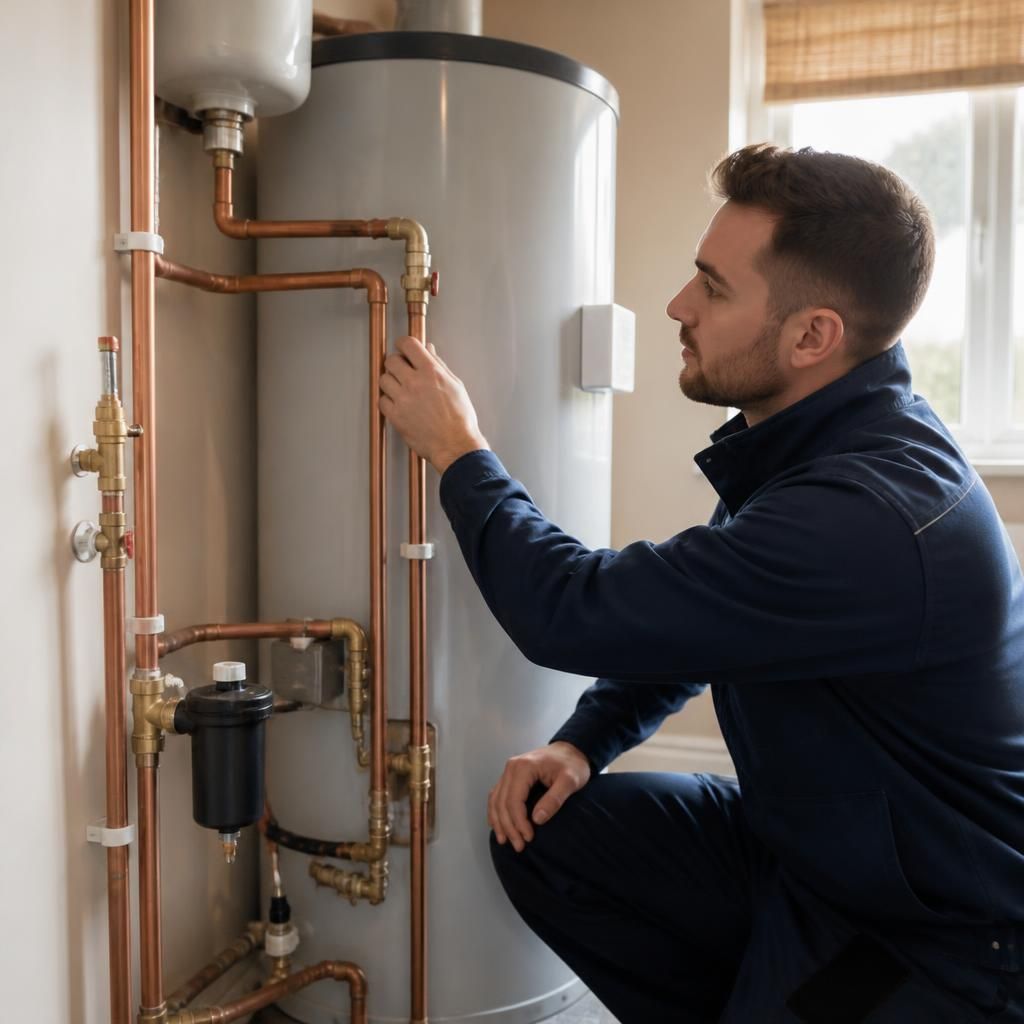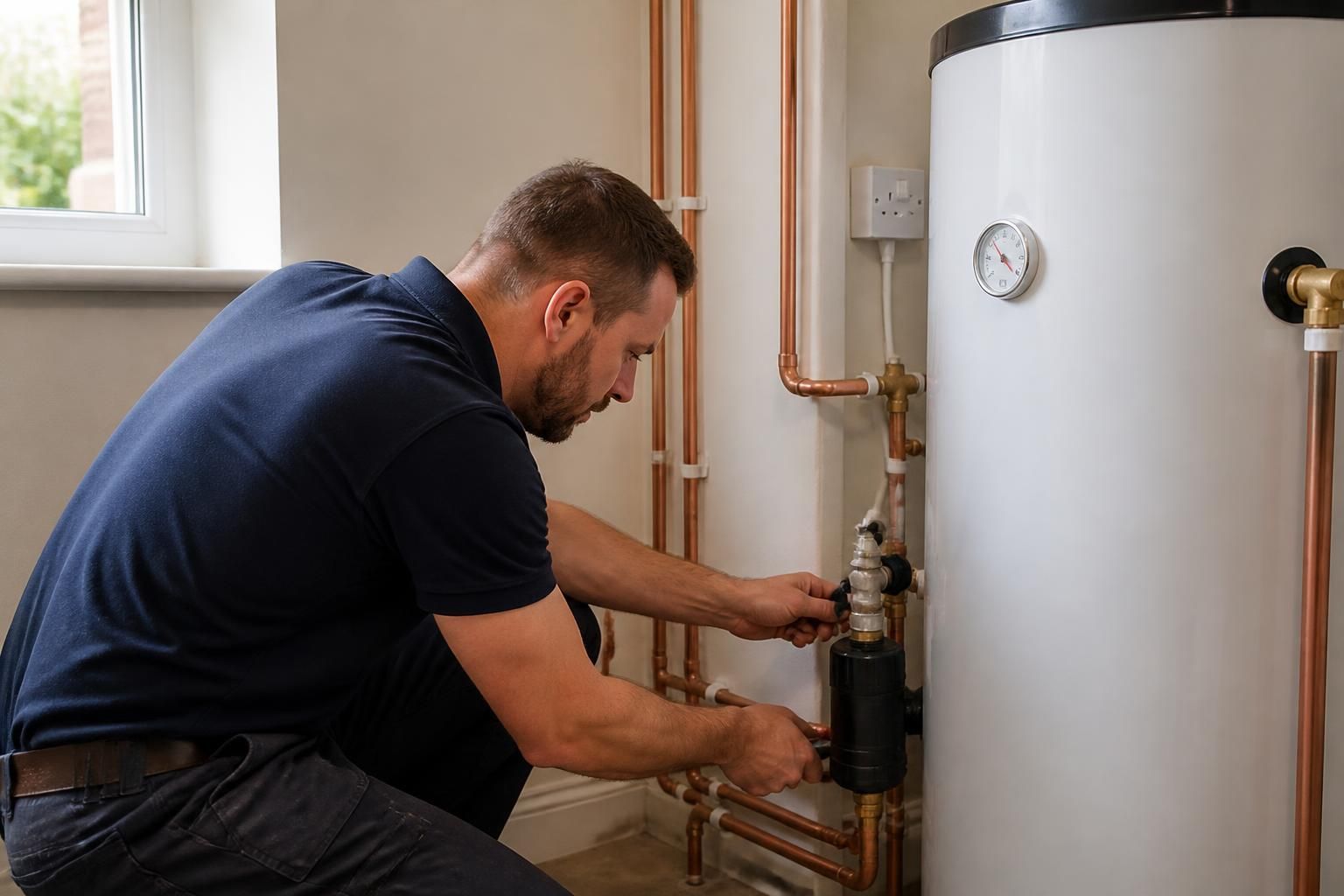
Water heater installation is usually a contained project rather than a whole-home disruption, but the impact depends on whether the work is a straightforward replacement or involves new pipework, electrical supplies, ventilation or structural alterations. A like-for-like replacement generally affects one service area, whereas relocating the heater or changing the system can involve more preparation and access.
What happens during the installation
- The installer assesses the existing heater, its connections, the surrounding space and the route for removing the old unit.
- Protective coverings may be used around floors, cupboards and nearby fittings, particularly where the heater is located in a kitchen, airing cupboard, utility room or loft.
- The old equipment is disconnected and removed where applicable. A replacement may need slightly different connections, brackets or controls.
- The new heater is connected to the water system and, where relevant, its power supply, controls, discharge pipework and other safety components.
- The system is checked and commissioned so the installer can identify leaks, confirm correct operation and verify that safety features work as intended.
During the work, the installation area may be unavailable and household routines can be affected if the heater supplies hot water to bathrooms, kitchens or appliances. Plan around this by keeping the route to the heater clear, removing fragile items from nearby surfaces and ensuring the installer can reach relevant isolation points, electrical controls and pipework.
Factors that can increase disruption
- Location: A heater in a confined cupboard, loft or difficult-to-reach area takes more preparation than one in an open utility space.
- Access: Narrow doors, stairways, fitted furniture or limited working clearance can make removing equipment and positioning the replacement more involved.
- System changes: Moving the heater, changing its type or altering hot-water distribution may require additional pipework or control adjustments.
- Building condition: Old valves, damaged pipework, unsuitable supports or restricted access can only be addressed once the installation area has been inspected.
- Electrical or ventilation requirements: Some installations need suitable electrical connections, ventilation or safety arrangements. These should be assessed before work begins rather than improvised during fitting.
A new installation can therefore create more disturbance than replacing an existing unit in the same position. Ask for the proposed location, access requirements and any likely system alterations to be confirmed before the work starts. This makes it easier to protect furnishings, arrange access and understand which rooms may be affected.
Good preparation also helps limit mess. Clear stored items from cupboards, remove obstacles along the access route and identify any concealed pipework or wiring that may be relevant. The installer should explain any changes made to controls or isolation points and provide information on operating the new heater.
If the existing unit is leaking, showing signs of corrosion, producing unusual smells or repeatedly losing pressure, do not continue using it without professional advice. Water, gas and electrical connections require appropriate safety checks, and an installation should be completed and tested by a suitably qualified professional.
Ideal Plumbing Services provides water heater installation and related plumbing support for homeowners, landlords and tenants across Birmingham and the West Midlands. A site assessment can establish the likely level of disruption and identify access or system issues before installation is arranged.