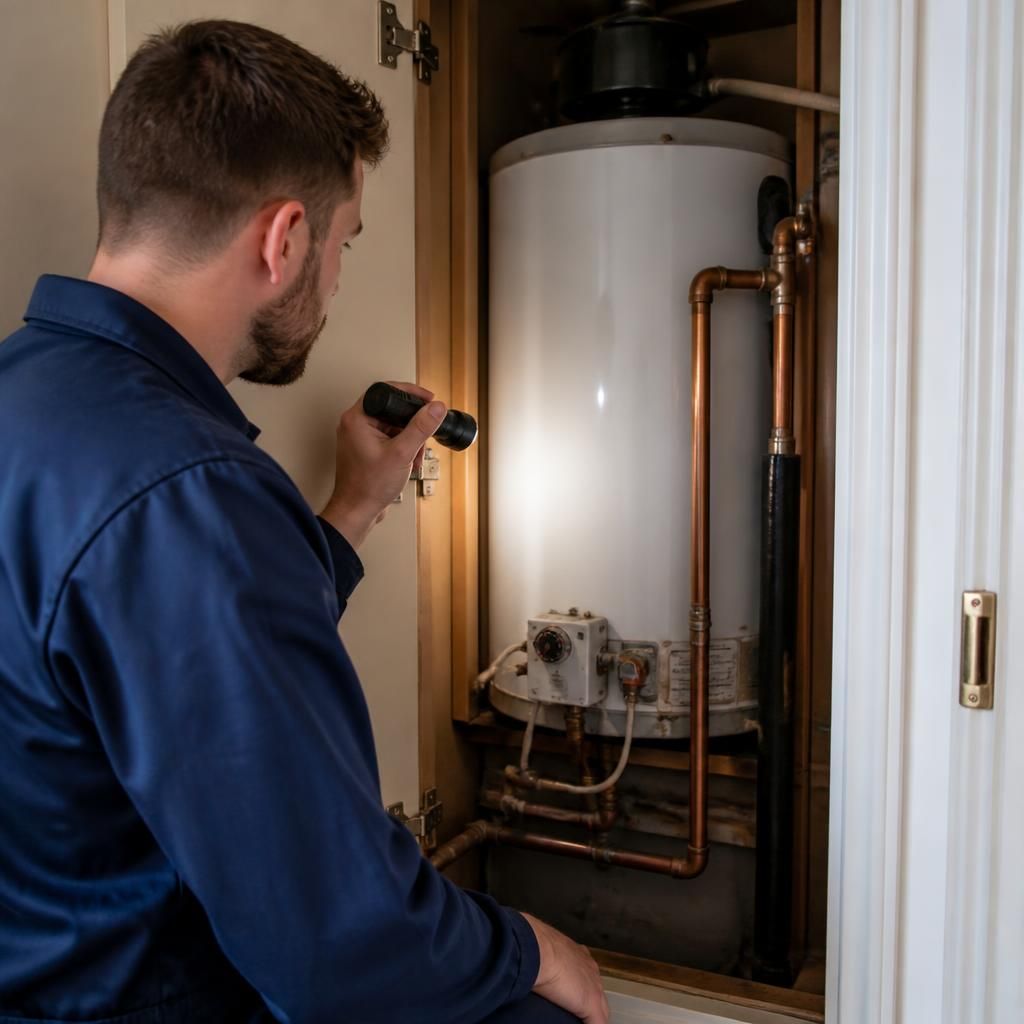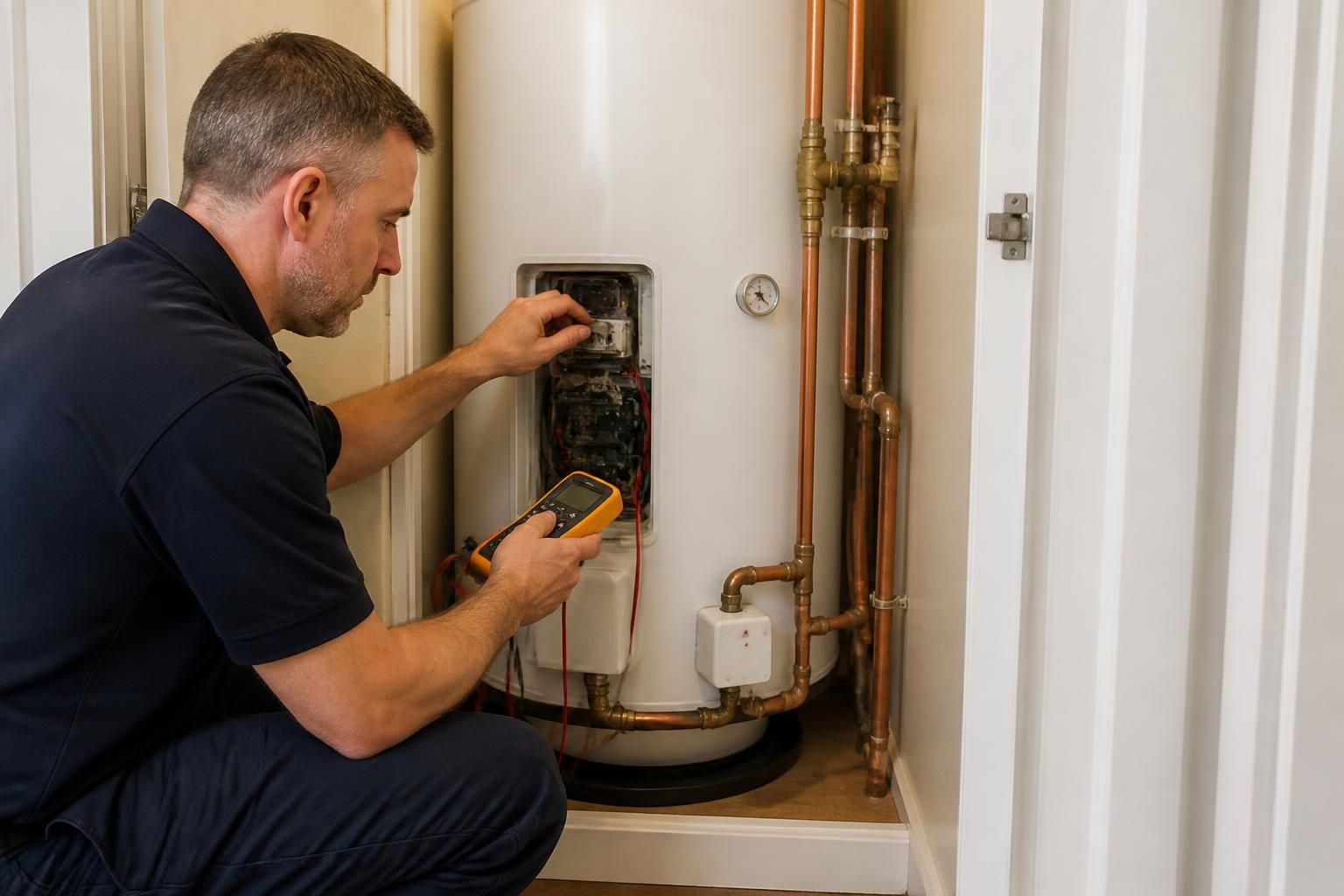
A water heater repair normally needs access to the room or cupboard containing the appliance, together with any removable panels, electrical controls and service points that the engineer must inspect. The required space depends on the heater’s design and location, but preparation should allow the appliance to be examined without moving household items or working in an unsafe position.
Before the appointment, check the following access points:
- Entrance and internal route: The engineer needs a clear route from the entrance to the heater. Move shoes, boxes, furniture and other items that could restrict movement, particularly in hallways, bathrooms, utility rooms and airing cupboards.
- Doors and panels: Open cupboard, wardrobe or utility-room doors fully. If the heater is behind a removable panel, make sure it can be taken off without damaging surrounding flooring, tiling or joinery. Do not remove sealed covers or electrical panels yourself.
- Loft or roof-space installations: Where the heater is located in a loft, provide safe access to the loft hatch and keep the route around the installation free from stored belongings. A fixed, suitable loft access arrangement and a stable working surface may be needed; an engineer should not be expected to work from an unsafe ladder or unsupported boards.
- Garage or outbuilding locations: Clear the area around the appliance and ensure the relevant room or building can be entered. Stored paint, fuel, chemicals and other hazardous materials should not be left beside the work area.
- Electrical and gas service areas: Depending on the fault, the engineer may need to identify the appliance’s electrical supply, local switch or consumer-unit circuit, or inspect related gas-service arrangements. Keep these areas reachable, but do not operate or remove anything unless you have been given suitable instructions.
If the heater is concealed behind fitted furniture, a bath panel, boxing-in or permanent building work, explain this when arranging the repair. Some panels are designed to be removed for servicing, while others may require a carpenter, electrician or another qualified specialist before the plumbing work can be completed. Do not cut into walls, floors or ceilings to create access.
It is also useful to have information about the fault available, including when the problem began, whether hot water is intermittent or absent, and whether any warning lights, unusual noises or leaks have been noticed. This does not replace a physical inspection, but it can help the engineer understand the symptoms and identify relevant parts of the system.
For rented accommodation, the tenant should confirm that the landlord or managing agent has authorised the repair where required. Someone responsible for providing entry should be present, and pets should be kept away from the working area. If access is blocked, the engineer may be unable to complete testing or may need to arrange a further visit once the obstruction or safety issue has been resolved.
Ideal Plumbing Services can advise on access requirements for water heater repairs in Birmingham and across the West Midlands. Sharing photographs of the installation and its surroundings in advance can help clarify whether the appliance is enclosed, located at height or reached through a restricted area.