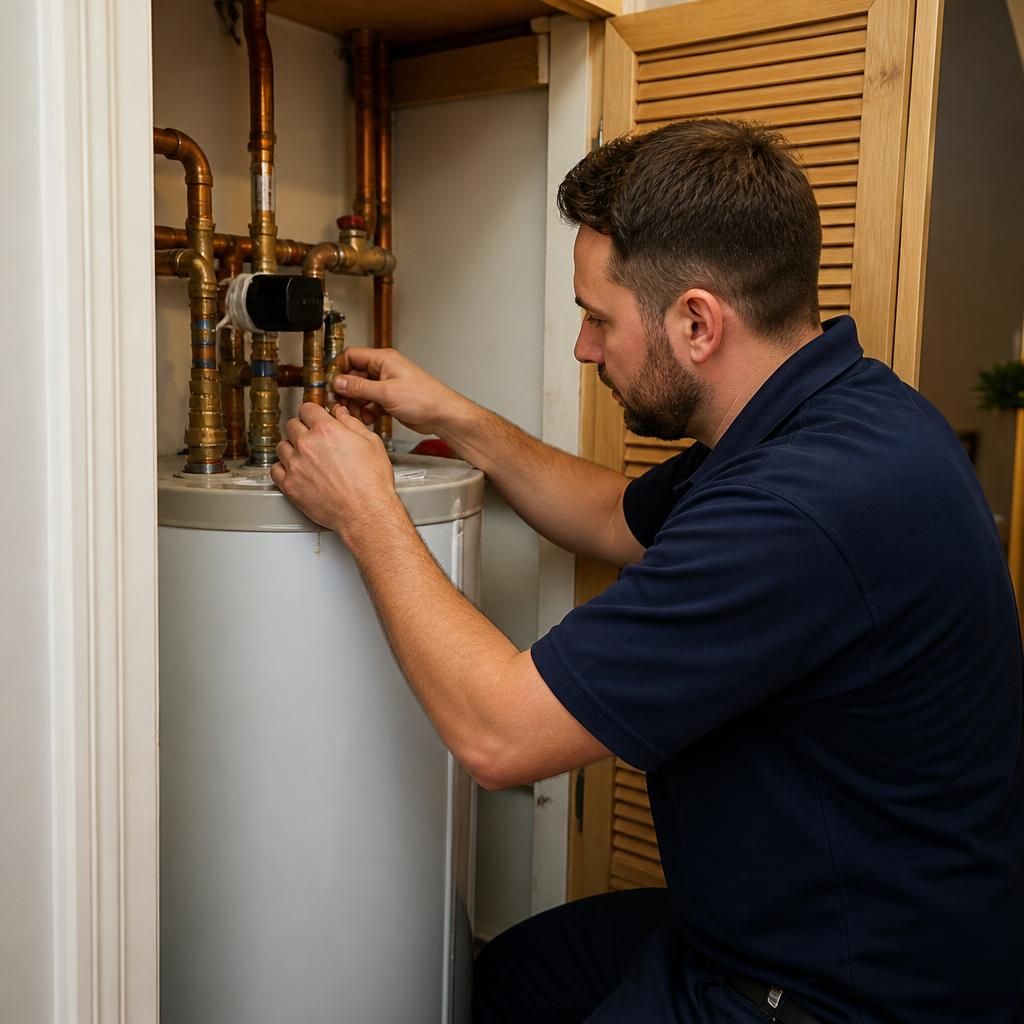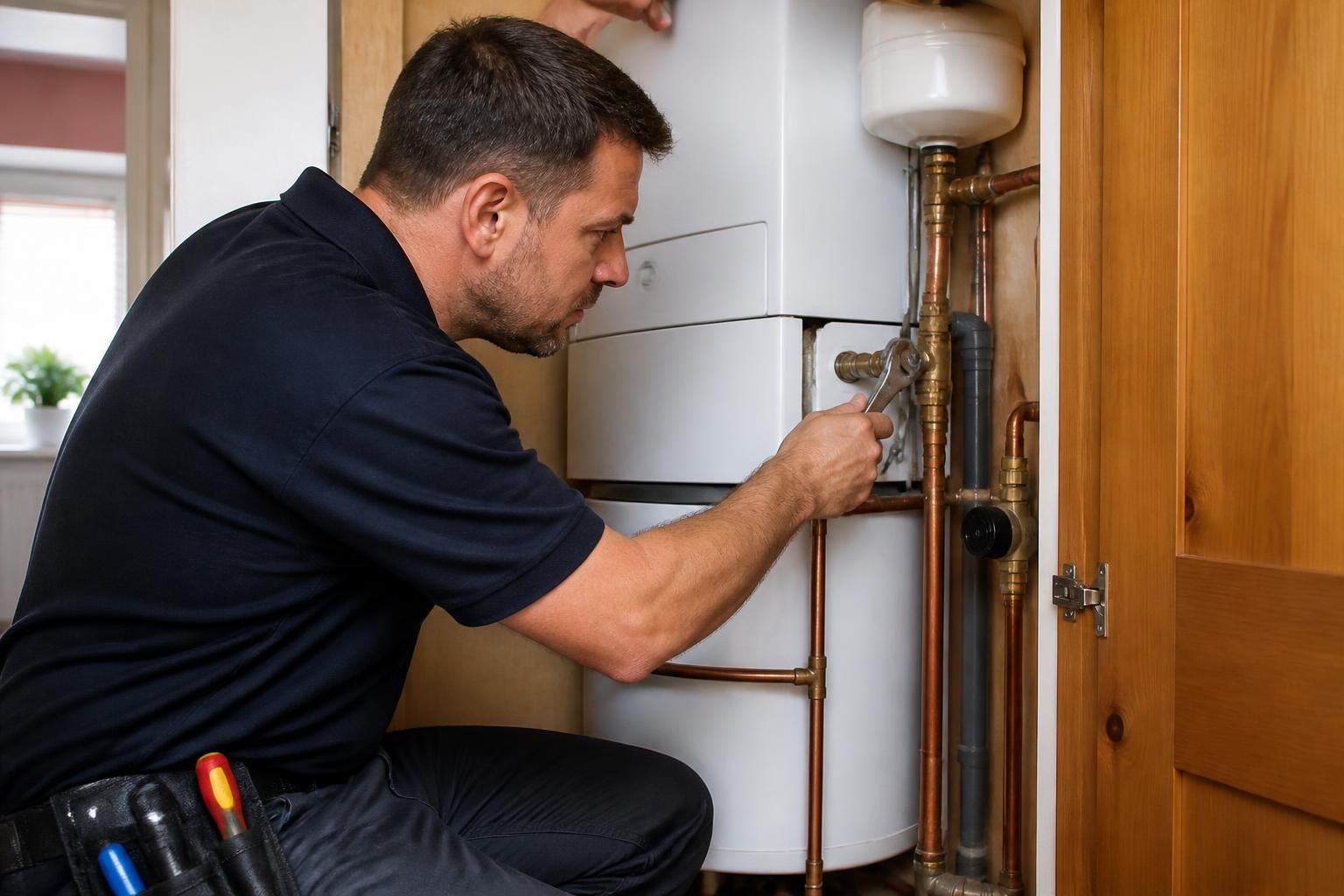
Water heater repairs normally affect the work area and the supply of hot water rather than disrupting the whole property. The practical impact depends on whether the fault is confined to a replaceable component or involves pipework, electrical connections, controls or a leaking vessel.
Before starting, the plumber should identify the appliance and its isolation points, protect nearby flooring and surfaces, and establish how the repair will be carried out. Water, electricity or gas may need to be isolated while the work is in progress. These steps are important for safety and prevent further damage, but they can mean that hot water is unavailable temporarily.
What happens during a typical repair
- The fault is assessed and the affected connections are isolated.
- Access panels or surrounding fittings are removed where necessary.
- The faulty part is repaired or replaced, with damaged seals, valves or connections checked at the same time.
- The system is refilled or reconnected, then tested for leaks, correct controls and safe operation.
Many repairs involve work beside the heater rather than opening walls or lifting floors. This can keep disruption to a minimum when the appliance and its connections are accessible. More involved work may create additional mess or require access to cupboards, airing cupboards, utility rooms or other stored items around the unit.
Factors that can increase disruption
- The location of the heater: A unit in a clear utility area is easier to work on than one behind stored belongings, fitted panels or restricted access.
- The nature of the fault: A control, valve or connection fault may require less work than a leak affecting surrounding pipework or internal components.
- Water damage: If the appliance has leaked, nearby flooring, cupboards and plasterwork may need to be inspected separately from the repair itself.
- Parts and system condition: Corrosion, seized connections or previous alterations can make removal and testing more involved.
- Safety requirements: Gas appliances and electrical components must be handled and tested correctly, which can add necessary steps to the work.
You can help reduce avoidable delays by clearing belongings from around the heater, ensuring the isolation valves are reachable and pointing out any previous leaks or unusual noises. Do not remove covers or attempt to isolate gas or electrical components yourself unless you are qualified to do so.
After the repair, the plumber should check that connections remain dry, the appliance operates correctly and hot water is being produced as intended. Ask what has been repaired, whether any temporary settings have been changed and whether there are signs that further maintenance is needed. Ideal Plumbing Services carries out water heater repairs for homes in Birmingham and the wider West Midlands, with the work explained before repairs proceed.