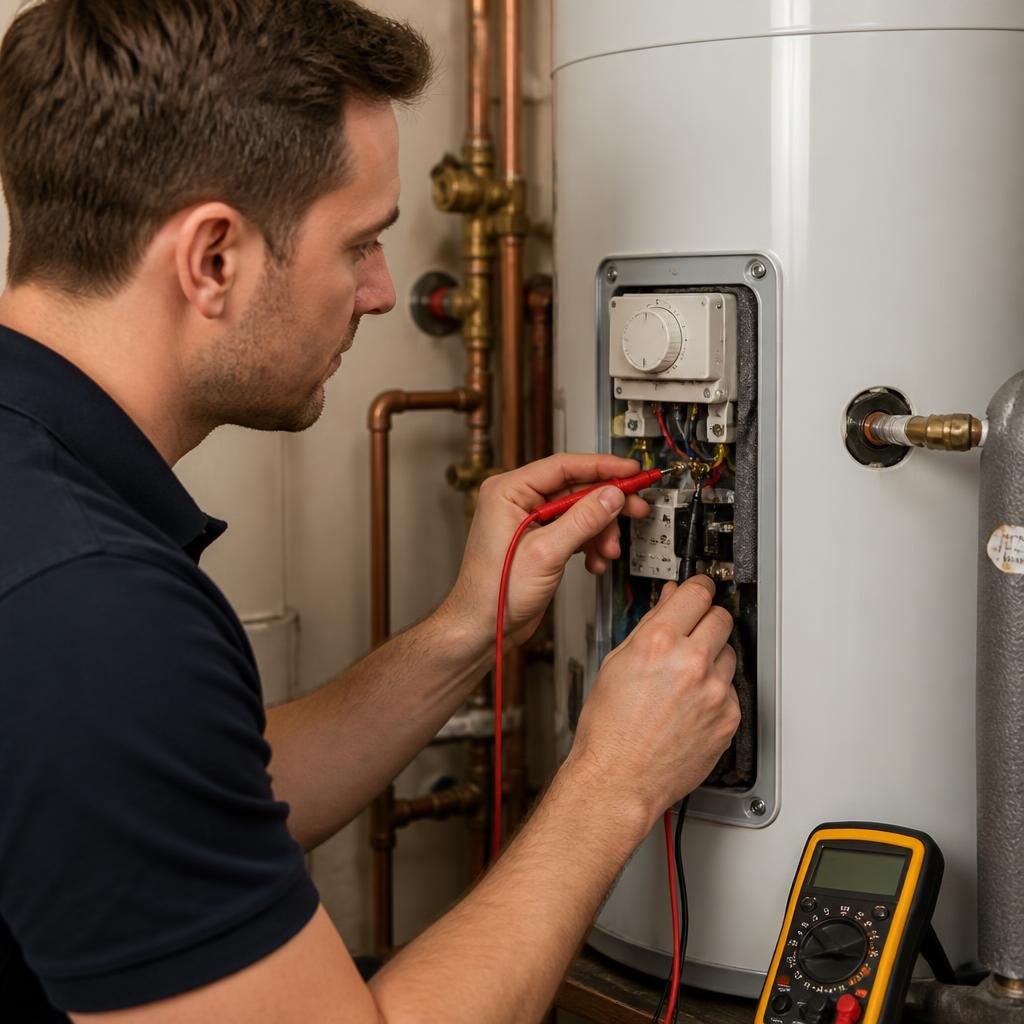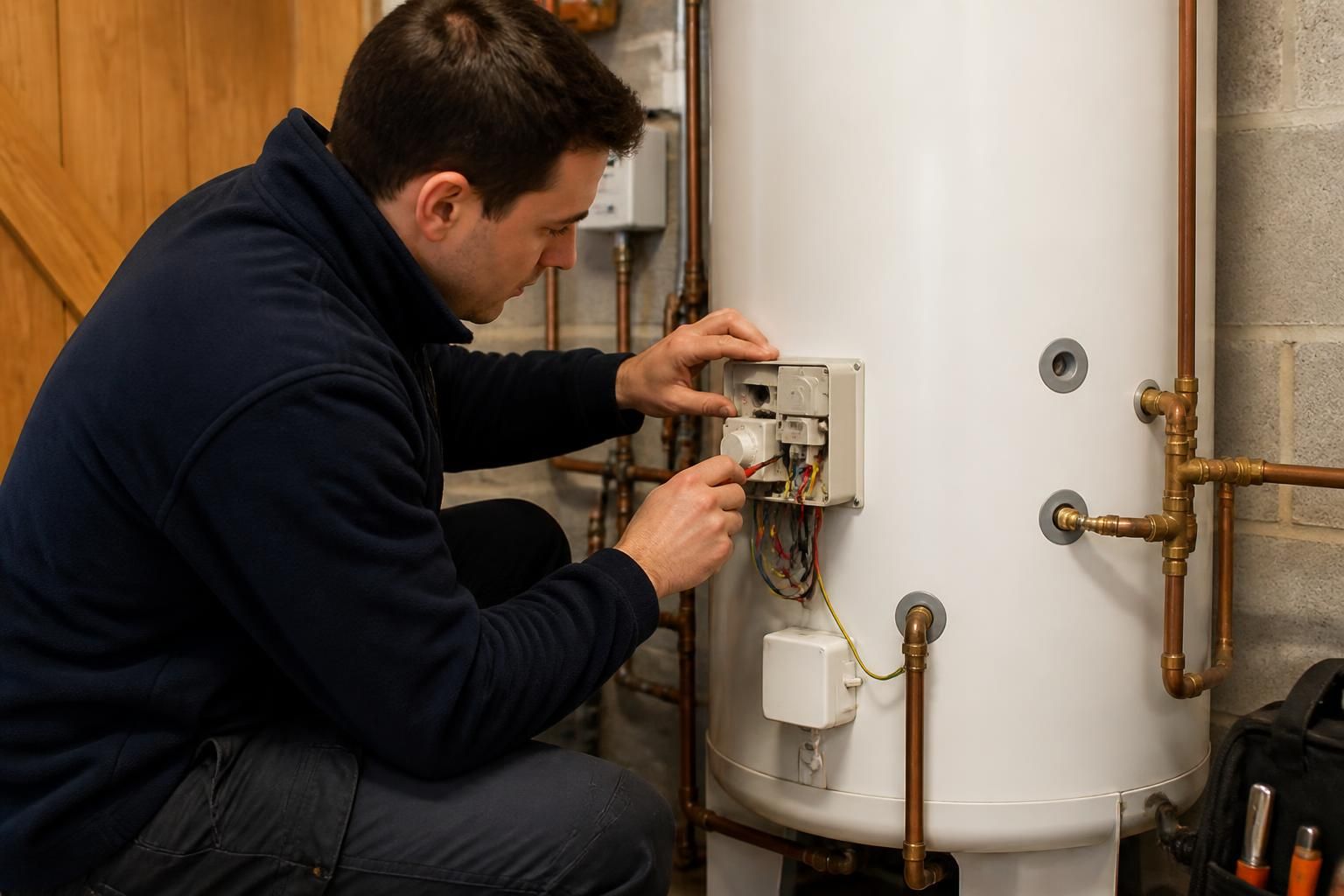
Repair is generally possible across the main domestic water-heating systems, provided the underlying vessel, heat exchanger and safety components remain in serviceable condition. The deciding factors are the type of fault, the age and condition of the unit, the accessibility of its components and whether suitable replacement parts can be sourced.
Electric storage water heaters commonly develop faults with the immersion element, thermostat, thermal cut-out, wiring or controls. An engineer can test these components individually rather than replacing the whole heater unnecessarily. A failed element may be replaceable, while repeated tripping, damaged wiring or signs of overheating require more detailed investigation before the system is used again.
Hot-water cylinders can often be repaired when the problem involves the immersion heater, thermostat, temperature-and-pressure relief valve, expansion components or associated pipework. Vented cylinders may also be affected by the cold-water storage and feed arrangement. Unvented cylinders have additional safety controls and expansion equipment, so diagnosis and repair should be carried out by a suitably qualified professional. A leaking cylinder body, extensive corrosion or a damaged internal lining may make replacement more appropriate than repair.
Instantaneous and tankless heaters may be repairable when the fault concerns an electrical supply, flow sensor, temperature sensor, control board, heating element or scale-restricted heat exchanger. These units rely on several interdependent controls, so symptoms such as fluctuating temperature, reduced hot-water flow or failure to heat do not identify a single component by themselves. Testing is needed to distinguish a component fault from a problem with the incoming water supply or electrical installation.
Immersion-heated systems can sometimes continue operating with one heating element failed, particularly where the cylinder has separate heating controls. However, relying on a secondary element can conceal the original fault and may not provide the expected hot-water capacity. The element, thermostat and surrounding seal should be checked for leakage, overheating and scale before a repair is completed.
Some faults are repairable without replacing the heater itself. These include:
- faulty thermostats, sensors and temperature controls;
- failed immersion elements or other replaceable heating components;
- defective valves, pressure-reducing components and expansion equipment;
- loose or damaged connections causing a localised leak;
- scale or debris affecting flow, temperature control or heat transfer; and
- certain electrical faults affecting the heater’s supply or control circuit.
Replacement is more likely to be recommended where the main tank is split, badly corroded, repeatedly leaking, severely scaled or no longer supported by available parts. The same applies when a repair would leave an unsafe pressure, temperature or electrical condition. A repair should not simply restore heating while leaving a defective safety device in service.
Before work begins, the system should be identified by its storage arrangement, heat source, pressure controls and method of temperature regulation. The engineer can then isolate the supply where necessary, inspect the affected components, establish the cause of the fault and explain whether repair or replacement is the more practical option. Ideal Plumbing Services provides professional assessment and repair advice for residential water-heating systems in Birmingham and the wider West Midlands.