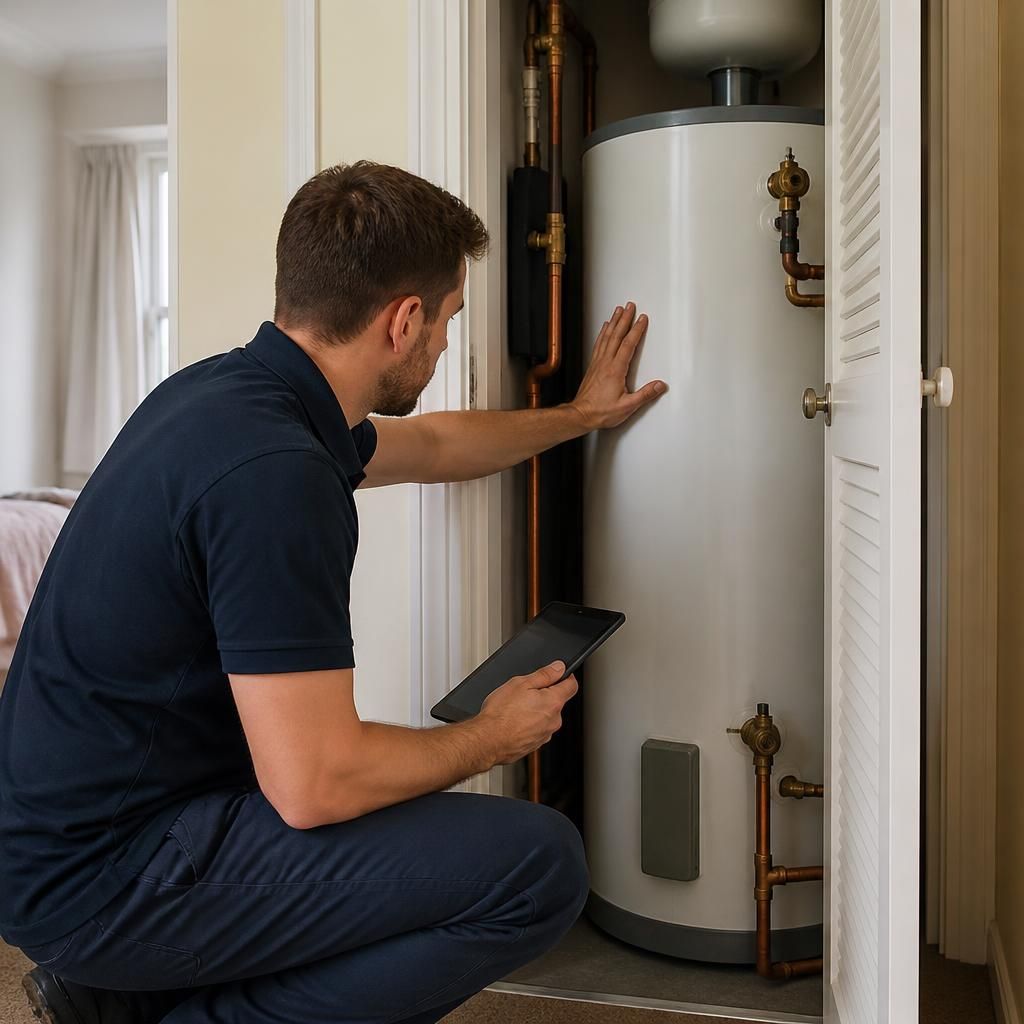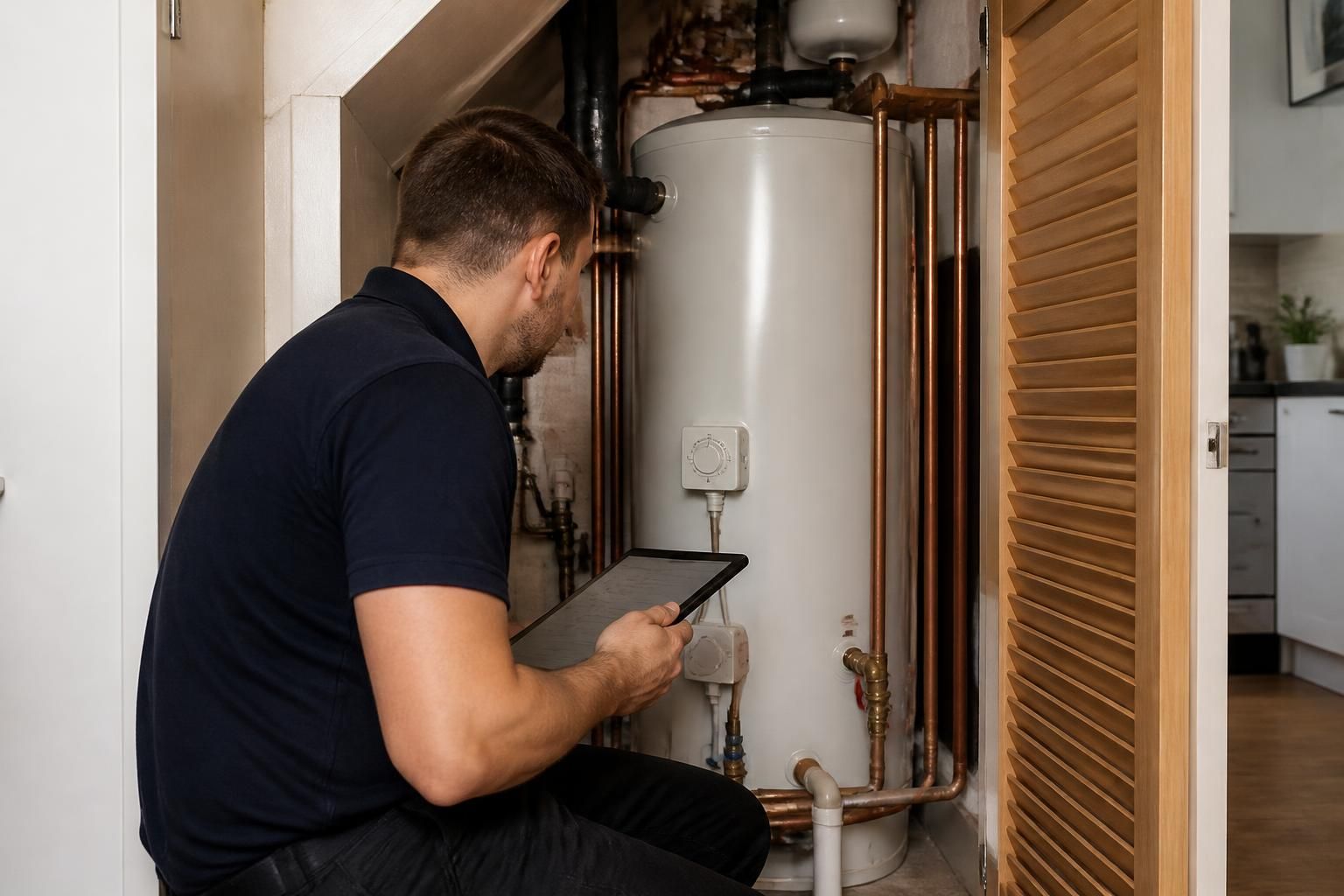
Water heater replacement is possible in flats and rental properties, but the replacement must be compatible with the building’s services, the available installation space and the legal responsibilities attached to the property. The correct approach depends on whether the system is a hot water cylinder, an unvented cylinder, an instantaneous heater or part of a wider central heating system.
In a flat, the existing arrangement should be assessed before any equipment is removed. Important points include:
- Water and heating connections: the heater may connect to pipework serving only the flat, or to shared risers and communal plant. Shared arrangements can limit which components may be altered within the property.
- Electrical capacity: some replacement heaters require a suitable dedicated circuit, correctly rated isolation and appropriate protective devices. The installer should confirm that the consumer unit and cabling can support the proposed appliance.
- Gas and flue arrangements: if the heater is gas-fired, the flue route, ventilation and combustion-air requirements must be checked. In a flat, the flue may pass through communal areas or affect another part of the building, so it should not be altered without the relevant approval.
- Discharge and drainage: pressure relief and condensate discharge pipework must terminate safely and in accordance with the appliance requirements. A replacement may need different connections from the old unit.
- Space and load-bearing capacity: cupboards, airing cupboards and ceiling voids may have restricted dimensions. A larger cylinder or a full unit can also create additional loading that needs consideration where it is supported above another room or on a platform.
Leasehold flats commonly involve more than the flat owner’s permission. The lease may control alterations to plumbing, electrical systems, external walls, cupboards, floors, ceilings or communal service routes. A freeholder, managing agent or residents’ management company may require a written application, method statement, insurance details or evidence that the installer is suitably qualified. These requirements are separate from arranging the installation itself, and the resident should check them before work is booked.
For a rented property, the landlord normally decides whether the heater is repaired or replaced and is responsible for ensuring that the installation is safe and properly maintained. Tenants should report the fault to the landlord or letting agent rather than arranging a permanent replacement independently. The landlord may also need records of the work, certificates for relevant gas or electrical work and confirmation that the property’s safety obligations have been met.
A like-for-like replacement is not always the best or even the possible option. A discontinued or inefficient heater may be replaced with a different type if the property has the necessary water pressure, electrical supply, ventilation, flue route and drainage. Changing from one system to another can affect hot water storage, recovery time, cupboard space and the way other heating controls operate. Those effects should be explained before the installation proceeds.
Access is another practical consideration in flats. The installer may need to move equipment through communal entrances, lifts, corridors or stairwells. Building rules can restrict the times when materials may be moved or require protective coverings in shared areas. If the old cylinder or heater cannot be removed through the original route, the property manager may need to approve an alternative method.
The installation should be planned around isolation points so that water, gas or electricity can be safely disconnected. Where a shared riser or communal supply is involved, isolation may require coordination beyond the individual flat. After fitting, the system should be checked for leaks, correct pressure, safe operation, suitable discharge and proper control of the hot water temperature.
Ideal Plumbing Services can assess the existing arrangement and advise homeowners, landlords and tenants on a suitable replacement for residential properties in Birmingham and the wider West Midlands. A useful enquiry should include the type of current heater, its location, any visible fault, access restrictions and whether the property is leasehold or rented. Photographs of the heater, pipe connections and surrounding cupboard can also help identify what needs to be checked before a quotation is prepared.