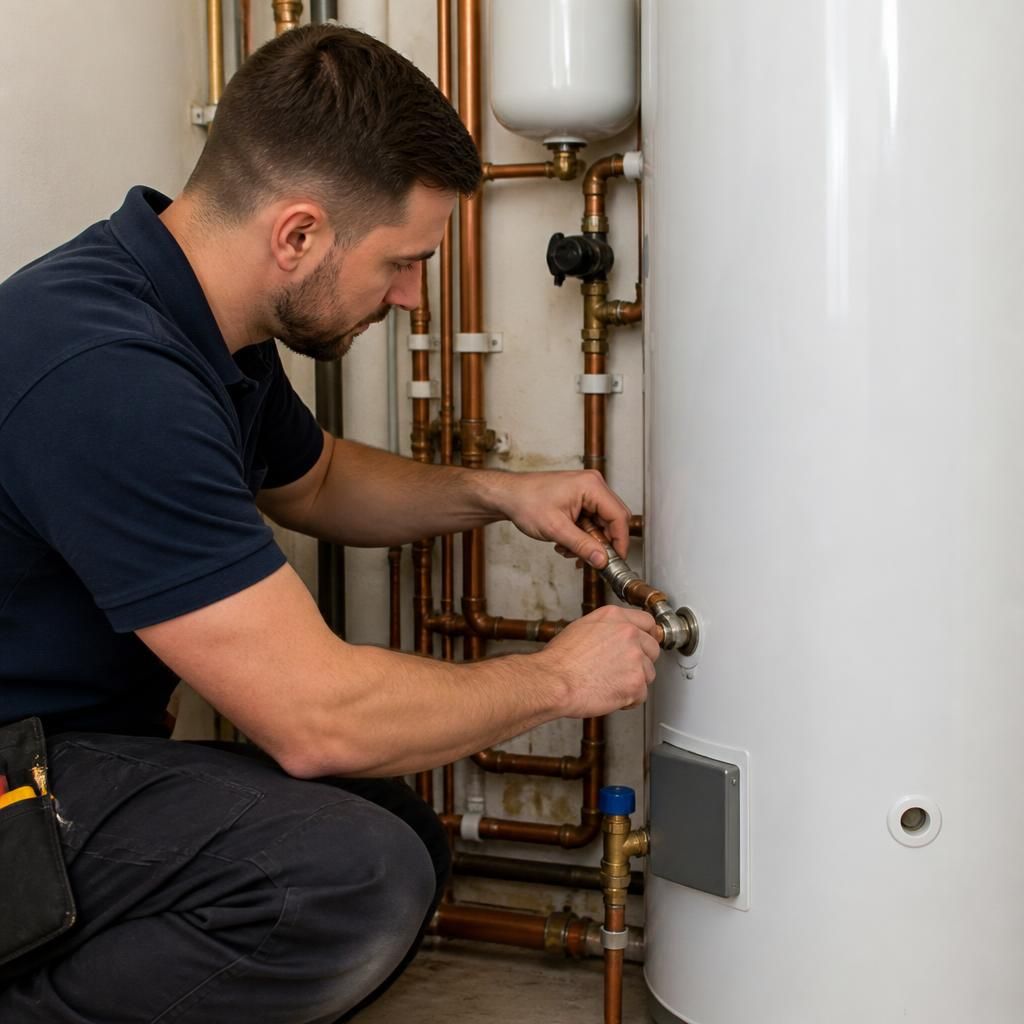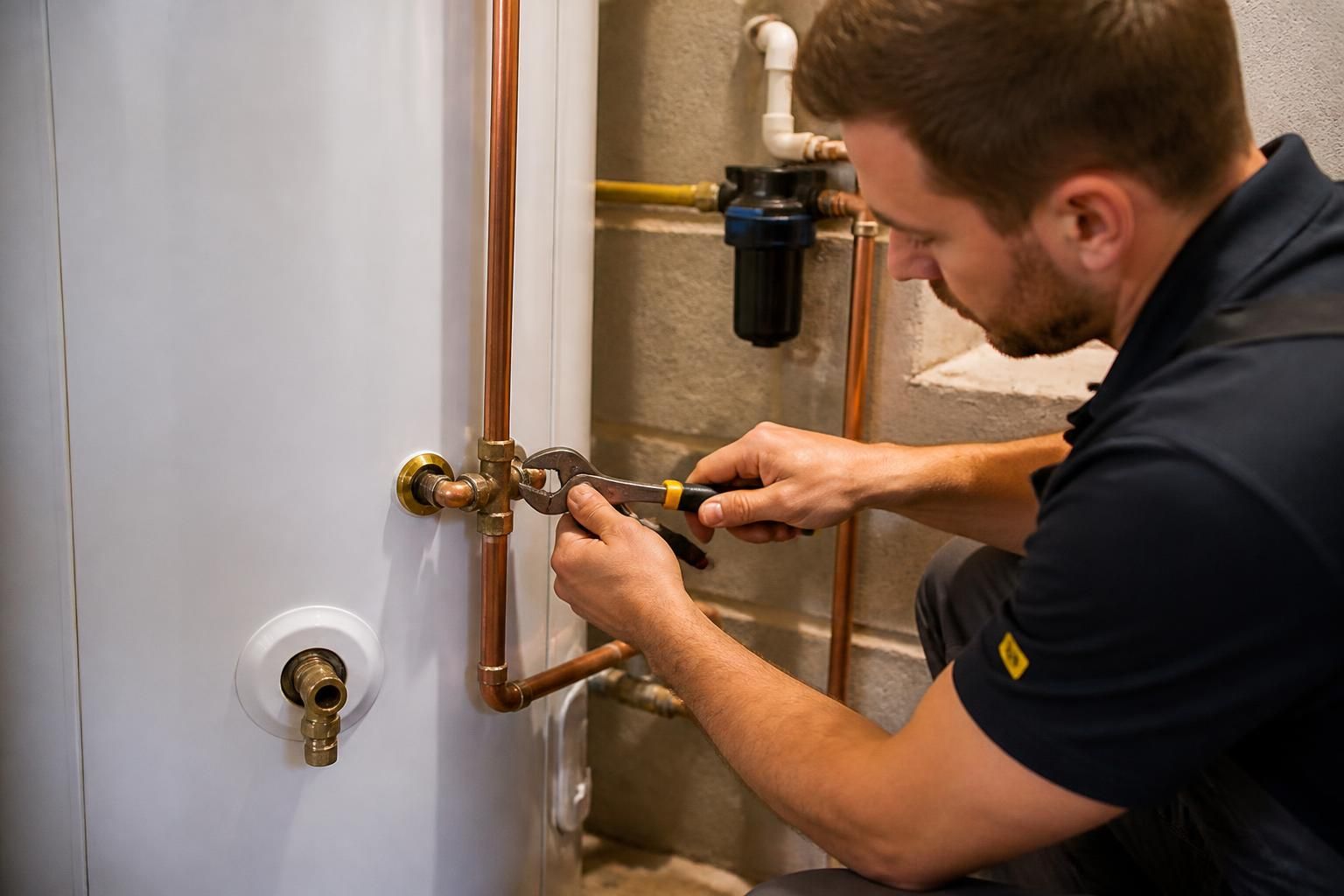
Water heater replacement is usually a contained job, with the main inconvenience being temporary loss of hot water and restricted access to the installation area. The overall disruption depends on the type and position of the heater, how easily it can be removed, and whether the replacement fits the existing connections.
Before work begins
- Clear the area around the heater, including cupboards, airing cupboards, loft access points and nearby floors.
- Remove personal belongings, cleaning products and stored items that could obstruct safe access.
- Keep the route from the entrance to the heater clear so the old unit and new equipment can be moved without unnecessary disturbance.
- Make arrangements for anyone who relies on hot water during the work, particularly in homes with young children, older residents or specific care needs.
The installer should confirm which supplies need to be isolated and explain how the work will affect the property. Depending on the system, this may include the mains water supply, heating circuit, electricity or gas connection. A replacement should not be started until the correct isolation points have been identified.
What happens during replacement
- The existing heater is isolated and drained where necessary. This can take longer if valves are difficult to operate, the system has poor drainage or the pipework is in an awkward position.
- The old unit is disconnected and removed. Larger cylinders or heaters installed in tight cupboards may require careful handling and may need to be taken out in sections or through a wider access route.
- The replacement is positioned and connected to the water, heating, electrical or gas systems that apply to that installation.
- The system is refilled, checked for leaks and tested. Controls, temperature settings and safety components should also be checked before the heater is put back into normal use.
Most of the activity is concentrated around the heater itself rather than throughout the whole property. However, disruption can increase if pipework needs rerouting, isolation valves need replacing, access panels must be removed or the new unit has different dimensions. A like-for-like replacement is generally less intrusive than changing to a different type or capacity of heater.
Will walls, floors or cupboards need to be opened?
Not necessarily. If the existing connections are accessible and suitable for the new heater, the work may be limited to the installation area. Opening finishes becomes more likely where concealed pipework is damaged, the new connections are positioned differently or the heater is being relocated. Any proposed changes to walls, flooring, cupboards or boxing should be discussed before work proceeds.
In flats and rental properties, access arrangements can add practical disruption. The resident may need permission from a landlord or managing agent, and shared access routes may need to remain clear. Where the heater is located in a communal area or serves more than one dwelling, isolation and testing arrangements should be agreed in advance.
After the replacement
The area should be checked for leaks, secure connections and correct operation before it is left in use. The first heating cycle may also reveal issues with existing controls, pressure or pipework that were not apparent when the old heater was operating. Keep the surrounding space accessible until the system has been checked and any removed panels or boxing have been properly reinstated.
To limit inconvenience, confirm the heater’s location and dimensions beforehand, identify where stored items can be moved, and ask whether any additional work is likely to be needed. A plumber can then distinguish between a straightforward replacement and a project involving alterations to the surrounding installation.