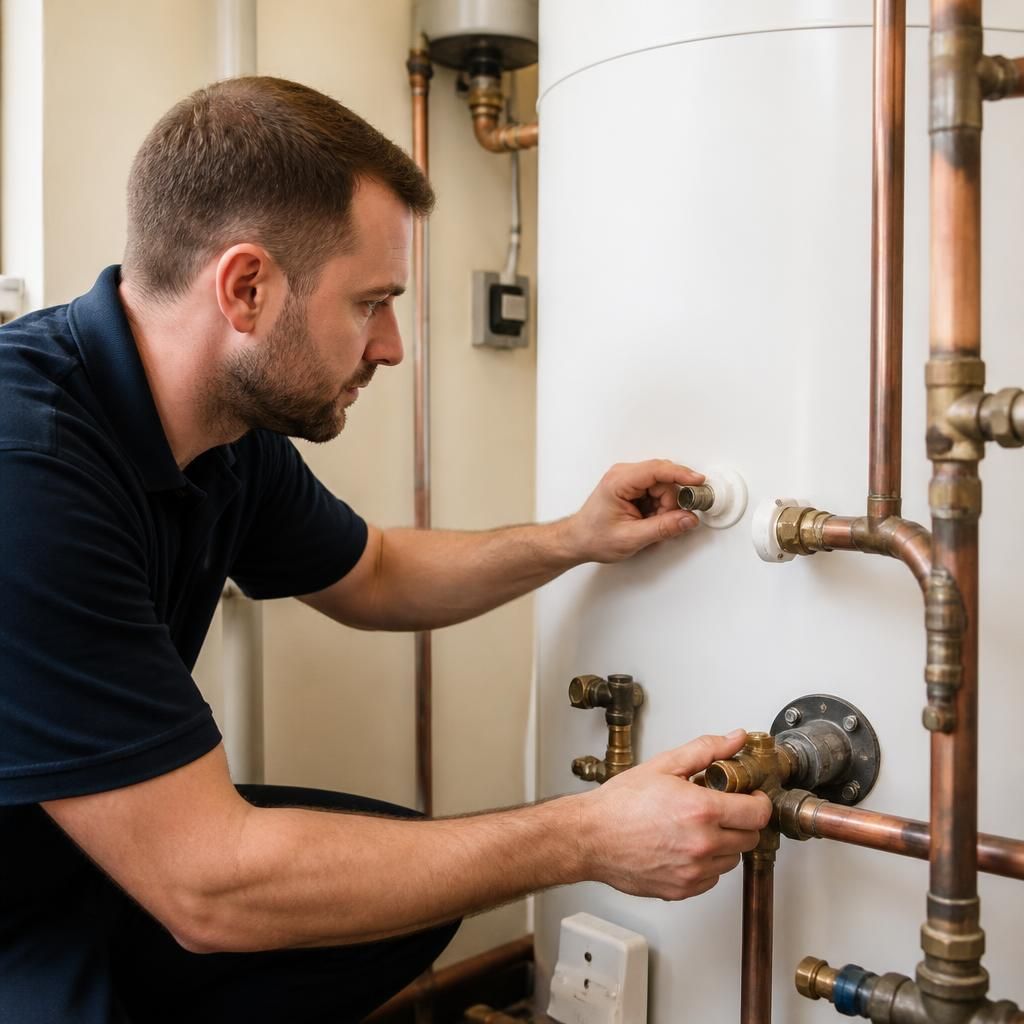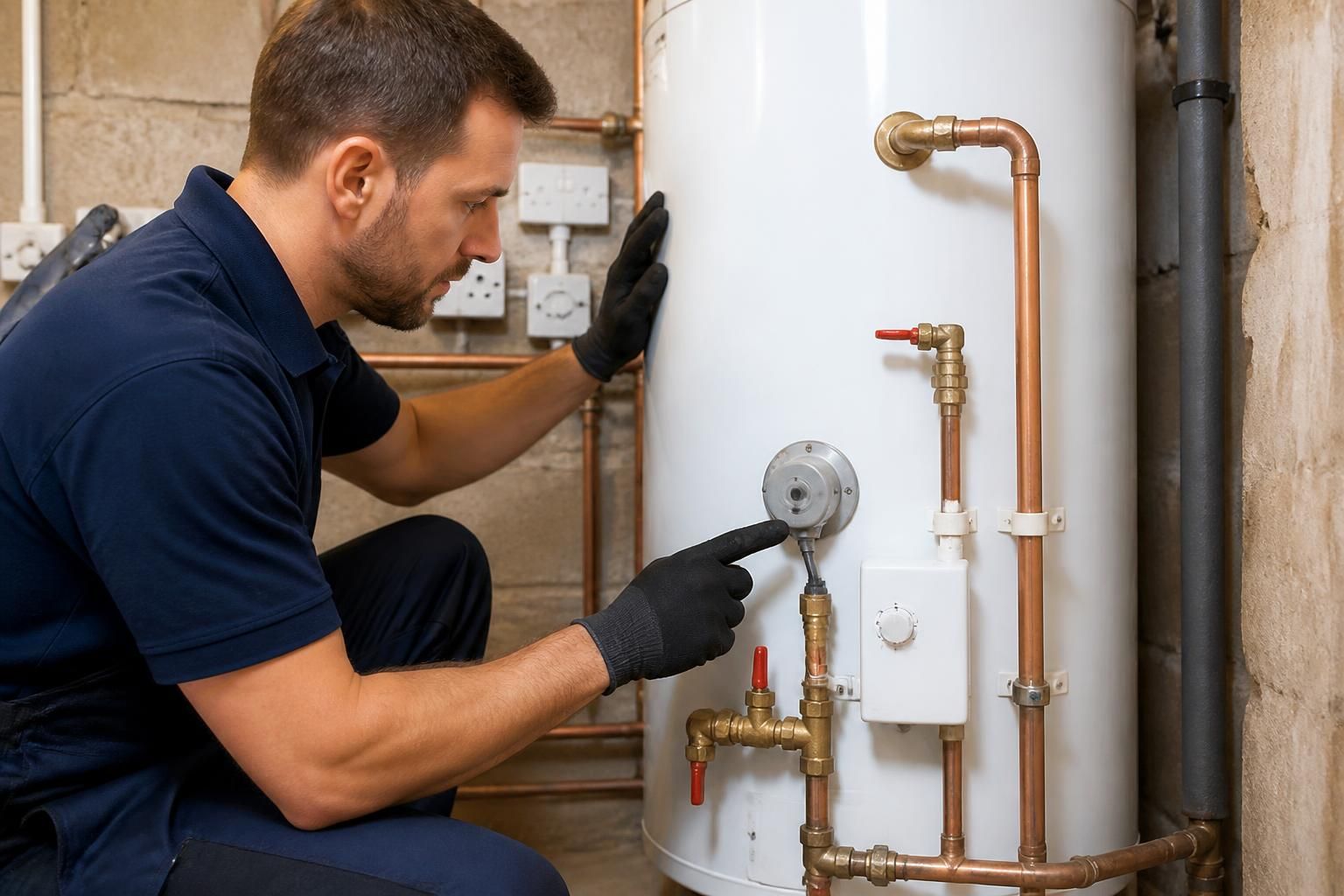
The right choice depends on whole-life value rather than the appliance’s age alone. A proper assessment should compare the confirmed fault, the condition of the associated controls and pipework, expected future maintenance, energy performance, available hot-water capacity and the practical cost of installing a suitable replacement.
Consider the nature of the fault. Some failures affect a replaceable component rather than the complete water heater. Examples can include a thermostat, heating element, valve, electrical connection or control. If testing identifies one failed part and the cylinder or heater body remains sound, repairing that component may be sensible. Replacing the complete unit becomes more appropriate when the fault is difficult to isolate, several components are deteriorating together or the repair would leave other unreliable parts in service.
Look for performance changes. A water heater that takes much longer to produce hot water, delivers less usable hot water than before or produces inconsistent temperatures may no longer be operating effectively. These symptoms can sometimes be caused by a straightforward control or element fault, so they should be diagnosed rather than treated as proof that replacement is needed. However, if performance problems persist after a suitable repair, the cost and inconvenience of continuing maintenance should be compared with installing a new system.
Assess the condition around the unit. Water marks, damp insulation, staining beneath connections, mineral deposits or a persistently wet area can indicate a developing leak. The source should be identified carefully because moisture may come from a valve, joint or discharge pipe rather than the heater itself. If the body of a storage cylinder is leaking, a component repair will not restore the vessel, and replacement is normally the appropriate long-term solution.
Check electrical and temperature-related symptoms. Burning smells, discoloured switches, tripped protection, unusual buzzing or visible damage to wiring require the appliance to be made safe and inspected by a suitably qualified professional. Water that is excessively hot, repeatedly cold or fluctuates without explanation may point to a thermostat, sensor, control or mixing-valve problem. These symptoms should not be managed by repeatedly resetting the system, as doing so can conceal the underlying fault.
Compare the full cost, not just the first invoice. A repair estimate should be considered alongside diagnostic charges, labour, replacement parts, access requirements and the likelihood of further work. A cheaper repair is not automatically better value if it leaves an ageing system with limited reliability or difficult-to-source components. Conversely, replacement may be unnecessary where a single accessible part can restore safe, dependable operation. Ask for the fault, proposed remedy and likely implications to be explained clearly before authorising either option.
Review whether the existing capacity is still suitable. Household routines can change. A property may have gained an additional bathroom, new occupants or greater demand for simultaneous showers and hot-water use. If the current heater regularly runs short, repairing it may restore its original output but will not increase its capacity. Replacement provides an opportunity to review cylinder size, recovery rate, controls and the available space, provided the proposed system is compatible with the property’s water pressure and electrical or plumbing arrangements.
Take installation constraints into account. A replacement is not always a simple like-for-like exchange. Access through a flat, cupboard or loft space, the position of isolation valves, discharge arrangements, electrical supplies and the condition of connecting pipework can all affect the work. The replacement must be correctly supported, connected and commissioned. In some properties, upgrading associated valves, insulation or controls is necessary to achieve a sound installation rather than simply fitting a new tank or heater to old connections.
Rental properties require a documented decision. Landlords should keep records of the reported symptoms, inspection findings, repair recommendation and any work completed. Tenants should report loss of hot water, leaks, unusual electrical signs or temperature problems to the landlord or managing agent promptly, rather than dismantling the appliance or arranging unauthorised alterations. The decision should prioritise safe operation, compliance and suitability for the property, as well as cost.
A qualified inspection is particularly useful when the symptoms could have several causes. Ideal Plumbing Services provides residential plumbing and heating support across Birmingham and the wider West Midlands, with over 20 years’ experience. A professional assessment can distinguish a repairable component fault from a problem where replacing the water heater is the more practical long-term decision, with the recommended work and charges explained before proceeding.