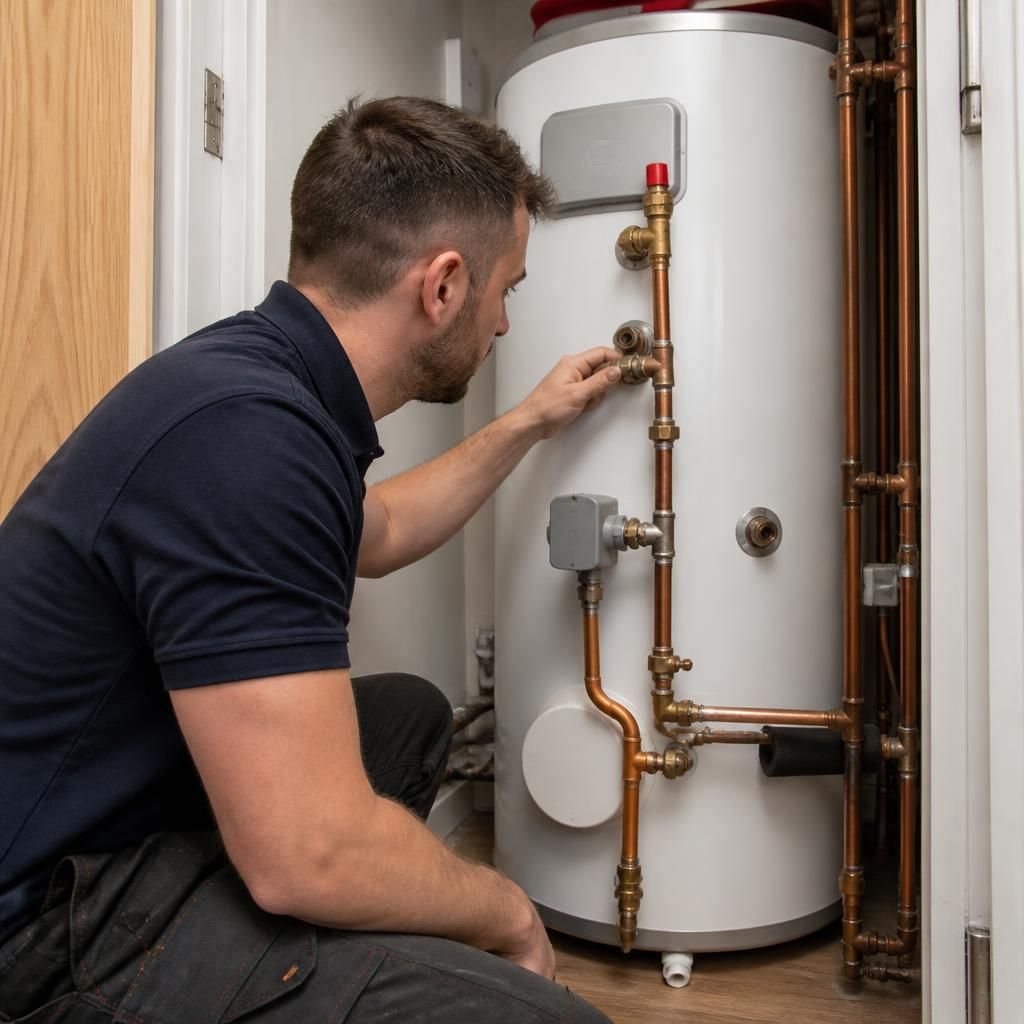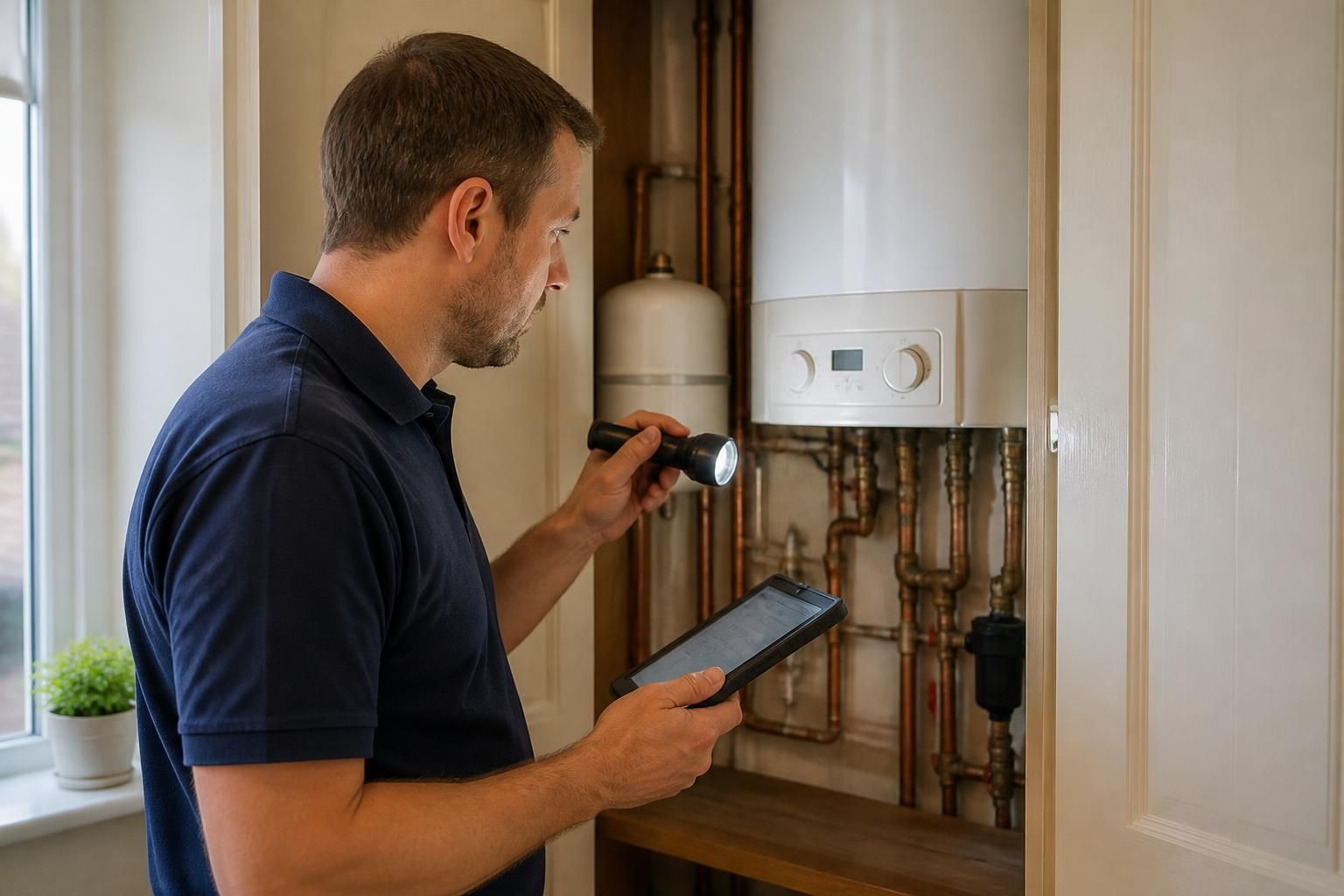
Before replacing a water heater, organise the relevant information, confirm any permissions that may be needed, and obtain a clear installation plan and written quotation. Good preparation helps the installer identify the correct replacement, anticipate associated work and explain any safety or compliance requirements before the existing unit is removed.
Gather the heater’s records
- Find any installation documents, service records, previous repair invoices and warranty information.
- Note the make and model shown on the rating plate, together with any serial number or installation date that is available.
- Keep photographs of the unit, its connections and nearby controls. These can help an installer understand the existing arrangement before attending, although they do not replace an inspection.
- Write down the symptoms you have noticed, such as inconsistent temperature, unusual noises, discoloured water, leaks or repeated trips of an electrical switch. Include when each issue occurs and whether it affects all hot-water outlets.
This information is useful when distinguishing between the main appliance and related components such as valves, controls, pipework, thermostats or electrical supplies. A replacement may not resolve a fault that originates elsewhere in the system.
Check ownership and permission requirements
Homeowners should check whether their home insurance, warranty or any previous installation agreement contains relevant conditions. Landlords should review their maintenance records and arrange the required approval before work begins. Tenants should contact the landlord or managing agent rather than authorising a replacement themselves, unless their tenancy agreement specifically permits it.
Flats and leasehold properties may also be subject to building-management rules. Ask whether permission is needed for work affecting communal areas, risers, external discharge routes, electrical supplies or the building’s water system. If the property is rented, agree in advance who will receive the quotation, approve additional work and retain the completion documents.
Prepare the information needed for an accurate quotation
Tell the plumber about any changes to the property or household since the current heater was installed. Relevant details can include an additional bathroom, altered pipework, a loft or cupboard conversion, changes to the electrical supply, or plans to renovate the room. Also explain whether the heater supplies taps, showers, appliances or a wider heating and hot-water system.
Ask the quotation to separate the main replacement from possible additional items. It should make clear whether it includes:
- Removal and disposal of the existing heater.
- New isolation valves, safety components, controls or connecting pipework where required.
- Alterations to the electrical supply, flue, ventilation or discharge pipework, if applicable to the type of heater.
- Making good around the installation, such as replacing damaged panels or sealing penetrations.
- Testing, commissioning, user instructions and relevant certificates.
A written quotation should also identify assumptions and exclusions. This makes it easier to compare like-for-like proposals and reduces the risk of unexpected charges if concealed pipework, deteriorated valves or inadequate connections are discovered.
Check the installation route and work area
Clear personal belongings, stored items and cleaning products from around the heater and along the route to it. Protect items that cannot be moved and tell the installer about fragile flooring, restricted doors or shared access arrangements. Do not dismantle cupboards, disconnect pipework or remove panels yourself unless instructed to do so.
Ask how the old unit will be removed and whether the installation requires temporary access to an adjoining room, loft, meter cupboard or consumer unit. If the heater is located in a rented property or a communal building, agree how access will be managed and who will be present to provide entry.
Confirm safety and compliance questions
Before work starts, ask which parts of the installation require a suitably qualified specialist. Gas appliances, electrical connections and certain discharge arrangements have specific safety requirements. The installer should explain how the replacement will be isolated, connected, tested and commissioned, and what documentation you will receive afterwards.
Ask whether the proposal needs to account for current Building Regulations, ventilation, pressure relief, expansion control, earthing or safe discharge of hot water. The precise requirements depend on the heater type and the existing property services, so these should be confirmed during the assessment rather than assumed from the old installation.
Plan for the changeover
Decide which hot-water outlets are essential during the work and ask how long the property may be without hot water. Protect children and pets from the work area, and avoid using the old heater once it has developed a significant leak, exposed wiring, burning smell or repeated electrical fault. If water is escaping, use the isolation valve if it can be operated safely and switch off the relevant electrical supply only when this can be done without touching wet equipment.
Before the installer leaves, check that the heater operates correctly, controls are explained and any warning signs or maintenance requirements are understood. Keep the quotation, invoice, installation instructions, certificates and warranty information together. These records can support future servicing, fault diagnosis, insurance queries or a later property sale.
Ideal Plumbing Services can assess the existing arrangement and explain the preparation, installation and documentation needed for a water heater replacement in Birmingham and the West Midlands.