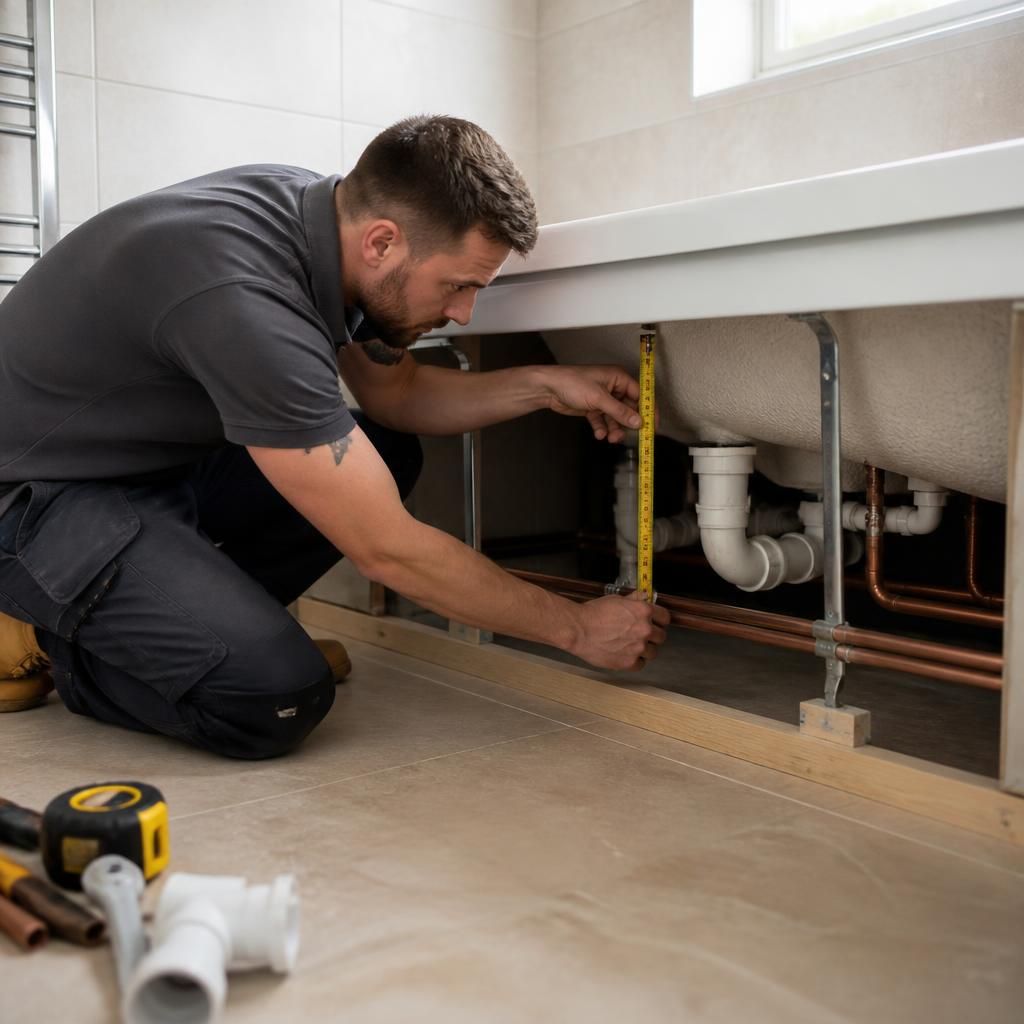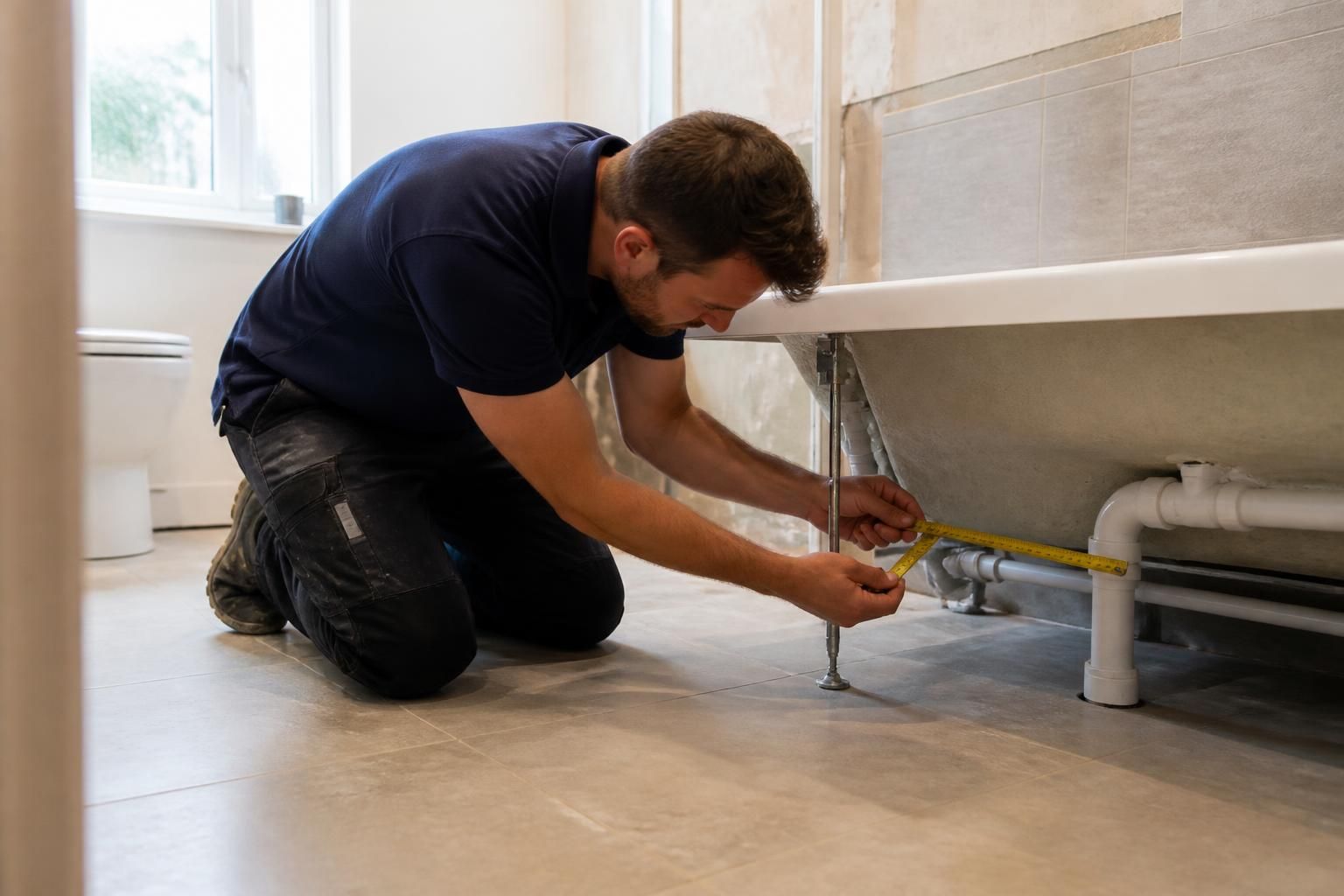
A full bathroom installation is priced according to the complete scope of work, not simply the number of fittings being replaced. The main cost differences usually come from the specification, the complexity of the installation, preparation requirements, compliance work and items included in the quotation.
The specification has a direct effect on the total. A straightforward bathroom with standard, readily available products is generally simpler to price than one involving bespoke furniture, unusual dimensions, specialist sanitaryware or made-to-measure components. Product availability can also affect the schedule and the cost of coordinating deliveries, particularly where several suppliers are involved.
The amount of preparation required should be identified before work starts. Removing the existing bathroom, lifting floor coverings, taking down wall finishes and preparing surfaces all add to the scope. A quotation may also need to allow for making good around removed fittings, repairing damaged substrates and preparing walls or floors to receive the new installation. These tasks are separate from installing the visible bathroom products, so they should be clearly listed rather than assumed to be included.
Waterproofing and substrate preparation are important cost considerations. Areas exposed to regular splashing may need suitable tanking or other waterproofing measures, while uneven floors and walls may require levelling or reinforcement. The correct approach depends on the construction of the room and the proposed shower or bath arrangement. Cutting back on these concealed stages can create problems later, so they should be assessed as part of the installation rather than treated as optional decoration.
Compliance requirements can add specialist work. A bathroom project may involve building regulations, electrical safety requirements, ventilation standards or permissions, depending on the property and the work proposed. Electrical work in bathroom zones must be planned around the location of water sources, while ventilation may need to meet the requirements for moisture control. Where approvals, inspection or certification are relevant, the quotation should explain who is responsible for arranging them and whether associated charges are included.
The property itself can create additional costs. Older homes may contain outdated pipework, unsuitable substrates or previous alterations that do not meet current requirements. Converting a room that was not previously used as a bathroom can require more extensive preparation than renewing an existing suite. Leasehold properties may also have approval requirements, and flats can involve restrictions on access, deliveries, waste removal or work affecting shared services.
Waste handling is another item to check. The removal of the old suite, packaging and construction waste may be priced separately from the installation. Ask whether loading, transport, disposal and any necessary permits are included. This avoids comparing a quote that includes complete waste removal with one that only covers the installation work.
A written quotation should set out:
- the products and quantities included;
- preparation, removal and installation tasks;
- waterproofing, making good and finishing responsibilities;
- any electrical, ventilation or compliance-related work;
- waste removal and disposal;
- items excluded from the price;
- how unforeseen work and changes will be approved; and
- whether VAT is included.
Unforeseen costs are most likely when concealed areas cannot be inspected until the existing bathroom has been removed. Examples include damaged flooring beneath a leaking appliance, deteriorated wall surfaces or pipework that cannot safely be reused. A reputable installer should distinguish between the agreed work and genuine additional work, explain why a variation is needed and obtain approval before proceeding where practicable.
When comparing quotations, assess the scope rather than choosing solely on the lowest total. Two prices may differ because one includes preparation, waste removal, compliance work or making good while the other excludes them. Requesting a site assessment and a detailed written breakdown gives a more useful indication of the final cost than relying on a broad estimate based only on the room or product list.
For a planned installation, Ideal Plumbing Services can assess the existing bathroom, identify work that may not be visible at the outset and explain which elements are driving the price. This helps homeowners, landlords and tenants in Birmingham and the West Midlands understand the proposed work before committing to a full bathroom installation.