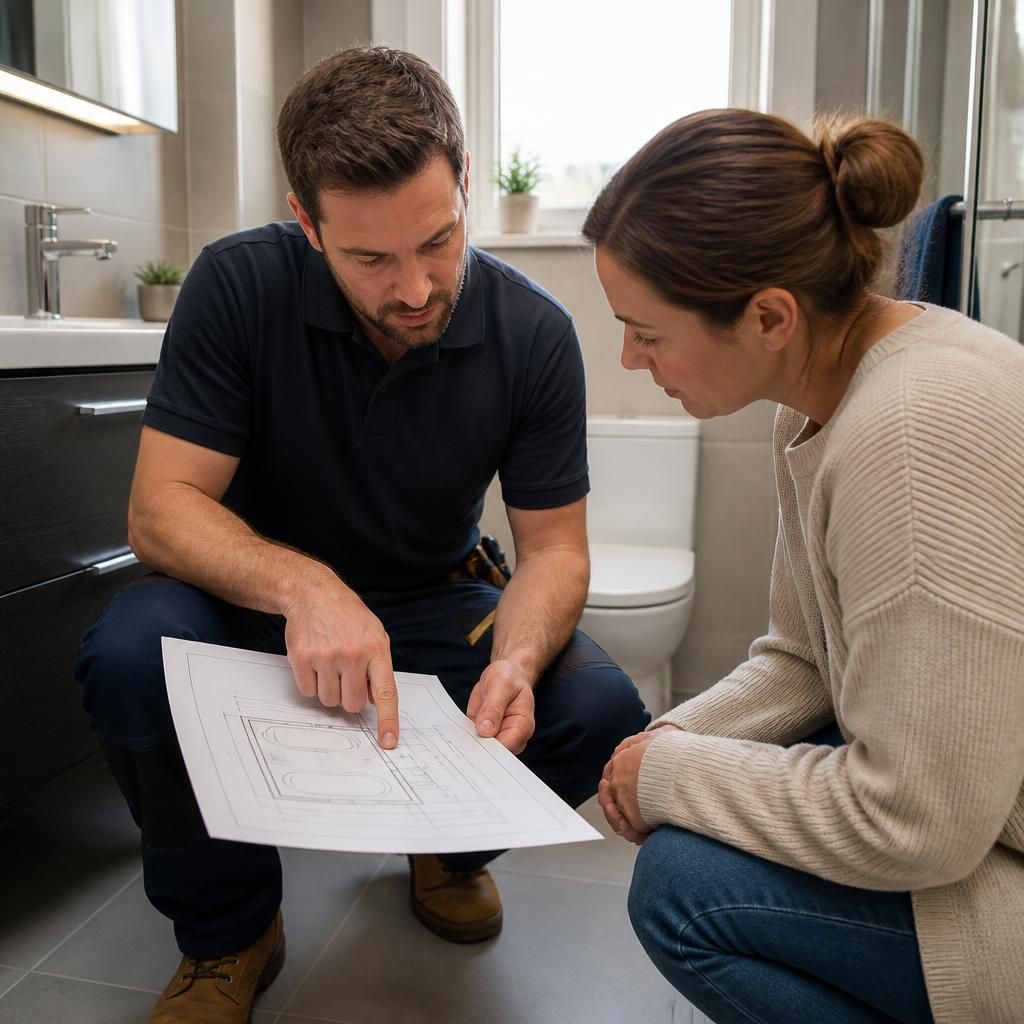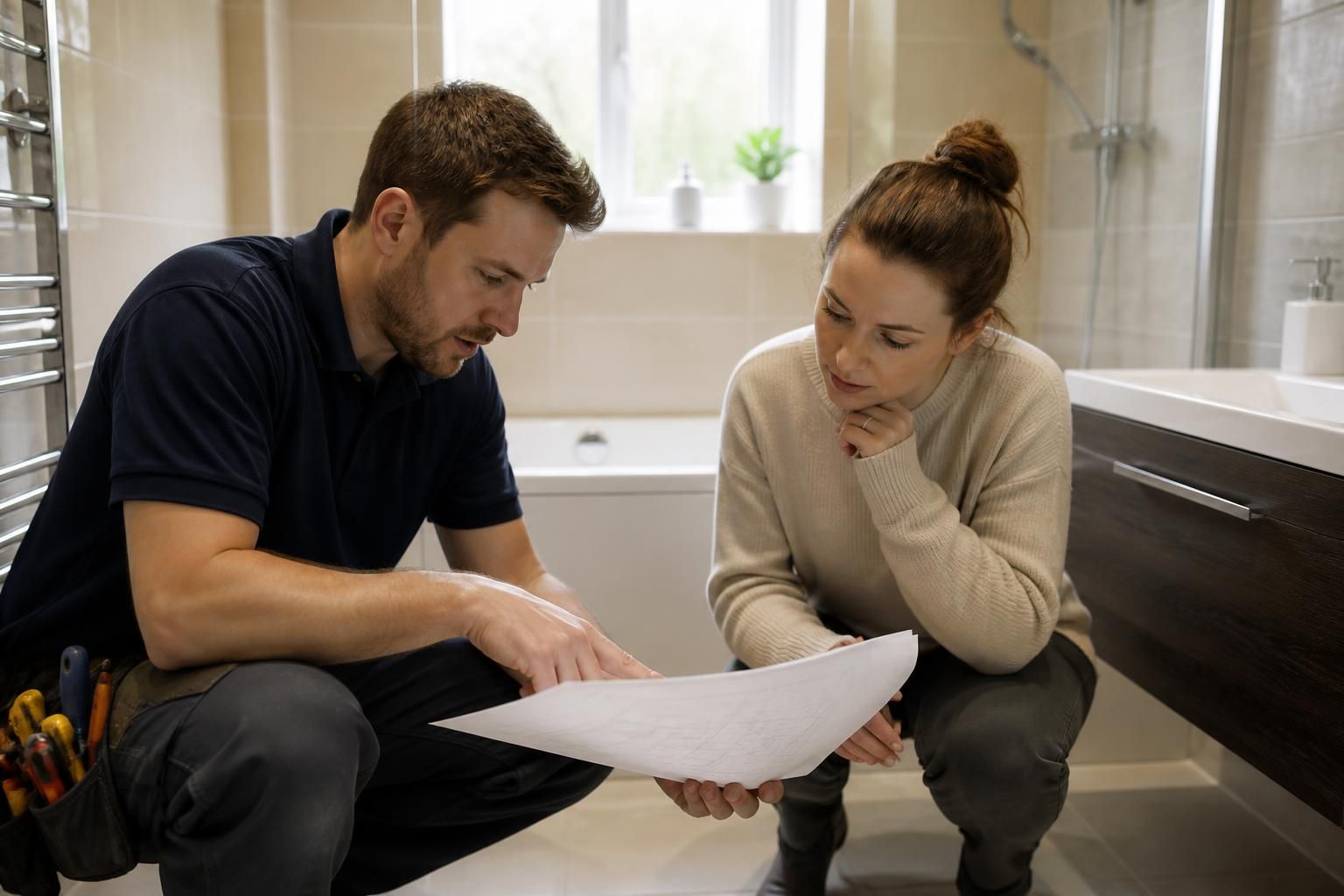
Before hiring a bathroom installation plumber, check that they can assess the existing plumbing, plan the proposed layout accurately and complete the work under clear written terms. The right choice is based not only on the quoted price, but also on technical competence, planning, communication and the checks carried out before installation begins.
Review relevant experience
Ask whether the plumber regularly completes full bathroom installations or mainly carries out isolated repairs. A complete installation may involve removing existing fittings, altering water supplies, adapting drainage, installing sanitaryware and coordinating ventilation or electrical work. Request examples of comparable projects, particularly where the layout or pipework had to be changed, rather than relying only on general plumbing experience.
Read recent, independent customer reviews with attention to comments about workmanship, cleanliness, communication and how problems were dealt with. A consistent pattern is more useful than a single highly positive or negative review. You can also ask whether references from similar residential projects are available, subject to the previous customer's permission.
Arrange a proper site assessment
A reliable installer should understand the room before recommending a layout. During the assessment, check that they have considered:
- the position and condition of existing hot, cold and waste pipes;
- drainage routes and whether the proposed fittings can discharge correctly;
- water pressure and flow in relation to showers, taps and other outlets;
- the condition of floors, walls, joists and surfaces that will support fittings;
- ventilation, condensation risks and the location of any extractor;
- access for removing old fittings and bringing new materials into the property; and
- the location of isolation valves so future maintenance is practical.
Be cautious if a layout is recommended without checking these points. A design that looks suitable on paper may require substantial pipe alterations, affect drainage performance or leave essential valves inaccessible.
Confirm the design and product details
Ask for the proposed layout or specification in a form you can check before work starts. It should be clear where the bath, shower, toilet, basin, radiators, storage and other fixed items will be positioned, including door clearances and access for maintenance. Confirm the dimensions of the selected fittings and that they are suitable for the available space.
Check who is responsible for confirming measurements, ordering items and resolving a problem if a product is damaged, missing or incompatible. It is also sensible to establish whether fixtures supplied by you must meet particular connection requirements or be available before the installation reaches that stage.
Check how associated work will be handled
Bathroom projects can involve more than plumbing. Ask which parts of the work the installer will undertake directly and which will require a suitably qualified specialist, such as electrical work, plastering, tiling or joinery. Confirm how those trades will be coordinated and who you should contact if one part of the installation affects another.
For electrical items in a bathroom, such as lighting, an extractor fan or an electric shower, ask how the work will be tested and documented. Plumbing and electrical systems should not be treated as interchangeable parts of the same job; each must be completed by someone competent for that type of work.
Read the terms before work begins
In addition to the quotation, check the written terms for:
- the agreed specification and any exclusions;
- how changes requested after approval will be priced and authorised;
- the procedure for dealing with concealed damage found after removal;
- responsibility for protecting floors, furniture and other parts of the property;
- the expected sequence of work and how decisions or delays will be communicated; and
- the documents, certificates or operating information you will receive at completion.
Any variation should be agreed in writing before the additional work is carried out. This reduces disputes where opening a wall or floor reveals old pipework, damp, damaged supports or other conditions that could not be assessed fully beforehand.
Ask how the completed installation will be checked
Before the bathroom is treated as complete, ask what testing will be carried out. This should include checking joints for leaks, confirming that wastes discharge correctly, testing hot and cold supplies, verifying that fittings are secure and ensuring that ventilation operates as intended. Where specialist electrical work forms part of the project, request the relevant completion documentation.
Inspect the finished room against the agreed layout and specification. Check that doors, drawers and access panels open properly, isolation valves can be reached and sealant has been applied neatly around areas exposed to water. A clear handover should explain how to use unfamiliar fittings and identify any routine maintenance the installer recommends.
Finally, make sure you have a named contact and a documented process for raising a defect or query after completion. Taking these steps before appointing a bathroom installation plumber helps you compare providers on the quality and manageability of the whole project, rather than on price alone.