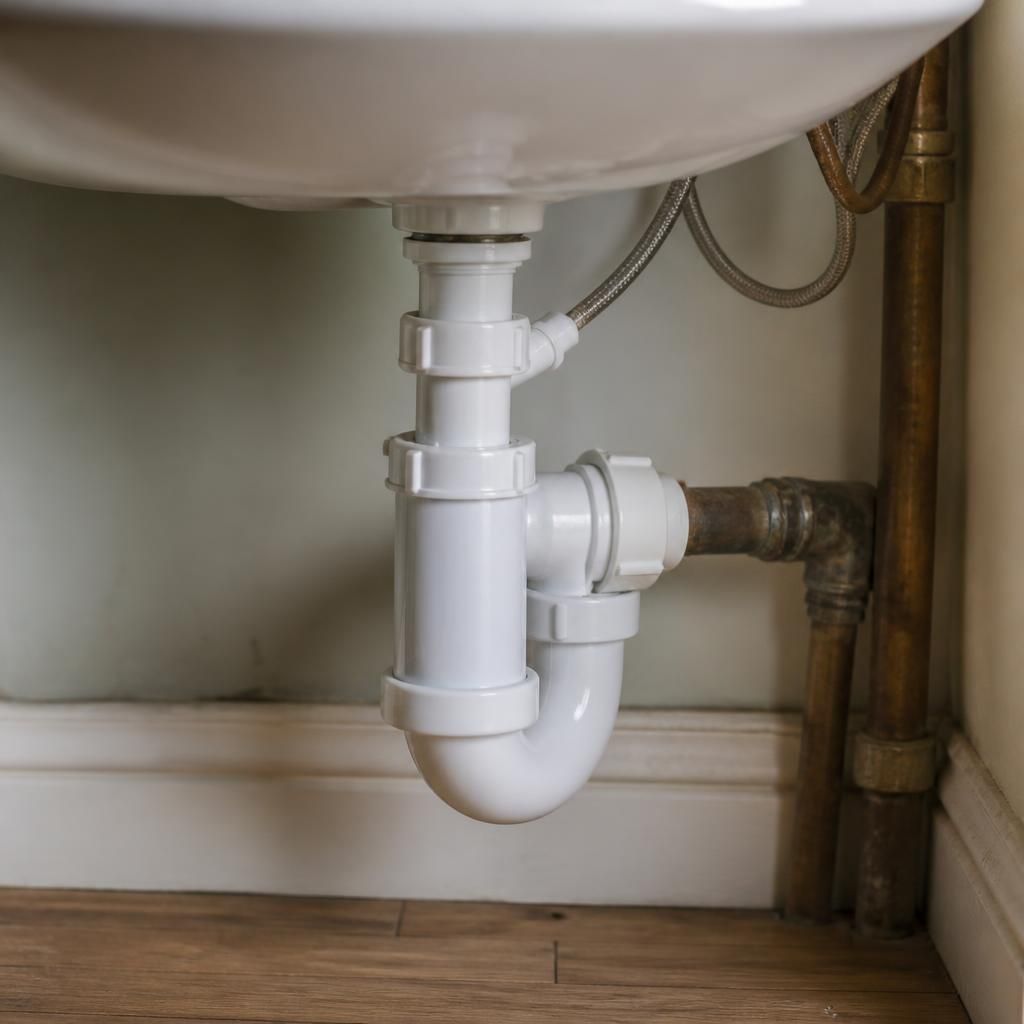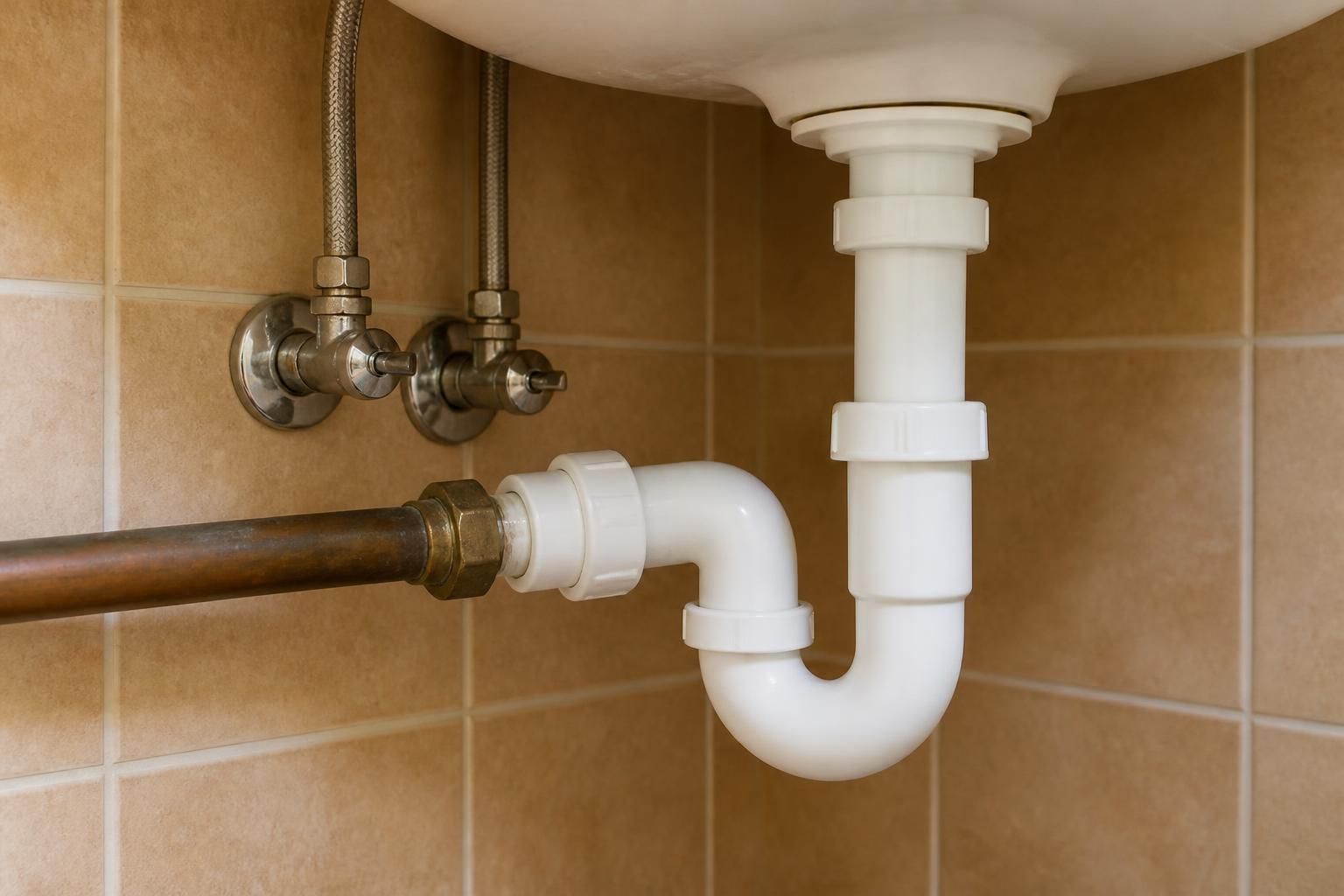
Whether the existing waste pipe can be retained depends on how well it matches the new basin and its trap. A like-for-like replacement will often connect without major alteration, while changing from a pedestal basin to a vanity unit, wall-hung basin or countertop basin may require the waste connection to be repositioned.
The following points are checked before the sink is fitted:
- Outlet position: the waste outlet must line up with the trap without forcing the pipe into an awkward angle. A poor connection can place strain on joints or leave insufficient space for the basin and surrounding furniture.
- Pipe size: the trap outlet and existing pipe need compatible dimensions. An unsuitable connection may require a correctly sized adaptor rather than an improvised joint.
- Gradient: the waste pipe should fall continuously towards the drainage connection. Flat sections can retain water and debris, whereas an excessive or uneven fall can make connections difficult to seal.
- Condition: joints, seals and the pipe itself should be free from significant corrosion, cracking, movement or previous leak damage. Reusing a defective section can transfer an existing problem to the new installation.
- Access: the trap and joints should remain reachable for cleaning and future maintenance. Enclosing them behind fixed furniture without suitable access can make minor blockages or leaks harder to deal with.
The type of replacement basin makes a practical difference. A conventional basin may leave the trap and waste route in a similar position to the old installation. A wall-hung basin can expose the pipework, so the route may need to be tidied or concealed within the wall. A vanity unit can restrict the available space and may need a compact trap or a carefully planned pipe route. The basin manufacturer's fitting instructions should also be followed, particularly where the waste outlet is positioned differently from a standard model.
If the new basin is narrower, wider or mounted at a different height, the existing pipe may still be usable with a short adjustment. This might involve altering the exposed section, fitting a new trap or replacing a limited length of waste pipe. Reusing the route does not necessarily mean reusing every fitting; older washers, compression nuts and solvent-welded joints may need replacement to create a sound connection.
A waste pipe that passes through a wall should be checked for its connection to the external drainage system. The pipe should be securely supported, protected from movement and sealed where it passes through the wall. If the route is shared with another appliance or connects to a larger branch pipe, the arrangement should also be checked for secure joints and appropriate drainage flow.
Common indications that the existing waste pipe needs more than a simple connection include:
- water draining slowly after the old trap has been cleaned;
- persistent smells from the waste or trap;
- dampness, staining or mould around the cabinet or wall;
- loose pipework or joints that move when the trap is handled;
- an outlet that sits too high, too low or too far from the new basin; and
- a previous installation that relies on excessive sealant, unsupported pipework or makeshift extensions.
Before installation, the water supply is normally isolated and the old basin and trap are removed so the route can be inspected properly. The new waste is then connected, supported and tested by running water through the basin and checking each joint for leaks. The trap should be cleaned out if necessary, and the basin should drain without backing up or retaining water around the plughole.
Ideal Plumbing Services can assess the existing arrangement as part of a bathroom sink installation in Birmingham and the wider West Midlands. Where the route is suitable, retaining it can simplify the work; where it is not, adapting or replacing the affected section provides a more reliable connection for the new basin.